WPP-Google's Multi-Year Partnership Transforms How Marketers Approach Storytelling Processes

WPP & Google Partner to Transform Marketing Workflow – Ciente

WPP & Google Partner to Transform Marketing Workflow – Ciente

As part of the agreement with Google, WPP will retain 300 million euros per year to invest in its AI future- remain a forerunner as it elevates client experiences.

CMOs and CEOs used to be misaligned about marketing’s role in a business’s growth and transformation.

The recent years have transformed this purview. Access to advanced technology has afforded tools to bridge the hidden cracks between marketing functions and the bottom line.

But today, with the whole picture in their hands, more business leaders are investing in it.

80% of growth leaders outperform their competitors. And they’re the ones who realize marketing’s true potential- its function as a growth accelerator.

This is the future that Google and WPP’s partnership plans to build upon.

They’ve expanded their five-year alliance to explore how marketers approach creative processes and transform the entire crux of marketing storytelling. The two giants aim to curate an integrated approach that empowers teams to enhance their quality of real-time personalization.

Google, through its AI capabilities, plans to help WPP revolutionize marketing as we know it. And take a giant leap beyond the traditional initiatives.

It’s a shared commitment to innovation. And a giant leap towards market-leading outcomes.

As a part of the agreement, WPP has made a $400 million spending commitment for Google tech. Some of the amount will be spent on integrating AI across its existing services, while some will be attributed towards AI investments made through WPP’s AI marketing platform, WPP Open.

“By delivering bespoke AI solutions and enabling hyper-relevant campaigns with unprecedented scale and speed, we’re accelerating innovation across every facet of marketing to drive unparalleled growth and impact,” chimed in Cindy Rose, WPP’s CEO.

This strategic alliance will establish new frontiers for WPP’s clients and what they can achieve with the revamped tech stack- the martech stack of tomorrow. The future of AI in marketing is now.

DGX Spark, the world's smallest AI supercomputer, could democratize AI: Jensen Huang

DGX Spark: Smallest AI Supercomputer to Democratize AI

DGX Spark: Smallest AI Supercomputer to Democratize AI

Nvidia has harnessed complexity, there’s now an efficient supercomputer that sits right at your desk. And it is powered by AI.

Nvidia has launched the DGX Spark, the world’s smallest AI supercomputer. Jensen Huang personally delivered the first unit to Elon Musk at SpaceX’s Starbase in Texas.

He said, “Imagine delivering the smallest supercomputer next to the biggest rocket.” With a laugh. It is clear what Nvidia is signaling here, these are the next gen computation powers that will enable us to target the next frontier: space.

And Elon Musk is, once again, in the middle of it. Not for a rocket launch this time, but for an unveiling that might redefine what AI hardware looks like. A supercomputer that fits on a desk and connects seamlessly with existing systems.

Nvidia calls the DGX Spark a “rocket engine for AI.”

What DGX Spark really is

The Spark isn’t just a scaled-down version of the DGX systems. It’s designed to bring supercomputing-grade performance directly to researchers, startups, and developers who can’t access massive data centers.

It’s compact, modular, and powerful enough to train and deploy complex AI models locally.

  • Built on Nvidia’s latest architecture.
  • Tuned for generative AI workloads and multimodal models.
  • Designed for personal or lab-scale experimentation.

Why it matters

DGX Spark could shift how AI research is done. Instead of queuing for cloud access or HPC clusters, developers can now iterate faster and run high-intensity workloads from their own desks.

It’s not just a hardware release. It’s Nvidia reshaping access to AI compute, turning what was once infrastructure into an instrument.

The bigger signal

This is more than a delivery to Elon Musk. It’s a statement of intent from Nvidia.
They’re not only building the backbone of global AI infrastructure. They’re making that power personal.

DGX Spark marks a transition point from cloud-scale AI to desktop-scale intelligence.

And if history is any guide, that shift changes everything.

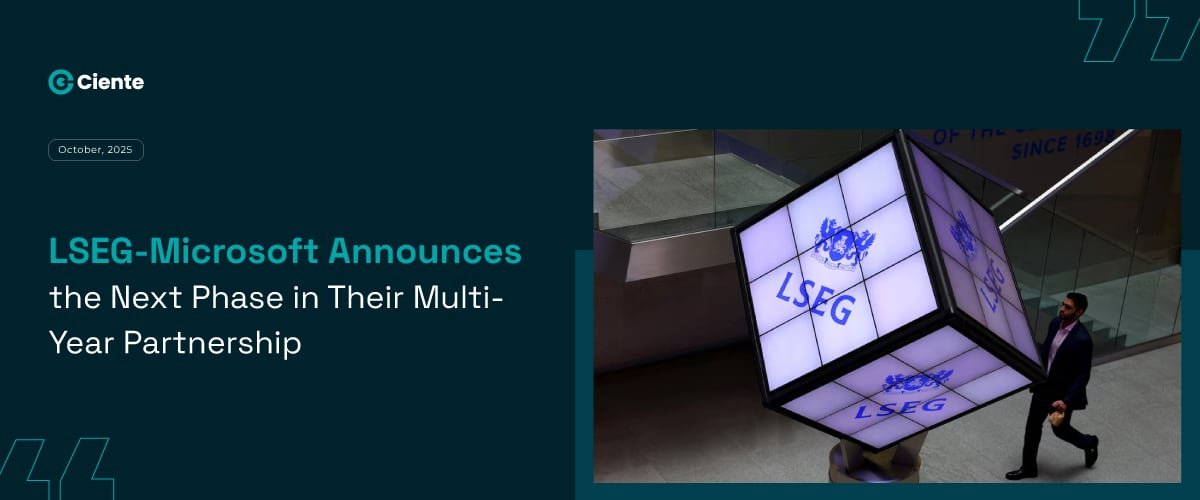
LSEG-Microsoft Announces the Next Phase in Their Multi-Year Partnership

LSEG-Microsoft Announces the Next Phase in Their Multi-Year Partnership

LSEG-Microsoft Announces the Next Phase in Their Multi-Year Partnership

Microsoft’s cloud and LSEG’s analytical data make a surprising combination. Could this multi-year alliance transform the finance industry from the inside out?

Have you noticed how many places don’t require swiping your debit or credit cards today? Transactions went from ATM transactions to Venmo and RTPs. And even cards today have another option- to “Tap and Pay.”

Tech has brought an influx of transformations to the finance industry. It was digitization that changed the game.

The way people interact with banking services and transact has undergone serious vamping. Financial services, from B2B to D2C and from global to local levels, have become more secure, seamless, and instant.

But as the finance sector expands, the concerns have also risen.

There are more heaps of customer data. This is the cost of digitization. You can’t eradicate any of it. Amid the complexity, all data is a goldmine.

But how can fintech actually use it to their advantage? Cue in: AI.

This is precisely what Microsoft and LSEG’s multi-year partnership is built on.

According to the agreement, Microsoft is embedding its high-level AI capabilities across each financial workflow and layers of LSEG. It’ll inherently transform how LSEG’s customers access their data. And also establish a secure bridge for deploying agentic AI through an LSEG-managed MCP server.

“LSEG’s partnership with Microsoft is transforming access to data for financial professionals with cutting-edge, AI-driven innovation at scale,” states LSEG’s Group Chief Executive Officer, David Schwimmer.

The collaboration will facilitate a strategic deployment of agents across Microsoft Copilot Studio through LSEG data. Users can now access LSEG-licensed data and analytics directly through their workflows.

Additionally, users can develop sophisticated AI agents and integrate them within their workflows with proper governance control. And with compliant and secure customization at scale.

Given that the finance sector is highly (and complexly) regulated, innovations must adhere to all necessary regulatory compliance. And algorithmic bias and data security continue to be a concern. This is why most fintechs lack a robust regulatory framework in place.

Microsoft’s partnership with LSEG might be a much-needed step.

It connects LSEG-trusted content with Microsoft’s AI capabilities to remove any barriers to innovation across finance. As per the announcement, the strategy is built on LSEG’s strategy, LSEG Everywhere, creating a pathway to scale AI across financial services.

The unparalleled quality of LSEG’s AI Ready Content and taxonomies serves as the right foundational blocks for Microsoft’s Copilot to build upon.

Figma Partners Up With Google Cloud

Figma and Google Cloud Collaborate to Empower Creatives

Figma and Google Cloud Collaborate to Empower Creatives

Creative demands are changing as AI pushes the boundaries of creative expression. Can the Figma-Google Cloud partnership help fulfill these needs?

Stop waiting, start creating.

Figma and Google Cloud just reiterated their partnership.

The goal?

Instill Google’s fastest generative AI, the Gemini 2.5 Flash, directly into Figma’s design platform- a crucial deal for the platform’s 13 million monthly users.

The headline is all about speed.

Early tests showed a stunning 50% reduction in latency for Figma’s “Make Image” feature. What does that mean? When you ask the AI to generate or edit a visual, it happens twice as fast. For designers, that’s less time staring at a loading bar and more time in the flow.

This is about powering image generation “without breaking their flow,” said Figma’s CEO Dylan Field.

This AI integration eliminates those awkward pauses. You can now conjure up icons, mockups, or textured backgrounds almost instantly.

The speed originates from the Gemini 2.5 Flash model, which is optimized for quick responses. It’s what turns AI from a fun novelty into a genuinely essential tool.

But Figma isn’t stopping at speed.

The platform is also integrating other Google models: Gemini 2.0 and the super-realistic Imagen 4. It gives designers an entire toolkit. They can use simple text prompts to create high-quality images and even test out product functions before anything is built.

Google Cloud CEO Thomas Kurian noted the collaboration will help “push the design market forward.”

For the creative world, this move means less time wrestling with tedious workflows. It’s more time focused on big ideas, creative expression, and building the future.

And the next great design is now just a lightning-fast prompt away.

Chips. AI. Efficiency. The world seems to revolve around computational prowess. Yet Intel has been largely absent from these discussions- losing market share. Could this be their turning point? Intel to unveil the next generation of the Lake chips, called the Panther Lake, their codename for Core Ultra Series 3 mobile processors. This processor promises up to 30% less power consumption and will have Intel Arc Xe³ integrated graphics. However, is this salvation for Intel and an opportunity for growth? Ever since it announced a partnership with Nvidia, Intel has been the object of speculation for many. Where does the company go? Intel has lost market share to AMD and Nvidia. Then there was the capital injection from the SoftBank group and the US government's buy-in of a 10% stake at $8.9bn. Intel has experienced a rocky road. At one point, it was the chip maker. Intel's i3 to i7 processors were the best in the market. Macs, Dell Latitudes, and hardcore gaming PCs all had Intel chips. Intel inside, went the historic copy. But no empire can stand forever. AMD and Nvidia have outpaced Intel by a huge margin- why? Many critics point out that it's because they did not capitalize on the AI hype. But perhaps the reasons go deeper. According to Reuters' report from 07th August, 2025, Intel has been struggling to launch its next-gen because of manufacturing struggles. Intel has been facing an uphill battle with changing processes, leadership, and accusations that its CEO, Lip-Bu Tan, allegedly works for China. But the tech world has been waiting for Intel to succeed. The company that once became a household name might fall into obscurity. But that would be a tragic day. For it was known for innovation and bringing the computer to each household. Without Intel, maybe the proliferation of this tech wouldn't be possible. Yet, the future seems uncertain. Let's hope the Panther Lake proves to be an advantage and not just "another competitor" to AMD's and Apple's line of chips.

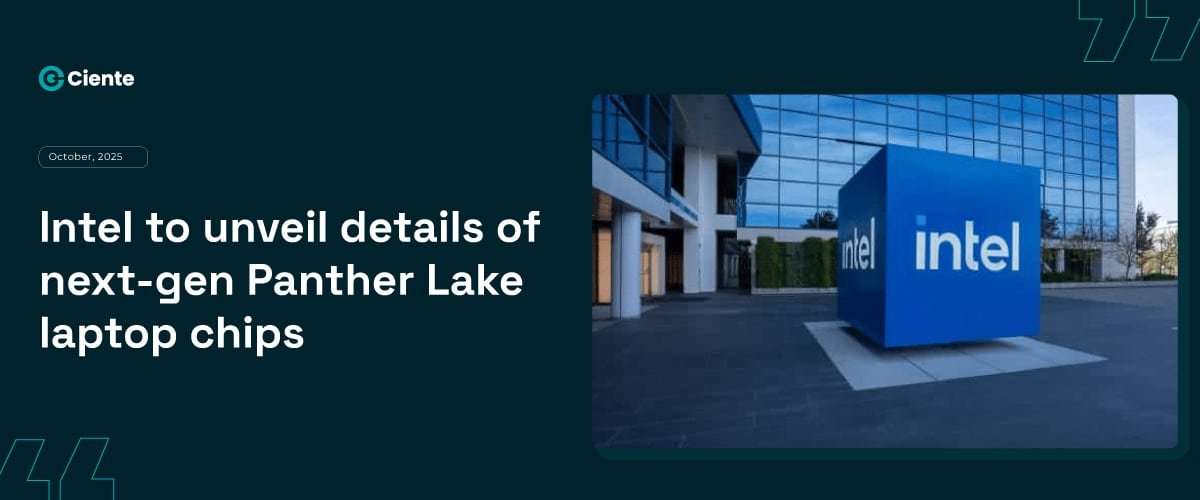
Intel to unveil details of next-gen Panther Lake laptop chips

Intel to unveil details of next-gen Panther Lake laptop chips

Chips. AI. Efficiency. The world seems to revolve around computational prowess. Yet Intel has been largely absent from these discussions- losing market share. Could this be their turning point?

Intel to unveil the next generation of the Lake chips, called the Panther Lake, their codename for Core Ultra Series 3 mobile processors.

This processor promises up to 30% less power consumption and will have Intel Arc Xe³ integrated graphics. However, is this salvation for Intel and an opportunity for growth? Ever since it announced a partnership with Nvidia, Intel has been the object of speculation for many.

Where does the company go?

Intel has lost market share to AMD and Nvidia. Then there was the capital injection from the SoftBank group and the US government’s buy-in of a 10% stake at $8.9bn. Intel has experienced a rocky road.

At one point, it was the chip maker. Intel’s i3 to i7 processors were the best in the market. Macs, Dell Latitudes, and hardcore gaming PCs all had Intel chips.

Intel inside, went the historic copy. But no empire can stand forever. AMD and Nvidia have outpaced Intel by a huge margin- why?

Many critics point out that it’s because they did not capitalize on the AI hype. But perhaps the reasons go deeper.

According to Reuters’ report from 07th August, 2025, Intel has been struggling to launch its next-gen because of manufacturing struggles.

Intel has been facing an uphill battle with changing processes, leadership, and accusations that its CEO, Lip-Bu Tan, allegedly works for China. But the tech world has been waiting for Intel to succeed. The company that once became a household name might fall into obscurity.

But that would be a tragic day. For it was known for innovation and bringing the computer to each household. Without Intel, maybe the proliferation of this tech wouldn’t be possible. Yet, the future seems uncertain.

Let’s hope the Panther Lake proves to be an advantage and not just “another competitor” to AMD’s and Apple’s line of chips.

WhatsApp Tests Out Cool New Feature to Amp Up Chatting with Status Questions

WhatsApp Tests New Status Questions Feature – Ciente

WhatsApp Tests New Status Questions Feature – Ciente

WhatsApp is testing a new interactive feature. Could it become a fun conversation starter or end up as another clunky addition to existing features?

The amount of time we spend on digital screens has replaced what humans crave the most- community. The digitization of almost everything has contributed to elevated loneliness rates.

And no amount of advanced AI models can cure this human need. But the tech industry is finding new ways to capitalize on this aspect.

From Instagram Stories to Tweets, everyone wishes to be part of a conversation, even if they’re taking part in it through a screen. If Threads, Reels, Subreddits, and of course, the algorithm that drives all these features.

This false sense of community has become the social currency of today.

WhatsApp’s latest feature (in its testing period), Status Questions, is a part of this ruse.

The tech leaders and innovators are filling the gap that they’re taking away from us.

First, WhatsApp was launched as merely a communication app, one that brought people close from across countries, states, and cities. It was a logical way forward- quite easily forward-thinking.

Then, as more and more competitors started to show up, it wished to stand out. The differentiator? Now, you can chat with businesses, Status Updates, Topic-Based Channels, and Communities.

With the latest interactive feature, Status Questions, users can add ‘question boxes’ on any video or picture people post to their status updates. But what exactly is the purpose?

Again, it’s engaging conversations. To kickstart conversations where you can’t simply pose a question or answer someone else’s question. You can only post a single question at a time, and all the responses appear in a single section that the poster is privy to. And even if the answer is shared publicly on the status, then the messenger’s identity remains anonymous.

The point is simple- to make WhatsApp conversations and connections dynamic and fun.

This comes after Meta had introduced a Payments option. Although limited in its capabilities in relation to its digital payments rivals, Indians are actively using the feature.

Maybe indicating that this Status Questions feature wouldn’t contribute much to the existing user demographic is jumping the gun. It could be a small part of making chatting fun again.

For now, it’s merely available to beta testers, with a stable release planned for Android users sometime next week.