Timeless Marketing Principles: What is Roadshow Marketing?

Roadshow Events and Marketing Benefits: Getting into the Nuance

Roadshow Events and Marketing Benefits: Getting into the Nuance

Roadshow marketing benefits fuse experience and conversion, revealing why presence, not persuasion, drives modern brand growth.

Here’s what separates roadshow marketing from almost every other strategy in modern business: it’s the only one where the experience and the sales act are the same thing.

In most marketing, you spend endless energy constructing an experience to lead to a transaction. The customer sees an ad, reads a case study, books a demo, and only after this chain of steps comes the possibility of purchase.

The experience is a prelude to the sale.

But in a roadshow, the experience is the sale.

By walking into the event, by choosing to interact, a person has already taken the first step toward conversion. They’ve invested time, which is a more powerful signal than a click. They’ve engaged directly, imagined themselves using your product, and now only the logistics of the sale remain.

That’s why conversion rates at roadshows often look surreal compared to digital channels.

You’re not trying to convince someone to care. They already do. You’re not pulling attention from a dozen tabs- you already have their full attention.

In this space, the representative’s job isn’t to sell. It’s to confirm what the prospect already believes but hasn’t said aloud: “I think this might be right for me.”

That’s the real benefit here- roadshows collapse the space between interest and purchase. Every other marketing tactic fights for that gap. Roadshows eliminate it.

And the economics follow. When you’re no longer paying to reach people who might have a problem, but instead reaching those who’ve already recognized it, your cost per acquisition stops being a fight. You’re not lighting matches in the wind. You’re walking into a room that’s already warm.

The Brand Resilience That Roadshow Marketing Benefits Create

There’s another layer most marketers overlook. It’s not just about conversions. It’s about fortifying your brand’s spine.

When your brand exists purely online, it’s at the mercy of the system it inhabits. One algorithmic shift, one policy update, one server crash, and your presence disappears. Your entire pipeline sits behind someone else’s gate.

But the moment your brand takes physical shape when people stand before your booth, touch your hardware, test your software, or watch a rep explain it with actual conviction, the perception shifts. Your brand acquires mass. It stops being an avatar and starts being a fact.

That presence builds brand resilience.

People remember what they’ve experienced, not what they’ve scrolled past. When a brand exists in memory as something tangible, it becomes resistant to competitive attacks and digital volatility. If a platform bans you tomorrow, the people who met you in person will still recall that experience.

And that’s not a marketing trick, it’s psychological architecture. The human brain treats physical experiences as proof. For high-ticket or high-risk categories, that’s everything. When a prospect sees your product live, your willingness to show up becomes its own statement of confidence:

We’re not hiding behind filters. We’re right here. Test us.

You can’t fake that. And that’s why roadshows build not just awareness, but credibility that compounds.

Roadshow Marketing Benefits for Demand Generation

Most marketers treat roadshows as a tool for closing deals. That’s only half the truth. Roadshows are also demand creation engines.

They don’t just convert existing interest; they manufacture it.

Picture this: a prospect vaguely feels there’s a problem somewhere in their workflow. It’s background noise, not an urgent need. They’re not searching for solutions right now. But they walk into your roadshow and watch a live demo. They see someone like them explaining how the same pain point was solved. Suddenly, that vague discomfort crystallizes into a defined need.

That’s demand creation in its purest form.

In digital, you’re trying to pull people into the funnel. In roadshows, they build the funnel around themselves.

And here’s where it gets even more stronger because the roadshow experience imprints. That person might not purchase that day, or even that month. But they go home remembering you. They mention you at work. They look you up weeks later. You’ve become the mental shortcut for a category of problems they now take seriously.

That’s long-tail intent, the kind that no retargeting ad can replicate.

Hence, when you think about roadshow marketing benefits, think beyond immediate sales metrics. Think about the sustained velocity it creates, the steady hum of qualified awareness that echoes long after the tents are packed up.

That’s what separates roadshows from every other “activation.” They don’t just generate demand. They redefine its timeline.

The Intelligence You Gain From Roadshows Is Fundamentally Different

Let’s talk about the kind of intelligence roadshows produce because most marketers underestimate it.

People say roadshows deliver “real-time feedback.” Sure. But that’s the shallow read. The truth is that they offer unfiltered human intelligence, the kind algorithms can’t touch.

When someone fills out a feedback form or replies to a survey, they’re performing. They’re editing their thoughts, shaping their words to fit what seems appropriate. But in a live setting, when they hold your product, frown, and ask a question, they’re showing you raw cognition.

That’s the data goldmine.

You don’t just learn what’s confusing, you understand why it’s confusing. You see what assumption was brought into the interaction, what expectation they carried, and where your messaging or product missed that mark.

A UX analyst staring at heatmaps sees where users drop off. A rep at a roadshow watches how their mind gives up what frustrates them, when they sigh, when they smile, when their curiosity reignites.

That’s not data. That’s understanding.

When your product team feeds off that kind of learning, evolution accelerates. You stop designing from abstraction and start from contact. That’s the difference between improvement and insight.

So yes, feedback is one of the roadshow marketing benefits. But more than that, it’s empathic telemetry. It tells you not just what works, but how people feel while it works.

How Roadshow Marketing Benefits Differ From That of Trade Shows and Pop-Ups

It’s tempting to lump roadshows in with trade shows or pop-ups. They all involve real-world engagement.

But the difference isn’t cosmetic, it’s structural.

Trade shows are stationary. People come to them if it’s convenient. Pop-ups are temporary. You discover them by accident or through social promotion.

Roadshows are neither. They’re peripatetic by design; they go to the audience instead of waiting for the audience to come to them.

That shift changes the entire psychology of attendance. When you remove the travel, cost, or inconvenience barrier, you’re no longer asking for commitment; you’re rewarding curiosity.

And the magic is in repetition. A trade show is a one-off. A roadshow spans cities and weeks. By the time you reach your fifth destination, word has already spread. People are waiting. They’ve heard. They’ve seen snippets online.

That creates what I call geographic momentum. Your brand starts to feel like it’s everywhere, not in an aggressive, ad-saturated way, but as a quiet, consistent presence moving through space and conversation.

That’s why ROI looks different here. You’re not buying impressions; you’re creating memories. Each stop isn’t just an event; it’s a conversion node in motion.

And the more you move, the stronger the network of anticipation becomes.

Three Hidden Dimensions of Roadshow Marketing Benefits

Underneath all these tactical outcomes lies something nuanced, the human architecture that makes roadshows work when everything else feels transactional.

There are three dimensions digital marketing can’t replicate: behavioral verification, emotional receptivity, and memory architecture.

Behavioral Verification

Online, skepticism is the default. People read your copy, watch your demo video, scan testimonials, and doubt lingers: Is this real?

The internet taught us to question everything. We’ve all bought something that looked better in ads than in life.

A roadshow neutralizes that doubt. Not through persuasion, but through verification. When someone sees your product function live, touches it, tests it, the skepticism doesn’t vanish; it transforms. It becomes something testable.

That’s the first real conversion moment: when belief moves from abstract to physical.

Emotional Receptivity

Digital marketing interrupts. It hits people mid-scroll, mid-task, mid-life. They’re not open, they’re distracted.

But when someone walks into a roadshow, they’ve chosen to be there. That choice shifts their emotional state. They’re not scrolling; they’re present. They’ve traded time for attention, and time is the rarest currency we have.

In that space, you’re not forcing attention; you’re earning connection.

Memory Architecture

Ads disappear in seconds. Physical experiences don’t.

A roadshow creates a sensory memory: the lighting, the sound, the conversation, the smell of coffee in the air, the unexpected joke your rep cracked. Those details anchor memory.

Later, when someone thinks about your brand, they’re not recalling a headline. They’re recalling a moment. And that moment carries an emotional texture, the kind that algorithms can’t simulate.

That’s why roadshow marketing benefits compound. You’re not creating impressions. You’re creating impressions of experience.

The Real Reason Physical Brand Presence Converts

Digital marketing has become the default operating system for growth. We’ve optimized it so hard, with segmentation, automation, and machine learning, that it’s starting to eat its own meaning. Everyone’s message feels the same. Everyone’s promise sounds rehearsed.

Then came the correction. Brands started going back out- taking the product on the road again. And conversion numbers began to recover not because technology got better, but because presence returned.

Roadshows remind us of something forgotten: trust isn’t built in pixels. It’s built in proximity.

Standing across from a human being creates accountability that no performance dashboard can replace. You can’t fake tone. You can’t hide behind scheduling tools. You show up or you don’t.

That’s the heart of it.

The reason roadshow marketing benefits matter today isn’t nostalgia for offline life. It’s about rebalancing belief. In a world oversaturated with digital promises, roadshows prove that real still wins.

They convert because they restore what marketing once knew but forgot in the automation race:

Presence is persuasion.
What is Roadshow Marketing?

Timeless Marketing Principles: What is Roadshow Marketing?

Timeless Marketing Principles: What is Roadshow Marketing?

Digital marketing is making marketers complacent. The ease of reaching new buyers and markets is so enticing that marketers have forgotten that promotion doesn’t just happen online.

It is built with a physical presence, too. And this type of promotion lingers in the buyer’s mind.

Roadshow marketing has been a timeless way of capturing the buyers’ attention. Perhaps it was the precursor to OOH. But the path of least resistance always wins over the more difficult methods. And this is difficult- gaining attention out in the wild and staying on course.

But what exactly is roadshow marketing, and is it all just a gimmick? Maybe it’s better to stay digital and stick to channels that work- and for the rest, there’s always hosting events.

Isn’t Roadshow also just hosting an event?

Yes, but roadshow forces the Rockstar in you. Forces you to navigate changing landscapes and reactions in real-time, across geographies.

Wow, that’s a mouthful.

So let’s get to it and explain what roadshow marketing is and where it stands. Spoilers: It might be a really good way to capture awareness through word-of-mouth. But you have to display the event at the right place and time, quite literally.

What is Roadshow Marketing?

Roadshow marketing is exactly what it seems, an event, hosted on the road in various locations.

It’s a tour.

A tour that grabs the attention of the people in all the right ways.

But let’s illustrate with a story to grab your attention.

Let’s get our attention to a time when screens did not exist. How did organizations market themselves? Word-of-mouth played a vital role, but so did moving from city to city. Why?

It got people talking. Imagine your cousin and you, living in different cities, talking about the same vendor. That must have been so exciting. To bond over a shared event or experience, whatever that may be.

That is roadshow marketing in its truest essence. To create a network of awareness across cities. It can be done globally, too. Provided the marketers in question have all the legal documents to do so.

The legality of a roadshow event

It goes without saying, but you need to get the correct permits for all roadshow events. Even one mishap on the road or at the venue is grounds for legal action. It’s better to be covered than risk it.

And it is this step that makes roadshows such a challenge, the legality and bureaucracy of it all.

Imagine doing this across your target cities and areas; this might be a hassle.

Plus, you will be dealing with two questions:

  1. Is this worth it?
  2. What if you don’t get the permission to execute it?

These are valid questions you must ask before executing the event.

Market research of your audience and their habits, and research about the area where the experience will be scheduled, will be your guiding star.

What does a roadshow event look like?

With this part, let’s run a few scenarios that will help you understand every piece of the roadshow puzzle.

First, our pieces:

  1. Legalities
  2. Market Research on audience habits
  3. Area Research
  4. Execution
  5. Audience Response

Based on your event, these pieces will take on different forms. But let’s run by them and understand what each of them means.

1. Legalities

There’s no need to rehash this one. But it does need to be repeated for impact- don’t miss this part, please.

Get the permits. And although we don’t condone it, if legalities take too much time, find loopholes, like Salesforce did. Their salesforce vs Sibel protest, although staged, was protected by protesters’ rights. But that is the United States; people in other countries need to figure out what they need to do.

Safeguard yourself.

2. Area Research

Area research is easy; this includes knowing where your event or experience will be hosted and what the peak hours are.

  1. Does your intended audience visit this area?
  2. What’s the history of the area? Because, of course, you don’t want to do something tasteless.
  3. Where can you get maximum visibility?
  4. What are the surroundings like?

3. Market Research on audience habits

This one, on the other hand, is a bit complex. It involves knowing when your audience actually visits the area you have decided upon.

This might include knowing which coffee shop or lunch shop a certain segment enjoys because those do exist. This way, you can partner with other outlets for a better experience. Or knowing what their timings are for frequenting certain areas.

And third, if they are open to your experience. Because if they think you are invading, that is not going to look good on a sales call.

4. Execution

Execution is where you make or break the event. The execution is where the experience can go from memorable to forgetful. Cringe or worthwhile.

  1. Is it valuable for your audience to stop and enjoy your event?
  2. What is the crux of the event, and what actions do you want your audience to take?
  3. Can you run a pilot program in your own turf?
  4. What is the reason behind the roadshow beyond awareness, if any?

5. Audience Response

Okay, maybe this is actually the real make-or-break. Even awkwardly executed events could be fun for people. It’s all about the charm of the person presenting it.

But what happens when the audience response is lukewarm at best and indifferent at worst?

  1. Just like marketing campaigns, this will require experimentation. And refinement. But the stakes are higher.

Roadshow marketing: Scenario 1

So what does this look like? Let’s run a scenario.

A B2B startup. “ConnectSphere.” They sell project management software, and they’re the underdog. Their main competitor, “TaskMaster,” is hosting a huge conference. ConnectSphere can’t afford a booth.

How do our five pieces fit?

  1. Legalities, they find a loophole. Instead of public permits, they rent a private lot across the street. It’s their space. No protest needed. Just a business license. Simple.
  2. Area Research: They know the terrain. They know where attendees enter and where they exit for lunch. They plant themselves right on that path.
  3. Market Research on audience habits: What do they know about the people? They’re tired. They’ve been in meetings all day. Their phone battery is low. They despise a hard sell. But they want solutions.
  4. Execution: An Airstream trailer. They call it the “Productivity Oasis.” Inside? Good coffee, comfortable chairs, and charging stations. The team isn’t selling; they’re hosting. A short demo plays on a screen, directly comparing them to TaskMaster. The only ask is a QR code scan for a free trial.
  5. Audience Response: It works. Of course, it works. People want a break. They want coffee. The non-sales vibe is a relief. They see the demo, and the confidence is intriguing. A buzz starts. They didn’t just crash the conference; they offered something better next door.

Roadshow marketing: Scenario 2

Now, a consumer brand. “Aura.” A new, eco-friendly energy drink.

  1. Legalities: A total minefield. Food and beverage permits for everyone. Single. Location. It’s a bureaucratic nightmare. But it’s not optional. You do the work or you go home.
  2. Area Research: They map a tour. Where do their people go? City parks, farmers’ markets, music festivals, and college campuses. They don’t wait for the audience; they go to them.
  3. Market Research on audience habits. The audience is on TikTok. They value authenticity. They can spot a fake a mile away. They are open to new things when they’re relaxed and having fun, not when an ad is screaming at them.
  4. Execution: A custom, solar-powered tricycle. It looks good. It’s an Instagram prop waiting to happen. They hand out chilled samples in compostable cups. The call to action is built for social media: “Post a photo, tag us, win a year’s supply.”
  5. Audience Response: A home run. The tricycle is different. It’s a story. They generate a flood of user content. You’ve just made your first customers your new marketing department.

So, Is It Worth It?

This brings us back to the real question. After the permits, the logistics, the sheer effort—is it worth it?

A roadshow isn’t just an event. It’s a deliberate move to forge a physical connection in a world oversaturated with digital noise. It’s an experience.

It forces you to answer the questions that matter.

  1. Where are our people, physically?
  2. What do they actually value in that moment?
  3. How can we make their day better, even for a minute?

The digital path is easier. It’s the path of least resistance. But that’s the problem. Everyone is on it. The potential of a roadshow is on another level entirely. It doesn’t create metrics; it creates memories. It creates stories.

And a good story is the only marketing that’s left.

It’s the difference between seeing an ad and being handed a cold drink by a friendly face on a hot day. One is an interruption. The other is a connection.

So while everyone else is hacking algorithms, maybe it’s time to remember the power of the pavement. The hard road often leads to the best places. The only question is if you’re willing to make the trip.

Roadshow Marketing Strategy

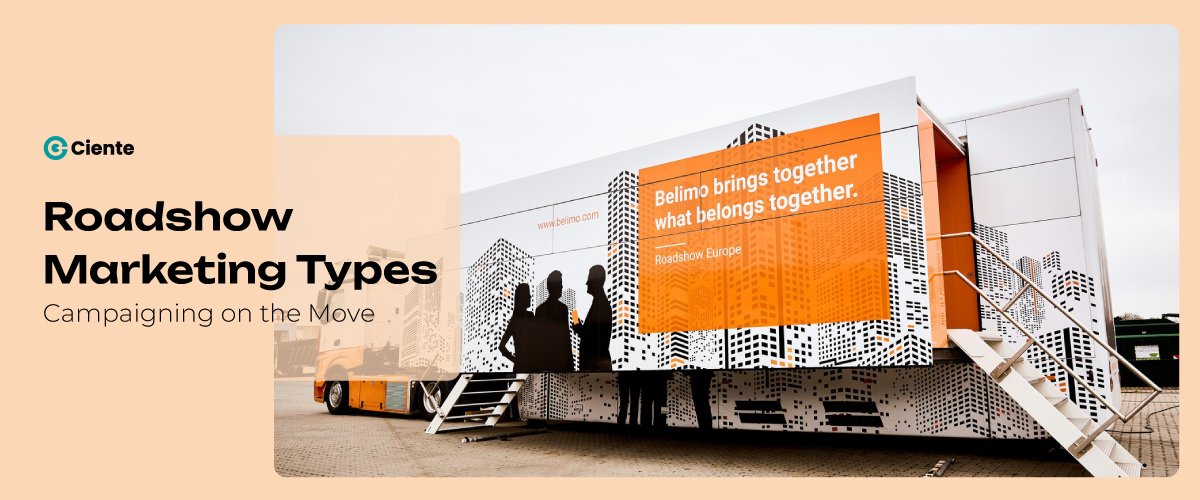
Roadshow Marketing Types: Campaigning on the Move

Roadshow Marketing Types: Campaigning on the Move

Versatile, effective roadshow marketing demands an innovative strategy. Could integrating different roadshow marketing types do the trick?

Your digital channels deliver impact and visibility, but they’re no longer the goldmine marketers incessantly believe them to be. Every marketer is aware of the influence digital presence creates- it’s now only about doing it right. Because honestly, everyone’s doing it.

This has shrouded all of marketing under a cloak of sameness. How do you choose- who do you partner with? Which brand’s solution do you use? Why is your brand worth investing in, and not your competitor?

Your brand voice is diluting amidst this market noise of sameness, or rather, one-ness.

If your brand can’t deliver a disruptive product, what can you actually deliver? A disruptive experience.

In a market landscape where every team is operating on a deadline and a budget, what could be this boisterous medium?

Roadshow marketing.

What is Roadshow Marketing?

The concept is exactly as it sounds. It’s a mobile experience that builds upon traditional marketing and advertising.

This is precisely what roadshow marketing is all about.

It’s a live and dynamic marketing approach that typically includes your brand’s top management touring different geographical locations to meet potential partners, investors, and buyers.

The fast pace of the digital-first world has every individual and business stuck in a loop-

Impact demands reach. How do you make yourself visible to those who could invest in your growth?

This is a never-ending conundrum. And it is directly linked to the deficiency of attention and loyalty- two rare currencies for marketers today.

So, instead of waiting for the buyers and investors to show up at your doorstep, you step across their threshold. You actually meet them where they are. And make reaching you easier for those who might be potentially interested in what you do and what you’ve to offer- your target audience.

Why Do You Think Roadshow Marketing Works?

Marketing isn’t as static as it looks from the outside. It isn’t about posting incessantly on social media, writing SEO-optimized blog posts, or writing collaterals for the sales team. Most of these marketing functions seem so mechanized and immobile.

But there’s another facet that fits as the final missing puzzle piece.

Digital engagement mostly ranges from likes and comments to webinars and online workshops. It has also come to comprise Zoom calls, but there’s still a lack of direct engagement. This limits exposure and constrains the brand’s control over how it is actually perceived by its audience.

Roadshow marketing gives the brands their control back.

Brands interact with potential customers on the ground by targeting areas with the highest footfall. The logic?

Elevated face-to-face engagement instills heightened trust and brand reliability. This removes the skepticism buyers may have while choosing you.

Your brand becomes a living entity, not a static logo on the screen.

This is what event marketing has also become more experiential. Marketing cannot be a one-way broadcast. It must be a strategic conversation.

And roadshow marketing is precisely this.

Businesses can set up shop in public spaces or rooms crowded with their ICPs. This way, your brand receives more exposure and visibility, which ultimately elevates recognition and brand recall.

However, there’s a significant limitation that professionals often cite- not all brands looking into roadshow campaigning can afford to penetrate every major city or hub. Hence, these roadshow events mostly cater to large market segments. It’s the only practical way, they assume.

What if it’s not?

Brand Presentations on the Road: Outlining Different Roadshow Marketing Types

There are various types of roadshow marketing that cater to different purposes.

Whether it’s a budget problem or the need to achieve a specific goal, understanding the distinct roadshow marketing can help dispel any concerns. It eradicates the presumption that one size must fit all; not all roadshow events look the same. Or are organized for a single purpose.

You can choose a mobile pop-up experience for a broad audience segment. Or opt for an exclusive, static roadshow to establish your value framework to key investors.

Different roadshow marketing types don’t just serve distinct goals, but they engage audiences differently, offering unique experiences. Let’s spotlight what these types are and the purpose they serve.

Types of Roadshow Marketing to Elevate Your Campaigning

1. Product launch roadshows

As the name suggests, product launch roadshows are marketing events that help brands debut new products and solutions to the market. This ‘on-the-road’ activity creates a buzz for you, especially surrounding a new innovative product, and subsequently boosts its sales.

The buzz fills the audience with a sense of urgency- anticipation. They want to be the first ones to experience it and test it out. While it can’t always guarantee high sales, it does shed a whole lot of spotlight on you-

Drawing more traffic to the business’s website and social media.

It works like magic for your company’s brand awareness, skyrocketing its visibility. But it fosters an opportune learning moment.

Product launch roadshows build a value-centre.

As the audience engages with and experiences your product, you also get immediate feedback. There’s no additional data that you need to sift through or analyze any metrics to grasp the first impression of your product. You receive it in real-time.

Through live demonstrations designed for swift and first-hand experiences, these product launch roadshows act like feedback loops. And set the stage for further product developments- one that caters to customers’ actual needs and preferences.

Traditional product launch events v/s product launch roadshows

While the nitty-gritty can be the same, don’t confuse traditional product launch events with the roadshows.

Traditional product launch events depend on the buzz, from the exclusive, invite-only party to the press releases. They are high-end events that are organized in a single location. And aim to generate as much media coverage as possible.

Meanwhile, product launch roadshows are basically like travellers. A brand’s crew moves between multiple locations to cover diverse audience segments. The point is to set up shop with the maximum purchase potential possible.

Hence, the reach is quite broad- and more inclusive. With events open and free for the general public.

2. Brand awareness roadshows

Brand awareness roadshows don’t require a hyper-targeted approach. Because the crucial purpose is to elevate brand visibility and recognition, the two components of a comprehensive brand awareness strategy are.

It’s about penetrating today’s extremely crowded market to stand out and make the market aware of your existence.

And this is precisely what brand awareness roadshows help with.

To boost brand awareness, most brands promote through visual appeal.

Imagine a colorful truck with your logo, bathed in the same color palette. This travels from one location to another, adorned with bright, eye-catching visuals and one-liners that stay with the viewers.

Look at the Paytm example shown above.

The truck is decorated with its colors- white and blue. And has the logo plastered on it. This increases visual appeal and activates memory. And additionally, there’s a booth attached. Most of the time, there’s an engaging activity to trigger viewers’ actions, one that aligns with the brand’s messaging.

In this example, Paytm is launching its new ‘Scan QR code’ feature. Hence, the brand messaging on the truck asks the audience to try out its latest feature first-hand.

But that’s not all. Some brands even put up flash mobs, street performances, and interactive stalls to draw in the audience. They set up these events in a way that doesn’t necessarily sell any solutions, but caters to the customer’s experience- creating a fictional story that relates directly to the brand’s core values.

3. Educational roadshows

There are specific roadshow events that directly take on the theoretical aspects. There are a plethora of marketing pain points and challenges- the basics that most aren’t aware of. How’ll they dive right into the product when the surface-level basics aren’t clear enough?

Most of the population has the will to learn. And to educate themselves before they set forth to find what could cure their conundrum, they undertake in-depth research. One that would help them find the best solution possible and also help them learn how to apply it the best. This is applicable to every latest technological development.

There’s a new AI in the market, for example. You’re excited to integrate it into your current workflows, but do you understand the extent of its potentialities? Not quite.

This is where educational roadshows make a difference.

Several finance or even education-focused brands take this route. Rather than keeping forth the business’s services or offerings, they focus on the basics of who they are and why they are doing it.

For example, some volunteer organizations nail their entire objective to the why of what they’re doing for the communities. The same applies to blood donation drives. There’s a specific action that the business wants its viewers to take by educating them on why it’s necessary.

Literacy is the primary step in educational roadshow marketing.

4. Promotional roadshows

Promotional roadshows are all about promoting the brand through implicit experiences.

Think of lively fairs, music concerts, and exhibitions. Here, the brand sponsors the entire event and then leverages it as an opportunity to spotlight special offers, discounts, or any upcoming products.

Promotional roadshows are mostly about tying brand promotion with experiences. The audience doesn’t experience what the brand offers per se- they enjoy the curated event, from live games to contests. This creates a positive environment when the mind is least engaged or tied to any attention-needy task.

This is precisely what promotional roadshows build upon. The brands market these fairs first to attract a bigger section of the market. And take advantage of the crowd to highlight their promotional offers.

5. Experiential roadshows

Experiential roadshows are all about marketing through real-time experience. This specific type of roadshow can work wonders for tech companies for delivering a ‘new’ reality, something most of their solutions are often based on.

Just as new VR glasses or an innovative phone experience. They can curate an entire event based on what it’s like to use their tech products, especially the latest gadgets, compared to their competitors. It’s like stepping into a virtual reality, another world.

Experiential roadshows are all about creating a memory, a memorable experience that’s unforgettable. This is what most tech companies do with their expos and product launches as well. They amalgamate product launch, education, and promotion in a single roadshow-

To churn out a unique brand experience.

One that propels your brand to the top of mind, asserting much-needed credibility. Even if it’s a startup or a small business.

Roadshow marketing isn’t dead. It just requires an evolution.

Roadshow marketing is a highly creative and cost-efficient tactic. It’s been given minimal heed, owing to the popularization of digital marketing. If not into the core strategy, this face-to-face engagement technique must become an integral part of the sidelines.

There are so many audience segments that you cannot granularly penetrate- at least not from a distance. And most of the promotions that you curate for them are driven by intuition.

But with roadshow marketing, you don’t have to. You can take the show to your investors, partners, and potential buyers.

Think of the ad spend you could be saving, especially when you aren’t aware of how to penetrate a new market. Pivoting to organic, word-of-mouth marketing might add momentum to your campaigns.

It’s not just strategy, but marketing that transpires through excitement and meaningful experience.

Branding

Roadshow Marketing Strategy: The Lost Art of Presence

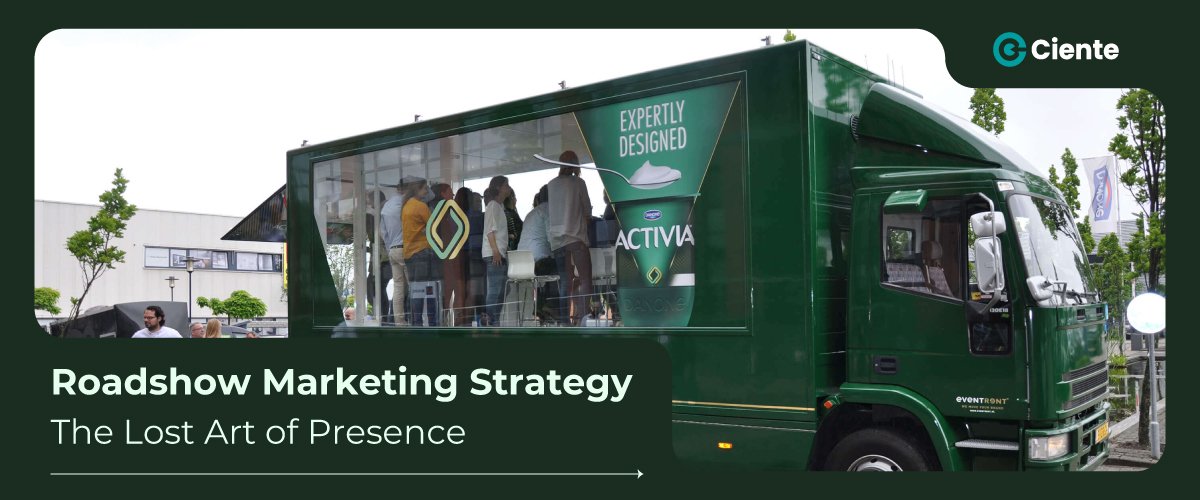
Roadshow Marketing Strategy: The Lost Art of Presence

Roadshow marketing is now about building human proximity in a digital-first world. The strategy that once moved stocks now moves trust- if you know what to fix.

Somewhere between marketing automation and performance dashboards, roadshows lost their magic. What began as a stage for conviction- leaders meeting markets, products meeting people slowly became a parade of predictable formats. A city checklist. A PowerPoint on wheels.

Every modern brand today seems to have rediscovered the “roadshow.” Yet, if you strip away the polish, most look the same. The same backdrops, the same speech scripts, the same applause loops that die the moment the stage lights fade.

A true roadshow isn’t about mobility. It’s about meaning. It’s not about being seen in ten cities; it’s about being felt in one room.

The irony is that marketers have turned something deeply human into something operational. We’ve optimized for efficiency when the whole point was intimacy. That’s why the next decade of roadshows will belong to brands that remember what this strategy was always meant to be: a moving belief system, not a moving booth.

Why Roadshow Marketing Still Matters

Showing up has become radical again.

Physical presence is today a differentiator, not the default. Digital has democratized reach, but also steamrolled resonance. People remember who stood in front of them- not who appeared on their feed.

The resurgence of roadshows isn’t nostalgia. It’s a necessity.

Why?

Because decision-makers are overwhelmed by incessant whitepapers, webinars, and virtual summits that all blur into one. But these walls come down when you meet someone face-to-face.

Conversations take a long breath. And context returns.

That’s what a roadshow really does. It collapses distance. The gap between perception and experience, between what a brand claims and what it feels like in person. It turns abstract trust into something tactile.

Think of it as a trust compounding mechanism.

Every handshake, every conversation, every localized story adds a layer to your brand’s credibility. That’s why roadshows haven’t vanished but evolved. They’ve moved from being promotional spectacles to becoming instruments of conviction.

The Real Roadshow Marketing Strategy Hiding Beneath the Event

The issue with most roadshows today isn’t execution, it’s architecture. The agenda looks full, but the strategy is hollow. They begin with logistics and end with social media recaps. You can sense it the moment you enter the room- every detail screams “planned,” yet nothing feels alive.

Here’s the uncomfortable truth: most roadshows confuse visibility for connection. They chase footfall instead of follow-through. They fill venues but fail to move markets.

A true roadshow strategy begins where campaigns end with clarity of purpose. Why are you going on the road? To showcase a product? To win investors? To realign perception? The format is secondary. The story is the strategy.

When the “why” is vague, the entire experience becomes ornamental. You can rent an LED wall and still not hold attention. But when the “why” is sharp, even a modest venue becomes magnetic. The alignment of story, audience, and intent- that’s the invisible scaffolding that holds every successful roadshow together.

Intent: The Missing Core of the Modern Roadshow Marketing Strategy

Marketers often treat roadshows as distribution channels for messages. But the best roadshows don’t distribute, but decode. They start with the intent of the audience, not the organizer’s intent.

Every city, every audience, every region holds a different kind of readiness. Some are there to learn more, and others are there to finalize a purchase. Some are skeptics, while others are believers who require a nudge.

If you fail to map this spectrum, your message misses the mark.

The same product demo that excites one market might alienate another. The same “vision talk” that inspires investors might bore channel partners. This is why intent mapping, i.e., understanding why your audience would attend in the first place, is the lost art of modern roadshows. Without it, all the data points and display screens in the world won’t create resonance.

When the roadshow becomes a mirror to the audience’s intent, the energy shifts. The room stops feeling like an audience. It starts feeling like an ecosystem.

Psychology of Presence: The Heart of Your Roadshow Marketing Strategy

There’s something primal about showing up. You can’t fake presence. You can’t outsource charisma. In a digital-first world, presence itself becomes proof of confidence, of conviction, of continuity.

This is what most best-practice blogs miss.

They’ll tell you how to choose venues, manage logistics, or design itineraries. But none of that matters if your brand’s psychological posture is off. The subtext of a roadshow isn’t “we’re selling something.” It’s “we believe enough in this to carry it on our backs.”

That’s why the most memorable roadshows don’t feel like campaigns but like movements. They create symbolic gravity. People don’t just remember what you said; they remember how the room felt. They remember the tone of belief that hung in the air.

And that’s the thing- roadshows don’t just move products; they move meaning. They tell the market that you’re willing to meet it halfway. That’s a gesture algorithms can’t replicate.

What the Usual Roadshow Marketing Playbooks Don’t Tell You

If you read most blogs on roadshow marketing, you’ll notice a pattern: they obsess over movement, not meaning. Routes, cities, vehicles, booths.

It’s not strategy, but logistics.

But no one tells you that the actual power of a roadshow lies in what happens between the sessions in the corridors and over coffee breaks. Those unplanned moments when hierarchy dissolves and people talk like humans again.

Those breaks are where trust compounds.

Most brands try to fill every minute of the agenda. The great ones leave room for silence, for serendipity, for participants to breathe and connect. Because in those gaps, relationships form. Deals are seeded. Stories are shared.

And that’s what’s missing from every best-practice guide- sometimes, it’s the unscripted that converts. The unpolished moment is what people remember when they think of your brand later.

The New Architecture of Roadshow Marketing Strategy

Let’s strip it down. Every effective roadshow now operates on four invisible pillars: purpose, presence, proximity, and proof:

  1. Purpose defines the why- your guiding narrative.
  2. Presence defines how your physical and emotional expression is in space.
  3. Proximity defines the who- your distance to the audience’s intent.
  4. Proof defines what’s next- the evidence that what you promised, you’ll deliver.

Purpose keeps you from becoming another touring campaign. Presence reminds you that this is performance, not presentation. Proximity ensures the message lands where it matters. Proof converts belief into business.

This is what modern roadshows get right. They don’t think in terms of venues or cities; they think in terms of states of belief. Each stop is not a location but a layer of conviction.

The roadshow becomes an organism that learns and evolves as it moves. The first event informs the next. The questions in Mumbai reshape the answers in Singapore. The feedback from Paris reframes the pitch in London. That’s how it should be

Adaptive, alive, compounding.

The Roadshow Event Ideas: Ideas that Travel

When people ask for “roadshow event ideas,” they often expect checklists. But a great roadshow doesn’t start with ideas; it ends with them. The best formats emerge naturally from clarity of intent.

Still, there are unique experiments. Some brands are breaking the mold with smaller, deeper gatherings, roundtable sessions in coworking spaces rather than hotels. Others are fusing art and enterprise, i.e., immersive installations that tell stories instead of selling products.

There are also hybrid innovators- roadshows that stream live, yet leverage local AR activations to ground the digital experience in physical reality. Imagine an investor presentation where the numbers appear on the walls as you walk through, or a product demo that doubles as a sensory exhibition.

The point isn’t extravagance. It’s resonance.

Roadshow marketing boils down to what you make people feel about what they already know.

What’s the ROI from Roadshow Marketing?

Marketers, understandably, crave metrics. They want conversion rates, lead counts, and engagement graphs. But presence doesn’t fit neatly into a spreadsheet.

How do you quantify a handshake that led to a partnership six months later? Or the confidence that investors gain when they see leadership own a room? The ROI of roadshows operates on a different clock. It’s slower, subtler, and infinitely more durable.

The better metric isn’t “leads generated.” It’s “trust velocity.” How quickly did your narrative move from awareness to alignment? How many people repeated your story after you left town? That’s how resonance is measured, not by clicks, but by echoes.

If you design a roadshow purely for data capture, you’ll get numbers but lose momentum. But if you design it for human recall, you’ll get both: stories that travel faster than your campaign budget ever could.

Reframing the Future of Roadshow Marketing Strategies

We live in a paradox: technology has brought everyone closer yet made connections shallower. The brands that will thrive are the ones that return to presence as a strategy. Not nostalgia, but necessity.

The roadshow is no longer a relic of old-school marketing. It’s the most future-proof antidote to digital detachment. Because at the end, algorithms can optimize reach, but not resonance.

You can automate emails. You can personalize content. But what you can’t do is automate charisma, or even the courage to stand in front of people and say- “here’s what we believe.”

Roadshow marketing’s future belongs to brands that show up with clarity, not noise. Who treat every stop not as a campaign leg, but as a moment of truth. Who understands that presence isn’t an activity but a signal.

And in a world drowning in noise, that signal still travels farther than any ad ever will.

10 Steps to Master Lead Generation for B2B Event Marketers

10 Steps to Master Lead Generation for B2B Event Marketers

10 Steps to Master Lead Generation for B2B Event Marketers

Irrespective of a virtual or an offline event, converting attendees into leads is the ultimate intent. But how can you accomplish that in an era of omnichannel marketing?

A lot goes into an event, from vigorous planning, investing, and resources to managing expectations. You work hard organizing an ideal event, deciding the location, shortlisting the attendees, and putting everything together. When the day finally arrives, you eagerly check the registration desk, keeping an eye on the number of event lead.

But here is the thing. Even if you have a large turnout, it doesn’t mean they will convert into leads. There could be scenarios when you have a good turnout, yet no lead conversion!

And there could be several reasons for this. Let’s not forget event lead generation is a critical aspect of an event marketing program. What’s important is to identify ways to convert the attendees into leads. In this article, we will cover all the essential pointers that will help you ace your next event and bag those target accounts.

How Event Marketing Fuels B2B Lead Generation?

85 % of B2B marketers depend on lead generation to grow their client network. Event marketing can pave the way for attracting more clients to your business. The main agenda behind planning events like conventions, trade shows, and product demos is to connect with your customer base and acquire event leads. It also allows you to showcase your brand expertise and how you will resolve audience pain points.  Here’s how hosting events can benefit your business.

Enhances Communication with Prospects

When you speak to your audience through virtual communication or in-person events, it enables them to put a face to the brand. Direct interaction strengthens the bond between customers and your brand. It’s far more effective than them reading a blog or post about your brand. Presentations are also a means to engage with the audience and involve their views and opinions. It allows a free flow of conversations and provides scope to address their questions.

Attracts clients through word of mouth

Audience engagement on social media and at the event can be measured with metrics but how will you know the customer’s perception of your brand? Word-of-mouth can increase audience reach, and the way to go is to launch an event that generates a response. You can also find bloggers who would write about your brand or a particular event. If people like the events and connect with your brand, they will talk to others, bringing you more customers. The more people talk about your brand, the more leads you generate.

Online Events for Event Lead Generation 

A hybrid or virtual event usually attracts a broad client network, increasing your chance of acquiring more leads. It opens up opportunities to get a global audience miles away from your location. What gives these an added advantage is you can record them. You can share glimpses of the recording on your social media. The entire webinar video could be available on your website for users to subscribe and download. In this way, you increase your outreach.

Event Lead Generation Strategies

While organizing/attending an event, you must be proactive throughout the event lifecycle. Whether you are hosting a webinar or an offline event, it’s vital to act.

Focus on identifying the high-value accounts and implement these steps to get them on board.

1. Networking

We cannot emphasize the word ‘network’.

You have organized an event, and the attendees have shown up. Talk to them, connect, understand them better, and mention key features of your brand. When you interact with prospects, you develop strong relationships with the potential to convert into leads.

Exchanging contact details creates a bridge for an interested clientele to reach out to your brand.

2. Performing lead scoring on-site

We know you would be crunched for time, checking the attendee list and making sure all is perfect. But without a lead score, the event is less likely to give you the desired outcomes.

The best way is to start scoring leads right after you talk to the prospects. You can build a system that makes it easier for you to track the conversations and the list of priority prospects.Then, you can assign each customer a score out of 10, a higher score representing a high interest in doing business with you and vice versa.

3. Take Notes

Lead qualification can seem cumbersome, especially if sales reps don’t add any lead context.

What often happens is that the sales rep of the event and the account executive who contacts prospects later are different people. This is why it is a good idea to maintain notes for each lead captured.

It could also be used as a reference sheet for others to follow up with prospects.

4. Social Media Marketing

The world has gone digital, and social media is no exception. Before launching an event, create a social media presence. Once the event is wrapped up, you can promote the highlights or live streams on channels your prospects frequent.

After an event, reach out to them through messages on social. Such prompt actions can drive more organic leads.

5. Referral Marketing

This approach relies on the network of existing customers and their credibility to attract new ones. Do not hesitate about the idea of asking prospects to put in a few good words for your business to their colleagues and contacts.

A referral can enhance brand awareness and improve the probability of closing deals.

6. Share relevant information

While talking to your prospects, shelling out general information about your business may not get you far. The objective is to convey how your business will address their concerns and why they should preferably choose your offerings.

When preparing the list of invitees, research the clientele and keep some key points at hand. Include some of these in the event presentation or brief.

When prospects can resonate with your brand, it shifts their perspective on the business, promoting the sales cycle.

7. Use Sales Enablement Tools

Interactive content like brochures videos or podcasts highlighting features about the company can be a great tool for lead capture. What you cannot communicate through conversations, such content does so in your favor.

Videos and podcasts can explain the offerings more engagingly. The sales reps should always have relevant resources at hand. You could also arrange for a screen displaying the features of the brand. Visual content can create a lasting impact on the clients, promoting brand authority

8. Conduct performance analysis

While using event strategy as a part of your marketing plan, allot time and resources toward performance analysis. Track the responses you received on social media and the website engagement.

And maintain a record of the engagement, including audience queries, and evaluate the statistics. This will give you enough data to plan your strategy forward from there.

9. Follow-up with Event Leads

Following up with a lead after the event will act as a catalyst for lead generation.

It is equally important as the event itself, and you must make the most of it. But promptness is a must-have when it comes to following up; any delay would dilute the purpose.

Follow-up emails are an opportunity to share additional resources, links, and any relevant data that would strengthen the brand image.

10. Always have a Plan B in your Pocket

An event can bring a mix of outcomes.

It can all swing in your favor, or there may be surprises. For instance, the high-value prospect you were looking forward to closing a deal with may decide not to attend the event. Or you may experience a smaller turnout than expected.

A backup plan will help you in such circumstances. Instead of relying on plan A, design a solid contingency plan to come out strongly irrespective of the event outcomes. It could be as simple as emailing the target prospects and sending them a link to the event.

Best Types of Events to Generate High-Quality Leads

A B2B event only comes to fruition if it’s organized and run with a purpose in mind. What is the goal of the specific event you’re organizing? Are you building brand awareness or hoping to generate high-quality leads?

The brand’s overall objective is what your event’s success boils down to. Because every event you organize is aimed at extracting a single outcome. Once you’ve an intent in mind, that’s where you begin with organizing your B2B events for lead generation.

But which type of events will actually help you collate high-quality, intent-driven leads? Choosing the right stage for your brand matters.

Here are some of the event formats that can reap wonders for your B2B lead gen strategy-

1. Conferences

Conferences are the norm and the cliché of the business world. But only because they actually work wonders for your brand.

It’s an elaborate event that brings together business leaders, thought leaders, and industry professionals under a single roof. Imagine the extent to which you’re introducing your brand, targeting the crème de la crème of the business world.

Not only can you network and build relationships, but you can also host panel discussions to exchange opinions. It’s a great way to position yourself as a subject-matter expert in front of other experts.

But for effective lead gen, you can’t just exchange business cards. Cards are often lost, and don’t hold much substance. But a lead capture app might do the trick, only after you’ve discerned who fits your ICP.

When you scan the attendees’ badges or business cards, you already receive a stacked and organized list of leads you’ve captured. They can be segmented according to their need level- from cold to urgent, such that they are acted upon as soon as possible.

Once done, you can outline what sort of partnership this could turn out to be. And whether the lead has the wavelength for a meeting to discuss potential sales.

2. Networking Events

Networking events take place in a professional setting, but they make space for socializing. There’s not a rigid schedule, such as a conference, where business leaders must move from one discussion to another.

Networking events are more flexible and casual. Think of cocktail dinners or speed networking events- the goal is always to build relationships and familiarity, and convert these into leads.

But according to the time and agenda, most marketers opt for quantity over quality. That’s not what will get you those conversions.

Focus on the quality. Don’t just stand there collecting as many business cards as possible. What’s the point if none of them remember who you are? So, pivot to making meaningful conversations. Listen to others, grasp their pain point, especially in the light of current market disruptions.

Start with a specific theme that’s common to both parties, or leverage icebreakers. Instill humor. And know the person in front of you; don’t sit down to discuss business.

Networking skills that work always equate to memorable experiences.

3. Online Workshops

Connecting with everyone at the base level, and specifically face-to-face, isn’t quite possible. But digitization has afforded us the means to reach audiences even on the other side of the globe.

Online workshops and training are the best way to do so for B2B businesses. Over 73% of marketers say that webinars are the most cost-effective means of generating high-quality leads.

And they work as a double-edged sword. These sessions don’t just offer you the advantage of creating awareness, but also position your brand as a credible authority.

To effectively capture intent-driven leads, you must clearly illustrate your intent. Begin here- with robust and strategic event promotion.

Tap into your social media, email marketing campaigns, and existing partnerships to reach as many people as possible. And then incentivize registration by offering access to an eBook or a whitepaper in exchange for contact details.

And then comes the day of the event.

Curate webinar content that informs and educates. One that delivers value and is actionable. You can highlight common industry pain points and offer practical solutions that could work for them in the short term.

This way, you deliver value up front.

Consider holding a Q&A session to engage the participants. It shouldn’t feel like a lecture or a monologue, but a dialogue. Given the conversation these create, online events such as webinars have become an industry staple.

4. Trade Shows

Trade shows are basically extensive gatherings where industry-specific businesses come together to illustrate their offerings.

And this works well for both B2B and B2C businesses, making it a versatile medium for B2B lead generation.

But successful trade shows are strategically planned and executed, from designing eye-catching booths to curating engaging pitches. You must stand out, be unique in a sea of businesses offering similar solutions. So, you must inculcate interactive elements and build upon your own brand identity to maximize visibility.

The point is: engagement and captivation.

It’s not about selling, but building interest and awareness. That’s what trade shows boil down to. The more you promote your booth, the more visibility your brand receives. And given that the exhibition is industry-specific, those with the right intent might actually end up at your booth.

So it’s all about offering unique experiences face-to-face, to convert later.

One of the other vantage points of trade shows is that they highlight the actual level of competition. And spotlights your position in the market, allowing you space to expand your reach.

Selecting the Best Event Lead Capture Tool for 2026

Event marketing planning also comprises deciding which lead capture tools to use for contact collection and management. It’s the primary step to a genuine and timely lead follow-up and qualification.

Without a robust tool, you’re left sorting through contacts that end up nowhere. Even the most staple method of contact collection, i.e., scanners, can end up clunky and expensive.

With this, phones have become the go-to for marketers. Your notes app may work all too well. But still, here are some lead capture tools that can help you streamline all business cards and contacts to ensure seamless lead nurturing later.

A. iCapture

image

Source: iCapture

iCapture offers precisely what is expected from the lead retrieval process- ease, convenience, and connection. It’s an intelligent capture and retrieval software for marketers who need both.

The best part of this platform is that it works offline and online. It can be proactively used to scan business cards and trade show badges.

But this app doesn’t rely on OCR, or Optical Character Recognition. It scans the card and sends the details to an actual human, who then transcribes and verifies the data on their end. However, there’s actually no manual work required, such as paper forms or importing CSV files.

The app itself organizes the attendee data in spreadsheets that you can easily access on their website and then sync with your CRM.

iCapture is best for B2B marketers who are running live activations across ground-level events.

B. Popl

image

Source: G2

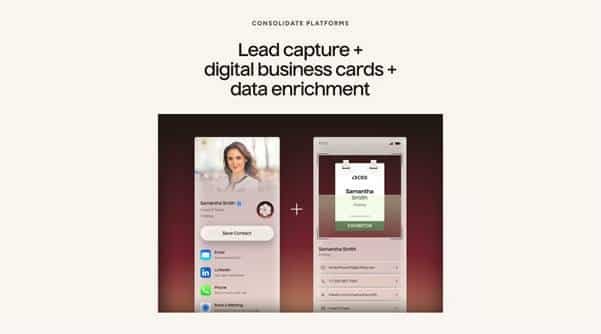
With Popl, you don’t need to carry business cards, and neither do your attendees. Marketers can send their contact details directly through the app to avoid missing out on any opportunities.

What most customers go for is ease of use. This is what Popl caters to by allowing users to collate their websites and socials, all in one place. You can share your contact details, company name, and social links with just a single tap.

The tool makes networking easier, especially when you’re amidst a crowd and crunched for time. It’s professional, quick, and convenient. It helps keep track of all contacts without having to manually enter details.

Popl is a pro at capturing leads right off the bat, and it saves marketers from the hassle of going through multiple steps. Following up is also seamless with its CRM integration, making it a game-changer in the networking and lead capture space.

C. Whova

image 1

Source: Whova

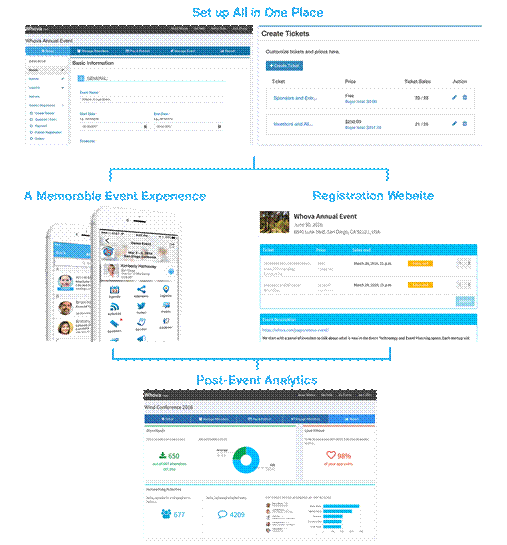
Whova is a comprehensive, all-in-one event management platform. It takes care of every tidbit across the entire event lifecycle, from registration to follow-ups-

  1. Before: Event registration, event webpage management, call for speakers and abstracts, and event promotions.
  2. During: Networking, check-in, exhibitor lead retrieval, etc.
  3. After: Event summary, post-event report, and lead follow-up (‘thank you’ messages).

And the best aspect of this app? You can customize it with your own branding. This serves an excellent purpose to elevate brand awareness and visibility. The app continues its functions in the background while it gives leads exposure to your brand.

You can use search tags to filter out attendees based on interests and job titles. And even send/receive messages, get notifications, look at upcoming sessions, and add them to your agenda.

In simple words, Whova keeps you organized.

For its highly sophisticated and 360-degree functionality, Whova has been recognized as the best Event Management Tool for nine years straight. It has powered over 50k offline and virtual/hybrid events across the globe, and is evidently a market favorite.

B2B events are all about curating experiences that translate delivered experiences into valuable leads.

It’s what B2B marketers must keep in mind.

It doesn’t boil down to the venue or the logistics you have. But the experience you deliver, and how much time you afford your conversations with other industry leaders.

Conversations and dialogue- the hidden gem. That’s what truly drives lead generation through events.

Focus on clearly presenting your brand message and fostering a connection with the audience. Utilize their presence at your event to your advantage, and network as much as possible. And add a layer of efficiency by following up with prospects who showed interest.

When planning events, leverage them to generate and nurture leads. However, lead generation is an ongoing process that demands time and resources.

A robust strategy can empower an entire event and its outcomes.

Through-Channel-Marketing-Automation

The Ultimate Guide to Through-Channel Marketing Automation

The Ultimate Guide to Through-Channel Marketing Automation

Through-channel marketing integrates the best of SaaS and marketing to give you an ergonomic solution. Are your marketing teams fully leveraging it?

In-house marketing teams require a channel partner if they want their organization to grow. For SMBs, it might be a while before that leap does take place, but once you’re big enough, partner channels shouldn’t be avoided.

There are doubts, though. What happens if the partner botches up marketing or the sales process, and your organization pays the brunt of it? This is where through-channel marketing automation, or TCMA, comes in.

These are a set of tools and strategies empowering your partners to carry out essential functions without losing your brand’s touch or them getting confused about what they should do. TCMA automates all of that.

And it empowers partners to execute a thorough vision and act like brand extensions, which in turn builds trust and deepens partner-brand relationships- something all partners should strive for. TCMA is actually quite the punch to unpack.

So here’s a quick rundown of the tools and strategies to get you up to speed.

What is Through-Channel Marketing Automation or TCMA?

Through-channel marketing allows your business partners to market your products or services on your behalf based on the tools, marketing collateral, and strategies provided by you. Automating key portions of this process allows you and your partners to generate more leads with less effort.

Why is TCMA Important?

Marketing automation in channel management is not only about efficiency but also about providing a simple way for your partners to get involved while ensuring brand integrity. Through automation, you can maintain consistent brand messaging, precisely execute marketing strategies, and provide your partners with the latest tools.

Benefits of Through-Channel Marketing

Increased efficiency for partners

Partners can initiate campaigns rapidly, allowing them to focus on interacting with customers instead of handling marketing materials.

Consistent brand messaging

TCMA tools guarantee that brand messaging remains consistent across different channels, preserving brand integrity by ensuring all marketing materials and messages align.

Improved marketing flexibility

Respond quickly to market shifts by updating and rolling out new content on partner networks immediately.

Better lead management

TCMA allows for automatic distribution of leads to appropriate partners, resulting in quicker response times and increased conversion rates.

Scalability

TCMA helps you expand your business, making it easy to acquire partners and handle more marketing activity.

Cost-effectiveness

Automation decreases expenses on labor and optimizes the efficiency of marketing spending, resulting in a decreased cost per lead and increased return on investment.

TCMA simplifies channel marketing complexity and enables partners to act quickly and efficiently by streamlining various marketing operations into one platform, ultimately producing desired outcomes.

Essential Elements of Through-Channel Marketing Automation

Content syndication

Content syndication in through-channel marketing automation solutions enables brands to distribute marketing content on multiple partner channels, ensuring the continual availability of up-to-date and relevant content.

Automated Campaign Execution

Streamlining the implementation of marketing campaigns, through-channel marketing automation eases the burden on partners and guarantees prompt and uniform campaign deployment.

Marketing Analytics

Using Through-channel marketing automation, brands can monitor and assess important performance indicators of local marketing efforts on various channels and partner levels, offering valuable information on successful and unsuccessful strategies.

Partners can customize and personalize marketing materials for their specific local markets while still upholding the integrity of the brand.

How to find the best through-channel marketing automation tools?

If you have been browsing the internet for the best TCMA tools, you might have hit a roadblock. There doesn’t seem to be a straightforward list. There are strategies, for sure, but no lists, and that seems intentional.

Most of the through-channel marketing automation tools are PRMs or marketing automation because, more than a singular tool, TCMA is a bunch of strategies executed by these tools.

If you’re trying to search for the best tool, you need to think broader. For example, when you Google the best TCMA tools in 2025. You’re met with two articles (this will change depending on the region)

Both Impartner and Ansira are TCMA but offer different tools and strategies for varying measures. And if you’re searching for tools on Google, there’s a better chance you will find more luck with G2.

Though you will find that some tools don’t necessarily follow similar patterns.

There are the UPMs (unified platform management), the PRMs (partner relationship manager), and simply marketing automation tools. That means TCMA is more about practices than it is about a singular tool.

The tools that do, however, implement these methods are:

  1. Extu
  2. Ansira
  3. Impartner
  4. Mindmatrix PRM
  5. Structured Web
  6. Unifyr One
  7. Zinfi

And more.

Essentially, they help partners provide an unmatched experience for their clients and ensure brand continuity across geographies and localities. It’s a dashboard that keeps everyone on the same page and helps brands approve and keep track of their assets across time zones, markets, and localities.

Steps to Implement Through-Channel Marketing Automation Solutions 

For successful execution of channel marketing automation, brands need to:

Pick the correct SaaS Marketing Platform

Opt for a comprehensive through-channel marketing automation platform or distributed marketing platform that matches your brand’s requirements and integrates smoothly with current systems.

Train and provide assistance to partners

Make sure your channel partners are adequately trained in utilizing through-channel marketing automation and receive continuous support from the platform provider.

Monitor and adjust

Always keep an eye on how well your through-channel marketing automation solutions are working, and be prepared to modify brand-to-local marketing strategies using data from marketing analytics reports and key performance metrics.

Scope of Through-Channel Marketing Automation

Through-channel marketing automation has the potential to transform how you assist, oversee, and work together with your channel partners. Here is a more in-depth exploration of what you can accomplish with a TCMA tool:

Digital asset management

Digital asset management involves sharing an extensive digital asset library with partners to efficiently distribute segmented and updated content, tools, and collateral.

Content syndication

Content syndication involves the automatic distribution of your marketing content to partner channels, ensuring brand consistency and message alignment.

Showcase syndication

Manages an engaging microsite that generates leads for your brand, which partners can distribute or utilize as a landing page for campaigns.

Promotion syndication

Promotion syndication involves creating topic-specific banner ads connected to syndicated microsites, allowing brands to increase visibility for new product promotions and generate interest through partner networks.

Social media automation

Plans and posts authorized content on partners’ social platforms, boosting audience and interaction.

Paid ads campaigns

Paid advertising campaigns are prepared for partners to launch in their local markets, allowing for centralized setup and management to maintain consistency and decrease unnecessary spending.

Email marketing automation

Email marketing automation allows partners to send pre-made, brand-compliant email campaigns to their customers, while also giving them the option to customize and automate the distribution according to customer behavior and preferences.

Claim processing

Oversees and monitors the allocation of market development or co-op funds given to partners to enhance local opportunities and networks.

Lead scoring and prioritization

Lead scoring and prioritization involve assessing and organizing leads to determine which ones to prioritize for follow-up by partners, thereby increasing the potential for conversion.

Lead distribution

Lead distribution involves sending leads from campaigns to the right partners using set criteria, to improve follow-up speed and conversion rates.

Analytics and reporting

Analytics and reporting offer in-depth information on partner performance, the success of marketing campaigns, and the overall effectiveness of the program.

Training and certifications

Supports partners in enhancing their product knowledge and sales techniques by offering online courses.

Integration capabilities

Guarantees smooth connectivity between your TCMA data and your PRM, CRM systems, and content management systems.

Each feature is designed to ease the marketing burden on your partners and ensure that your brand’s marketing efforts are more effective, consistent, and measurable across your entire partner network.

The future of through-channel marketing automation

From inventories and Digital asset management to sales and content distribution, partner channels have become part of the larger ecosystem. And as organizations try to penetrate global markets, they need partners to help them localize and understand cultural contexts.

The scope is the biggest anyone has seen, just like the printing press exploded reading, so has AI made production of digital content easier. But that means the noise will increase – branding messages might be subpar and miss the subtext entirely.

Subtlety and trust could be eradicated from conversations entirely. And brands will suffer for it.

One of the only ways to stay on track is TCMA. But the vendors you partner with must understand the scope of your campaigns. They can’t be singularly focused on bringing you disparate solutions, but a comprehensive view of most of your partners and vice versa.

Simplification of complex systems is the driving force behind it. And that is where marketing is headed- collaboration empowered by automation.

Wrapping it up

When you have the right through-channel marketing automation platform in place, it is a powerful solution that can revolutionize your brand-to-local marketing efforts. Adopting through-channel marketing automation can help enterprise companies ensure that their marketing messages resonate across all channels, improving brand awareness, brand loyalty, and sales. As the digital landscape continues to evolve, through-channel marketing automation remains a vital solution to stay ahead in the competitive world of distributed marketing.