blogs 04 1

Why high-quality data is imperative for marketers

Why high-quality data is imperative for marketers

High-quality data is essential to stand out when thousands of other things are vying for your customer’s attention.

Marketing is transforming to support the modern customer journey. With adults making 35000 decisions a day, the cognitive load can become too overwhelming. Marketers must gauge customer decision-making to craft the right strategy, creating more opportunities.

This blog post will illustrate the high-quality data imperative. Let’s dive in!

The newness

The volume of new tools and technologies entering the market is astonishing. The technology landscape has shifted substantially and continues to do so even now. These advancements have bestowed on people a plethora of choices and increased ease and convenience. The influx of new channels and platforms have paved the way for always-on communication and multiple touchpoints.

The modern marketing funnel isn’t linear. But with marketers not adapting to the changes in the market and consumer psychology, they fail to elevate the customer experience. And most customers make decisions based on the experiences brands create for them.

Here’s what to do next

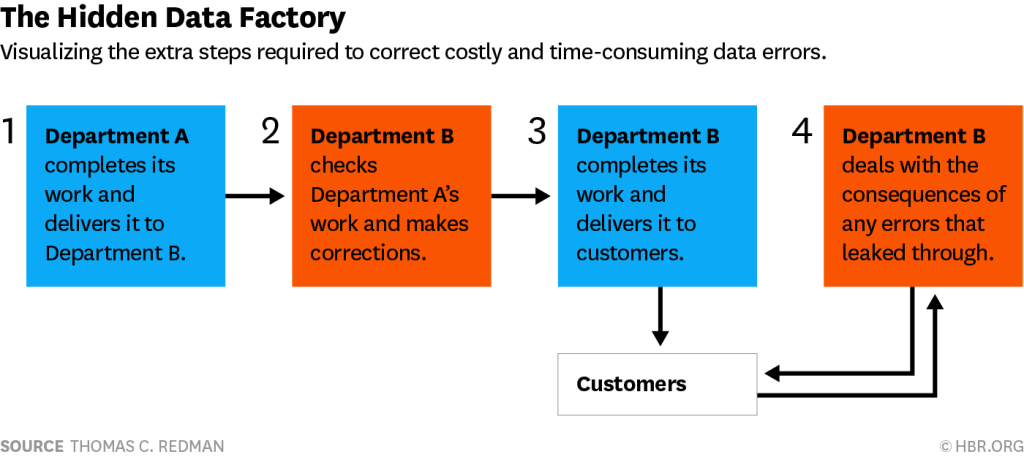
Hidden data
The inundation of data channels has marketers struggling to make decisions and stay on top of the most significant industry trends. But good quality data helps them be agile while responding to market demands and customer needs. It also facilitates them in realizing better brand awareness and revenue growth.
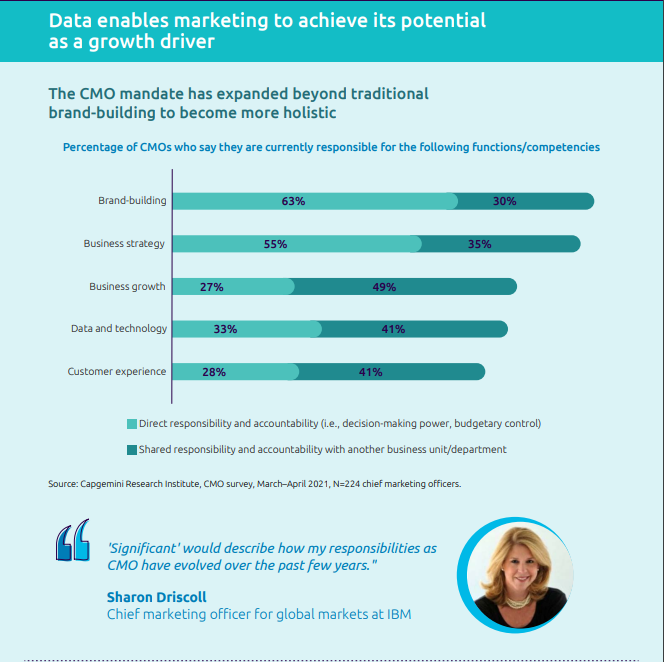
Marketing leaders’ roles have drastically changed over the last few years. CMOs must set a clear vision for their team and their interactions with sales. Data should form the core of marketing capabilities and define the path ahead.
CMOs should begin with creating a framework for data collection and integration. Marketing data can’t be scattered anymore. Implementing a customer data platform is a must to form a single customer view and turn data into actionable insights. Most marketers are busy chasing dollars, aka, immediate impact, and though it’s crucial to tie marketing’s impact to revenue, long-term marketing goals matter as much. Brands must integrate short-term and long-term marketing plans to maximize their ROI and collect the right data to understand customers.
CMO

If modern marketers can’t rely on data, analytics turn meaningless. Data has to be accurate and accessible, and it’s just not the marketing department’s problem. Businesses must make data quality an organization-wide responsibility. But marketers need to define what quality data means to them and make it an ongoing effort.

They may also leverage external sources such as tech publications, peer groups, and communities to supplement customer research.

The Editor’s Note

Bad data costs a lot, but it’s no rocket science to minimize the costs that come with it. Start with connecting the impact of data quality with marketing KPIs. Use data profiling early to draw constructive conclusions and spot data problems before it’s too late. As they say, timing is the difference between success and failure.

blogs 05 2

The Truth Behind AI Text Generators

The Truth Behind AI Text Generators

Empowered by machine learning and natural language processing, AI-text generators are the latest rage, but the truth isn’t so black and white.

What Is The Truth Behind AI Text Generators?

AI development is accelerating at a pace that is unfathomable to many. Though AI-powered tools such as text generators are exceptionally swift, there’s a dark side to it that we must contemplate. 

But before we dive into the ramifications, let’s understand how an AI-powered text generator works. 

It is a computer program that imitates human writing and is adept at language structure and patterns. Following a prompt, an AI text generator uses ML algorithms to create human-like text. These tools can work wonders for businesses that need to produce gigantic volumes of content at a breakneck speed, but at what price? There’s a lot to lose.

The Implications

Firstly, AI text generators aren’t as great as you think. These tools leverage existing data, so the text may replicate bias and inaccuracies they see in training data.

In a live-streamed event for Google’s Bard demo, the chatbot incorrectly attributed a discovery to Webb, costing the company a whopping $100 billion. 

Though it mimics human writing styles, an AI text generator lacks the human-thought process. So for brands like Ciente that believe in connecting the dots and having an original voice, it doesn’t add any value. We live in a content-inundated, mundane world, and AI-text generators could not be a possible solution because they lack originality and are incapable of creating a new, fresh perspective to look at things. 

Sure, they can educate you in a way, but how about making your audience feel emotions? Well, that’s what marketing should do. AI can help writers in certain lines, but it can’t take their job, especially if the writers are good at what they do.

The new cohorts of large language models (LLMs) demonstrate higher intelligence than the previous ones. But there’s more to the story.

According to a Forbes article, to make ChatGPT appear less racist, OpenAI hired Kenyans to filter the text. But paying these workers less than $2 per hour makes for another quintessential example of labor exploitation.

The next big issue is cybercrime. Hackers can use these platforms to write undetected malware scripts. New research by CheckPoint revealed OpenAI helped a threat actor finish his first script.

blog 2

The Editor’s Note

None of these AI-powered text generators are immune to error. The perfect platform has to be an amalgamation of tech and human advisory. If brands are using these tools to create content, they must consider how these platforms are capable of amplifying bias. In the end, AI-text generators only mimic what they’ve been trained on, so no matter how appealing they might look as a solution- they still come with pitfalls, and we can’t bank on their responses entirely.

blogs 06 1

Marketing Communications Competencies for 2023

Marketing Communications Competencies for 2023

Marcom can’t be a piecemeal strategy. It needs to be connected to data and cross-functional expertise to be impactful.

High-quality marketing communication inspires your audience to take action and drives better business results. But to craft excellent communications, CMOs must build a robust core and gauge marcom competencies.

This article will deconstruct that and offer insights that would help marketing leaders deliver impact. Let’s drill it down.

Why Marketing Communications matter so much

Marcom isn’t only about promoting a brand; it gives your brand a personality. Along with CX, marcom matters a lot for loyalty and brand memory. How a brand decides to speak to and engage its audience in turbulent times makes a huge difference.

It shows customers what you stand for as a brand and how you prioritize them. But most brands fail to intentionally communicate with their audience since unaligned communications often lead to inconsistent brand interactions.

Challenges in Executing Digital Marketing Strategy

What you can do about it

There’s an empathy gap. Brands collect customer data to offer personalized communications, but it takes more to orchestrate customer journeys in a digital setting.

You need a single unified view of the customer. Different departments have different information about a customer, meaning no one has the complete picture of the customer and what matters to them. Customers expect empathy, not just in brick-and-mortar stores but online too.

Technology coupled with the human touch can accelerate marketing growth. With AI and cloud tech revolutionizing marketing- we can finally understand customers’ digital body language and orchestrate the journey that resonates the best with them.

Structure, Focus, and Goals

Marketers have long been conveying what they want to say, but that doesn’t make a message compelling to the audience. An effective marcom plan zeroes in on customer needs and preferences. It’s what they need to hear, not what you want to tell them.

Structure your communication strategy and make it result-oriented. What do you want your audience to know? What should they know? How do you want them to feel? What’s the end goal?

No one needs a ramble or an unending monologue. Help your prospects visualize what you’re communicating; make it look concrete. Engage your ICP by having them participate in the conversation and addressing their pain points.

Marketing Software to bolster your communication plan

There are a plethora of marketing tools in the market. Since Ciente maintains a vendor-neutral stance, we’ve enlisted software/platforms that have worked for us.

Adobe Campaign

With the acquisition of Neolane in 2013, Adobe Campaign empowers marketers with an integrated customer view, personalized communications that happen in real-time, and dynamic content and AI-powered dashboards.

It’s a top-rated tool but doesn’t offer any free trials. Most users appreciate how they can easily integrate it with other solutions and platforms.

Marketo Engage

With Adobe acquiring the marketing automation company Marketo for $4.75 billion, it added another powerful tool to its repertoire of tech software. Marketo Engage is a preferred choice of B2B professionals as the sales cycle tends to be longer.

Marketo Engage could also help with lead management and scoring. Though the usability is on point, most new users find its learning curve to be a little complex.

Pardot

Pardot by Salesforce allows users to experiment with dynamic content, A/B test their marcom campaigns, score leads leveraging AI-powered triggers, and create relevant messaging at the right time with detailed prospect activity.

Though Pardot integration is smooth with other tools, it has limited customization options for marketers.

Editor’s Note

Marketers must connect content experiences. Data can unlock new opportunities. For instance, you can use customer profiles and activities to trigger communications when the customer expects it.

While communicating with customers, brands must ensure the interactions aren’t siloed and unaligned. Dive deep into customer history and gauge how your customer prefers to engage with the brand. Cross-team knowledge is the key to ensuring your audience receives nothing but relevant communications from you. It’s time to capitalize on data. It’s time to see your customers from a different perspective.

blogs 07 2

Marketing Technology: Martech Tools challenges and benefits

Marketing Technology: Martech Tools challenges and benefits

Skyrocketing business ROI doesn’t stem just from marketing your business. The goal is to overcome dynamic operational challenges using smarter Martech tools.

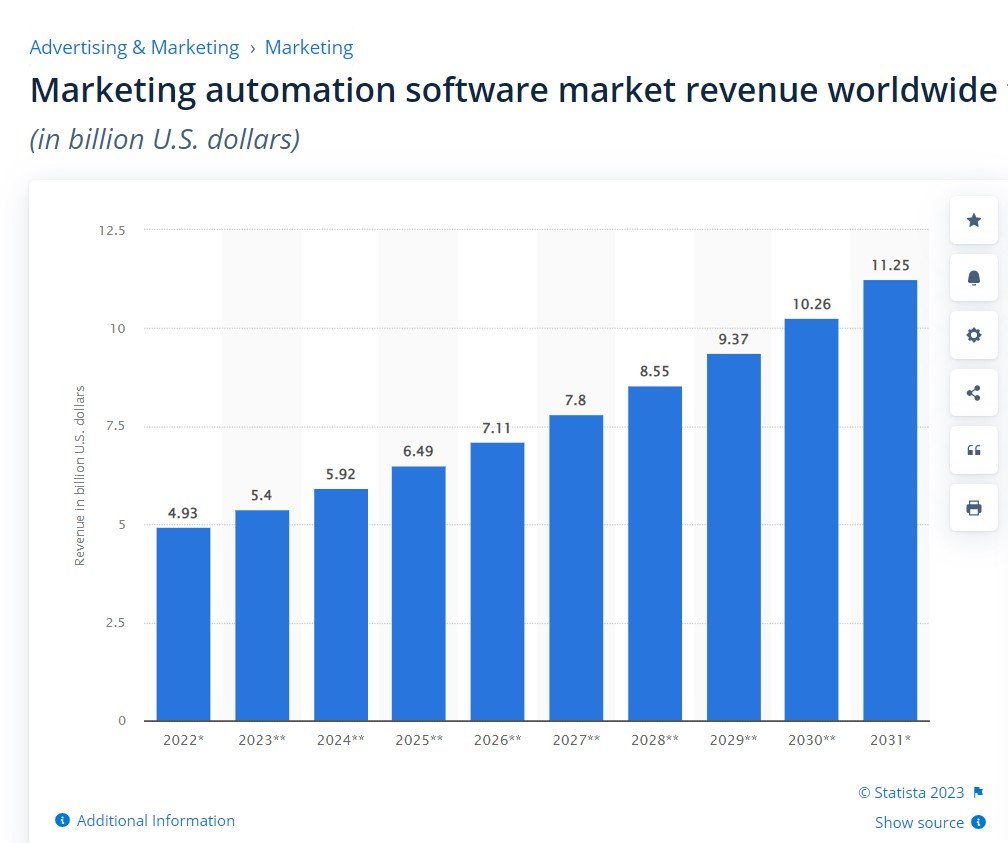
Marketing technology is transforming the way businesses approach their marketing strategies. With the right implementation and utilization of Martech tools, marketers can streamline their efforts and maximize the impact of marketing technology investments to drive growth. The tools also help in examining customer behavior and optimize the campaigns for a better ROI. A study by BDO WARC shows that the global Martech market is projected to grow from $121.5 billion in 2020 to $182.6 billion by 2025. This gives the laggards and even the industry’s early adopters a solid chance to equip themselves for a headstart in the market.

We’ll further dig into the benefits of Martech adoption for your business, the challenges you might anticipate, and how to overcome them

Cashing in benefits from Marketing Technology

Improved Customer Experience

Martech tools empower your business to concoct personalized and targeted campaigns by analyzing consumer behavior and their interests and preferences. This, in turn, leads to an improved CX, as customers are more likely to engage with something that has high relevancy to their goals.

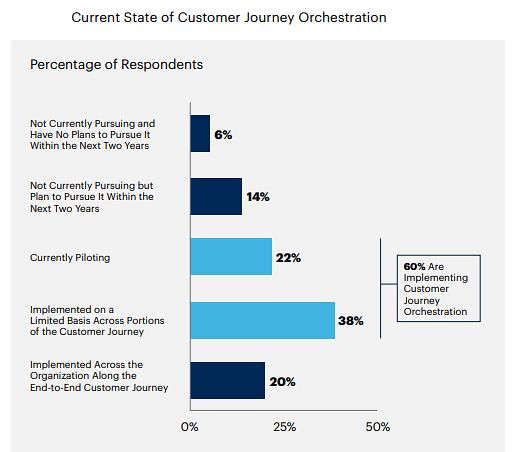
Current State of JO

According to a 2022 Gartner survey, CMOs prioritize investing in customer journey orchestration (JO) for improving the experience of customers at various touchpoints. This involves using multiple technologies and applications to create an enhanced and a cohesive JO. In contrast, only 20% of the respondents report having proficiently established customer journey orchestration techniques for the entirety of the CX process

Streamlined Marketing Efforts

Martech tools aid in automating and executing marketing plans that create a balance of the automation tools and manpower. This could save your human efforts from being squandered in manual tasks that can be automated like email marketing, social media scheduling, and data analysis. Thus, you can extract the most out of your technology capabilities paving the way for more business profit.

Task automation also allows for a more tailored customer communication process, providing data-driven insights and improved decision-making. For example, a study by Salesforce says that using marketing automation software has resulted in a 14.5% increase in sales productivity and a 12.2% reduction in overhead marketing costs. 

Additionally, customer relationship management (CRM) tools can help marketers track and analyze customer behavior to understand customer needs better and maximize marketing effectiveness.

Martech Tools for Data Analysis

Martech tools can help marketers in real-time data analysis by providing insights and metrics to help inform their marketing strategies. For example, data analytics platforms such as Google Analytics and Adobe Analytics can track website traffic, user behavior, and conversion rates. These insights can be valuable in tweaking strategies by extending your understanding of the customer journey and improving the journey orchestration process.

In addition, marketing automation tools like Hubspot and Marketo can help marketers collect and manage customer data, automate campaigns, and track performance. This enables them to enhance their resource utilization efficiency and effectively engage the target audience.

Businesses that leverage technology to analyze data and automate processes can improve customer engagement, growth, and revenue. Therefore, investing in Martech tools can be a game-changer for businesses looking to improve their marketing efforts and stay ahead of competitors.

Martech Adoption – The expected challenges

Selecting the Right Tool

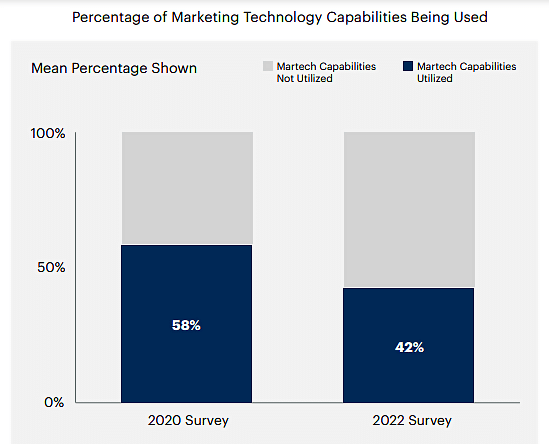
A recent survey by Gartner indicates that businesses are utilizing just 42% of their Martech stack capabilities, compared to 58% in 2020. Hence underleveraging and improper utilization of the Martech vendor investments can lead to potential headwinds for the business

Percentage of Marketing Technology

This is a problem because businesses must optimally utilize the marketing tools they’ve invested in, especially during tough economic times. If they do, they can avoid facing greater financial scrutiny from their CFOs or cutting budgets.

One of the biggest challenges of Martech adoption is selecting the right tool for your business. With over 8,000 Martech tools available, deciding which one to use can be overwhelming. To choose the right tool, companies need to clearly understand their marketing goals and the type of Martech tools they need to meet them.

Integration with Existing Technology

Integrating Martech with existing technology can be challenging, as it requires expertise and can be time-consuming. To overcome this, businesses should train employees to use the tools effectively and optimize their marketing strategies.

Cost

Martech adoption can be expensive, especially for small and medium-sized businesses. However, the benefits of Martech adoption outweigh the costs in the long run, enabling firms to achieve a better ROI in the long run.

Martech Adoption – Overcoming the challenges

Investing in Training

Investing in employee training is crucial for successful Martech adoption. You might invest in the best-in-class Martech tools, but under-trained personnel would create a gap and won’t be able to meet your marketing needs. Training your employees to strengthen your marketing foundation would help you optimize the expenditure of money in due course and increase your ROI.

Start Small

Keeping risk management in mind, businesses should start small and gradually scale up for minimizing risk. This allows them to test the tool’s effectiveness and make informed decisions before investing heavily.

Wrapping up

Martech adoption has become necessary for businesses looking to stay ahead in the digital age. However, embracing Martech might seem one of the best ways to spike up your ROI, but with the benefits come the challenges. To overcome marketing technology challenges, businesses certainly need to clearly understand their goals in the first place while considering every tiny element that would build a solid step for organizational success

By embracing this technology, you can revolutionize how you operate and reap the benefits it offers. It is essential to stay ahead of the curve and consider exploring Martech adoption to discover how it can enhance your operations and improve your overall performance.


blogs 08 2

Technology for a better CX

Technology for a better CX

There’s a chasm between the CX brands deliver and what customers expect. Technology can bridge this gap.

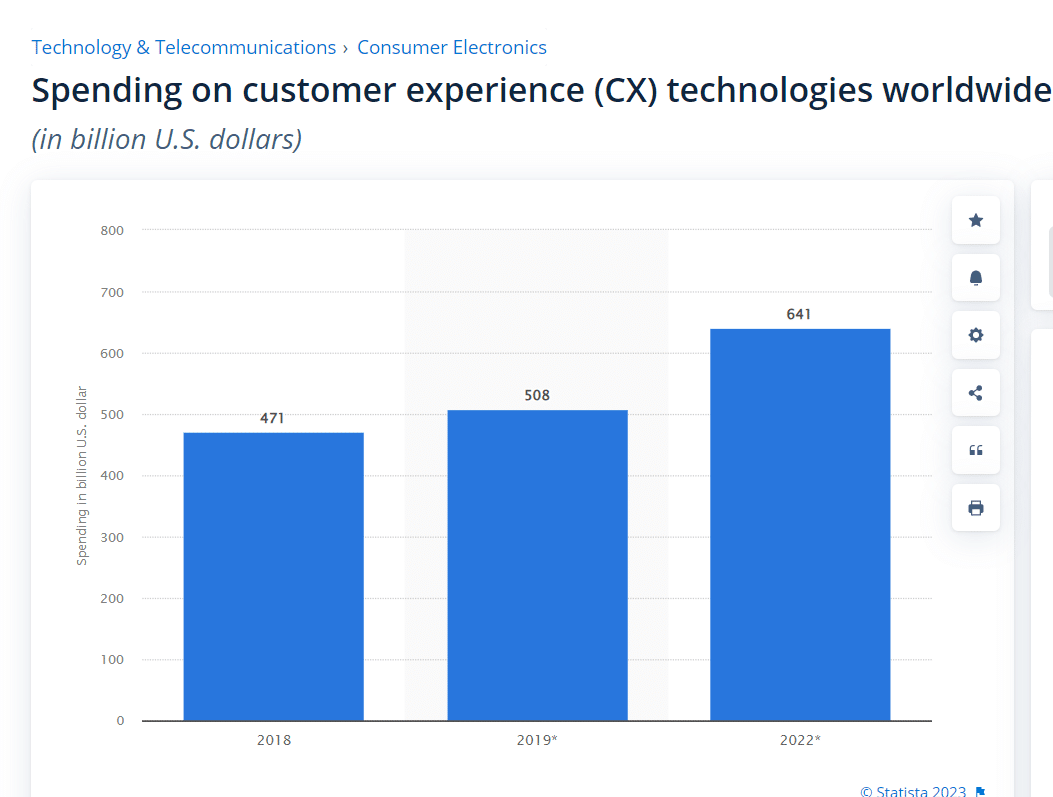
The CX technology space is rapidly growing, and this acceleration is so fast-paced that in just four years, the industry grew from $471 Bn to $641 Bn in 2022. 

What does it mean for your business? What does it translate to in terms of growth and customer demands?

During such economic headwinds, business leaders must prioritize efforts that boost CLV. It’s time to get serious about customer experience technologies or risk becoming irrelevant.

cx technologies 1

A Part of The Picture

Many businesses have begun leveraging multiple technologies to enhance CX. However, integrating these solutions is the only way to derive maximum benefits and growth from your tech investments. Take stock of your current tech stack and gauge if you’re using any solution in isolation because if that’s the case, you’re not looking at CX from a holistic standpoint.

There has to be a strategy for each transformation initiative, and enabling powerful omnichannel customer experiences would need a CCaaS infrastructure. Pricing and product features don’t give businesses a competitive edge in today’s customer-driven world; CX does (A Gartner study found 81% of companies expect to compete on customer experience).

But even though the expectations seem to increase, the budgets aren’t. 

CX: From Good to Great

We all know that if customers enjoy doing business with you- they buy more, refer more, and tend to be more loyal even during market fluctuations or getting cheaper alternatives. They are even more comfortable trading their personal information for a better CX.

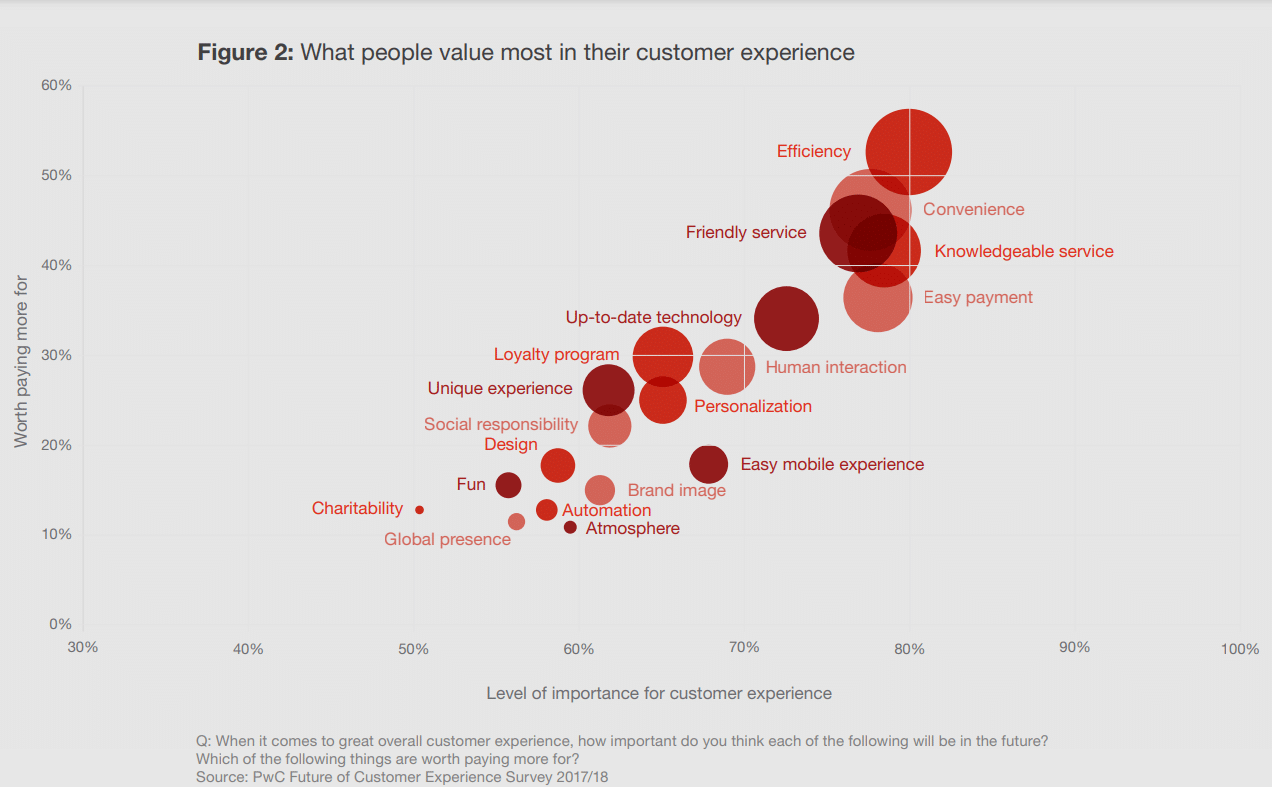
Understand what truly matters to your customers. Are they looking for agility, convenience, or just a human touch? Technology would help you understand your audience better and comprehend their likes, dislikes, goals & motivations.

Using the right technologies will make the experience more human and consistent for your customers. Prioritize solutions that deliver what customers expect the most. Using AI to create hyper-personalized, meaningful customer experiences will allow you to drive growth at scale.

cx technologies 2 1

Technology isn’t the goal

CX tech is booming and will continue to do so, but it is only a means to an end, not the end itself.

You need to prioritize CX in terms of people and goals. It starts with your culture and employees. How do they show up for the clients? How helpful and genuine are they in their interactions with the customer? Do your employees have adequate training to get the most out of tech and offer customers the speed and precision they demand?

Great CX begins with a great employee experience. Your client-facing teams can get the support they need from tech, but tech isn’t the only thing that makes CX great; people play a role just as important.

Rethinking CX requires marketing and tech leaders to reimagine tech and people. Align these two areas to create a sophisticated human-tech relationship and elevate CX.