Edge Computing: The Digital Revolution Driving the Future and the Top 7 Trends of 2023

Edge Computing: The Digital Revolution Driving the Future and the Top 7 Trends of 2023

Edge Computing: The Digital Revolution Driving the Future and the Top 7 Trends of 2023

Edge Computing is not just the future—it’s the present. Here’s how it is transforming the IT landscape and enhancing data efficiency and security.

Edge computing, a concept that was once just a blip on the radar of tech enthusiasts, has evolved into a significant player in the ever-evolving landscape of computer organization and architecture. As we journey further into 2023, we see this evolution accelerating, firmly establishing edge computing as a cornerstone in the IT strategy of businesses and organizations worldwide.

But first things first, why is edge computing the future? To answer this, we must first take a glimpse at the fundamentals of computing. Traditionally, cloud computing centralized data processing by pushing data to a centralized cloud infrastructure for analysis and decision-making. However, the increasing volume of data generated and the demand for low-latency, high-bandwidth applications have strained the cloud’s capabilities.

Enter edge computing – an innovative solution that moves data processing from the cloud to the edge of the network, closer to the source of data. This model decentralizes data processing, alleviating the load on the central servers, reducing latency, and leading to quicker, more efficient decision-making. Imagine a smart traffic system that can adapt in real-time based on the traffic volume and conditions or a healthcare monitoring device providing instant critical health data to doctors. The possibilities with edge computing are endless. Moreover, in today’s rapidly evolving digital landscape, the exponential growth of data and the widespread adoption of connected devices are driving increased demand for storage, computing, and network capabilities. Consequently, edge computing has emerged as a pivotal solution, bringing these vital resources closer to the endpoints. As per a recent report, with the volume of global data projected to surge to unprecedented levels, reaching 97 zettabytes (ZB) in 2022 and a staggering 181 ZB by 2025, the surge is largely attributed to the ever-expanding ecosystem of the Internet of Things (IoT) connected devices. By 2030, the number of IoT devices is expected to soar to 24.1 billion.

image 8

The Rise of Edge Computing

The rise of edge computing can be linked to its symbiotic relationship with cloud computing. Traditional cloud computing architecture leverages centralized servers—physically remote and separate from the end-user—to process data. This cloud infrastructure plays a crucial role in delivering services across the globe. However, as the digital world continues to grow, a new approach to cloud strategy has emerged, one that revolves around edge computing.

Edge computing redefines the standard cloud computing infrastructure by processing data closer to the source—the edge of the network—minimizing latency and enhancing the user experience. As such, it enables the migration of computing from the cloud to the edge, a concept aptly referred to as ‘cloud to edge.’

As per the latest findings of a comprehensive report from Statista, the global market for edge computing is anticipated to witness an impressive surge, with estimated revenues expected to soar to a staggering 274 billion U.S. dollars by the year 2025. This remarkable projection highlights the immense growth potential and increasing significance of edge computing solutions across various industries and sectors.
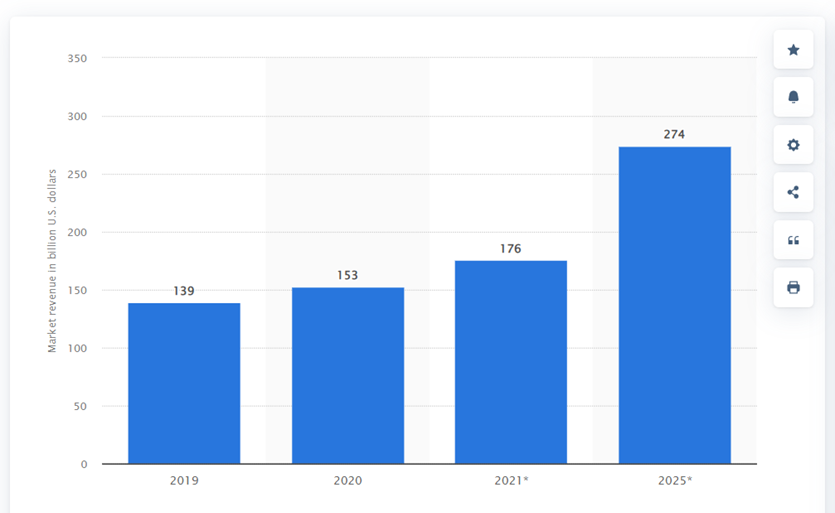
image 9

The collaboration of edge computing and cloud computing will redefine the future scope of edge computing, bolstering its adoption in diverse sectors. How so? The synergistic ‘cloud to edge’ approach retains the cloud as the orchestrating platform, while the edge devices, furnished with edge computing software, perform real-time data processing. This unison amplifies the strengths of both cloud and edge computing, creating a new landscape of ‘cloud edge computing’.

Top Trends of 2023

As we peer into the future, let’s explore the top 7 trends that are making waves in edge computing in 2023.

1. AI-Powered Edge Computing: With AI capabilities at the edge, devices can independently execute complex tasks. For instance, an AI-enabled security camera at the edge could analyze and recognize suspicious activities in real time, triggering an alarm instantly without needing to send the data back to the cloud. This trend implies a shift towards smarter, autonomous edge devices that can learn, adapt, and make decisions.

2. 5G and Edge Computing: 5G technology, with its low latency and high bandwidth, will enable real-time applications at the edge. For example, autonomous vehicles can leverage 5G-enabled edge computing to process massive amounts of data in real time, ensuring safe and efficient operations. This convergence will unlock unprecedented applications, disrupting sectors from transportation to healthcare, manufacturing, and beyond.

3. Security at the Edge: As we distribute data processing to various edge devices, each device becomes a potential target for cyberattacks. Thus, innovative solutions to ensure data privacy and security will be paramount. This may include advanced encryption, authentication methods, and decentralized security protocols specifically designed for edge environments.

4. Edge in IoT: With IoT devices generating voluminous data, it’s more practical to process data at the edge. For instance, an edge-enabled smart factory could process data from numerous sensors on-site, enabling real-time monitoring, predictive maintenance, and streamlined production processes. This trend signifies a move towards more efficient and powerful IoT systems.

5. Fog Computing: As an extension of edge computing architecture, fog computing involves a network of edge devices collectively processing and analyzing data. This distributed approach reduces the load on individual devices and the cloud, allowing for efficient data processing and decision-making across the network. It essentially creates a cooperative environment between edge devices.

6. Industry-Specific Edge Solutions: Different industries have unique needs and challenges, and as such, bespoke edge computing solutions will emerge. For example, in the healthcare sector, edge computing could enable real-time patient monitoring and rapid diagnostic processes. In retail, edge-enabled systems could provide real-time inventory tracking and personalized customer experiences. This trend underscores the versatility and adaptability of edge computing.

7. Greener Edge: As sustainability becomes more crucial, energy-efficient edge computing solutions will emerge. Edge devices that consume less power or that can operate on renewable energy sources will become increasingly popular. Plus, processing data at the edge reduces the energy spent in transmitting data to the cloud, contributing to a greener tech ecosystem.

Edge computing undeniably presents a new horizon of opportunities. Its potential is vast, from improving daily processes like traffic control to revolutionary applications in healthcare, manufacturing, and more. As we forge ahead into a data-rich future, edge computing is destined to be a game-changer, ushering in an era of smarter, faster, and more efficient digital solutions.

As edge computing continues to mature, it’s important to stay curious, open, and adaptable. Like any technological revolution, the transition from a traditional cloud computing infrastructure to an edge-focused model will present challenges, but the potential benefits are significant.

In conclusion, edge computing is more than just a trend – it’s an evolving paradigm that’s reshaping our digital world. It’s a testament to how far we’ve come in computer organization and architecture, and an indication of the exciting developments still to come. As edge computing continues to rise, we can’t help but wonder: What does the future hold, and how will we shape it?


The Rise of AI in Marketing: Advantages, Disadvantages, and Implications

The Rise of AI in Marketing: Advantages, Disadvantages, and Implications

The Rise of AI in Marketing: Advantages, Disadvantages, and Implications

The rise of AI has drastically changed the way businesses connect with their customers. Here are some benefits and pitfalls of using AI in marketing.

In the age of digital marketing, artificial intelligence (AI) has emerged as a game-changer, bringing drastic changes to the way businesses interact with their audience. AI helps 21st-century businesses keep up with the fast-paced and digitally-driven market, allowing them to plan, execute, and optimise marketing campaigns faster. By leveraging this technology’s capabilities, marketers can tap into vast amounts of data, automate processes, and deliver highly personalised experiences to their target audience.

But while AI is poised to improve marketing practices for the better, it’s not without its challenges. With the promise of change also comes cause for concern — its implications on customer ethics, human labour, data collection, and more. In this article, we discuss the numerous advantages, disadvantages, and implications of using artificial intelligence in marketing.

The Advantages of Using AI in Marketing

As a tool, the role of AI is to help marketing departments make processes faster and more efficient. It allows for the automation of tasks that don’t require human intervention, leaving room for marketers to think bigger. Its limited yet robust role makes it an excellent aid, but in itself is incapable of being an adept marketer — meaning that marketing jobs are still safe. 

Here are some reasons marketing departments are using AI to their benefit:

Advanced Data Analysis

AI-powered analytics tools help businesses gain meaningful insights from large and complex data sets quickly. Traditional data analysis methods often fall short due to the sheer volume and complexity of data available today. AI algorithms can uncover patterns, trends, and correlations that human analysts might otherwise miss.

Analytics allow marketers to track user behaviour faster and examine user behaviour on various metrics (engagement, conversion, time and location, etc.). Applications like Google Analytics, for instance, track all this data in real time, enabling teams to respond to changing user behaviour faster than ever before. In addition to tracking campaign progress, this kind of data also serves as comprehensive research for new campaigns.

By leveraging AI in data analysis, marketers can make data-driven decisions, optimise marketing strategies, and gain a deeper understanding of customer behavior, preferences, and market trends.

Automation of Rote Tasks

AI technology offers significant advantages in automating repetitive and time-consuming marketing tasks. Using tools for large-scale data generation and analysis, high qualified lead generation, content curation, email campaigns, and social media posting, marketing departments can save time and make their processes more efficient.

Tools like Jasper, Wordtune, Otter.ai, and Grammarly can speed up the content creation process and aid in writing, editing, and curating collaterals. Platforms like Meta Business Creator, Metricool, and Google Analytics can help you schedule social media posts or ads, while MailChimp and sendinblue can help you automate email campaigns.

Using AI for repetitive and recurring tasks allows marketers to shift their attention away from manual work and focus on creative and strategic aspects of their role. Automation also reduces human error (you’re unlikely to miss posting) and oversight (you have more time to do quality checks and the like).

Improved Customer Service

AI-powered chatbots and virtual assistants have transformed customer service in marketing. These AI systems can handle customer inquiries, provide instant support, and offer personalised recommendations. These tools use natural language processing and machine learning algorithms to understand customer queries, engage in meaningful conversations, and resolve issues efficiently.

Creating automated chatbots allows for real-time interaction with customers. Responses for common queries can be templatised and quickly dispatched to customers, while executives can address more specific or unique queries with the nuance that is required. This combination of automation and human interference allows the department to provide customer interactions that are timely and carefully tailored experiences that enhance customer satisfaction.

By providing 24/7 support and quick response times, AI-powered customer service enhances the overall customer experience, increases customer satisfaction, and reduces the workload on human customer service representatives.

Enhanced Personalisation

One of the key advantages of AI in marketing is its ability to deliver highly personalised experiences to customers. AI algorithms can analyse vast amounts of customer data such as demographics, preferences, browsing behaviour, and purchase history, to generate valuable insights.

With this information, marketers can segment their audience and create highly targeted advertising campaigns that appeal to each segment. By identifying browsing patterns and user preferences, AI algorithms can deliver personalised advertisements to specific segments or individual users — making the advertisements more relevant, immediate, and effective, leading to higher engagement and conversion rates.

Another effective way to make customer experiences more personalised is through recommendation engines. A recommendation engine uses data mining, machine learning, and artificial intelligence to understand user preferences and predict items that users are likely to engage with or find value in. They typically study data about user behaviour, browsing history, past interactions, preferences, and feedback to make personalised recommendations.

Recommendation engines are increasingly being used in a wide range of industries: online commerce, news and media, digital streaming, entertainment, social media, and more. They play a pivotal role in customising user feeds to deliver relevant experiences and eliminating irrelevant ones—ultimately helping users discover products, services, or content that aligns with their interests.

Additionally, such data also helps marketers deliver personalised offers and increase customer engagement and loyalty.

The Disadvantages of Using AI in Marketing

The benefits of using AI in marketing come with its own set of risks, challenges, and considerations for marketers. Data privacy and security breaches are at the forefront, along with an overdependence on user data and a risk of strategies lacking the human touch. It’s crucial that marketers be cognizant of these pitfalls so they can make well-informed decisions about how AI contributes to their strategies. Here are some considerations marketers should know about:

Data privacy and safeguards

The use of AI in marketing heavily relies on collecting and analysing vast amounts of customer data. This raises concerns about data privacy and security. The onus is on the marketers to be abreast of data regulation policies in the regions they are in and comply with them. It’s also crucial that they obtain consent from users in a transparent way by clearly stating data collection processes and providing accessible opt-in/out mechanisms. As netizens become increasingly savvy, disclosing data collection practices is a crucial way to maintain customer trust. 

Storing and processing large volumes of data also increases the risk of data breaches and cyberattacks. While implementing AI tools, marketers must also implement security measures to protect (sensitive) customer information. Some commonly adopted measures include encryption during customer interactions, secure data storage, cybersecurity measures to prevent data leaks, etc.

Bias from existing data

Given that AI primarily learns from historical data, it’s unlikely to provide up-to-date information on emerging trends or unforeseen events. Its reliance on existing information also means it’s susceptible to the biases perpetrated in existing data and discourse. If machine learning continues to operate on erroneous information or biases, it may end up making recommendations that are irrelevant, exclusionary, or even harmful to its users.

Rectifying these biases usually requires human intervention, which may (depending on the severity of the bias) render the whole process counterproductive. It’s essential for marketers to evaluate algorithmic data and regularly assess for biases that may be discriminatory or negatively impact customers.

Risk of generic (or insensitive) responses

While AI automation can streamline marketing processes, it presents a risk of having customer interactions that are generic and lack a human touch. It serves a limited purpose in customer relationships, especially in instances when personalised assistance or support beyond what AI is programmed to do is required. While AI fares well with routine or commonly asked queries, it lacks the empathy needed to handle more complex or sensitive matters.

Moreover, marketing as a discipline relies on emotional connections with customers.  AI-driven interactions run the risk of being too detached from human behaviour and may lack the empathy and understanding that normally comes with customer interactions. AI may also be unable to pick up subtle and contextual clues that human marketers can spot. If customers can easily recognise they are engaging with a machine, their experience with the business may not be as fulfilling or memorable.

Overreliance of data

In addition to biases, an overreliance on data can lead to a narrow perspective and overlook important qualitative insights and intuition. Using historical data as primary research can limit marketers’ perspective of emerging trends and may miss out on evolving customer expectations. Numbers also fail to capture subjective customer experiences, which marketers often draw on to create compelling campaigns. It’s humans who ultimately bring contextual understanding, creativity, and empathy that can complement data-driven approaches and lead to more well-rounded strategies.

Another concern is that AI algorithms also may not pick up on rapidly changing market dynamics and consumer behaviors. AI models typically make predictions assuming that historical patterns will always continue to hold true. If changes in market conditions and consumer behaviour are shifting faster than ever, then data collection must also evolve rapidly to keep up with these changes. Marketers should regularly evaluate and update their AI systems so they provide updated data that reflect evolving market trends and consumer preferences.

(You can also check out this blogpost ‘The Truth Behind AI Text Generators‘)

Summing up: the implications of using AI in marketing

Even as we scratch the surface of artificial intelligence and its role in business, its implications remain vast and reaching. It has increasingly gained traction as businesses recognize its potential to enhance marketing strategies and drive results. Companies are increasingly adopting AI technologies, more so after the COVID-19 pandemic, to create personalised marketing campaigns to cater to a global audience.

In large-scale campaigns, AI can be used for personalized recommendations, automated customer service, and data analysis.

The increase of AI in marketing also raises questions about the division of labour within marketing departments, since there are overlaps between its functions and what marketers have traditionally been doing. With many routine and repetitive tasks automated through AI tools, marketers have more opportunities to upskill and learn to work alongside these tools.

Marketers must be aware and critical of AI’s role in marketing processes. They must create strategies that leverage AI’s strengths but retain the human elements of marketing processes. Moreover, evolving trends, employee training, cost of implementation, and other factors must be considered while marketers implement AI in their strategies.

The Intersection of Creativity and Technology

The Intersection of Creativity and Technology

The Intersection of Creativity and Technology

We need technology to work for creativity, not against it.“

Intersection of Creativity and Technology

The debate of Creativity vs Technology has been going on for a while. But what we need to get straight is it’s not a competition. It’s not another either/or situation where we have to choose one. In today’s world, creativity and technology work together, as it should.

Critics argue technology has made everything kind of the same. It’s as if the world and our work lives are all a how-to template. You go through your social accounts, and it all looks jarringly similar. What can bring a breath of fresh air?

image 5

Technology and creativity are now more intertwined than ever, and it’s at the intersection of the two- magic happens. Creativity helps you unlock these new ideas that can be potentially disruptive; technology takes care of the execution. Human minds create abstract ideas; technology deconstructs those so we can finally decipher them.

Supporters argue technology will replace humans. But no technology (no matter how sophisticated) can mimic human creativity and its genius.

image 6

Undoubtedly, a lot depends on standardization and routine work. AI can take care of that, while humans can have their creative juices flowing and do what they do best, leaving the rest to the machines.

Utilizing the full breadth of our tech stacks paves the way for more creative opportunities. Technology has empowered us with the capabilities to create more and share more. A great idea can reach millions so quickly that it was inconceivable a few decades back.

Without technology, businesses can’t make sense of the colossal quantities of data they keep amassing. Without creativity, they can’t create change. It’s worthwhile pondering here how technology facilitates an idea; it’s not the idea itself. It allows all new concepts to come together in one place, building on it and leading to a more focused execution of the whole process.

image 7

The Editor’s Note

With technology come monotony and sameness. Data shouldn’t be the only thing leading your efforts; it should be informing your decisions.

Create an atmosphere where you don’t consider tech and creativity as two competing forces but as complementing assets that intersect and achieve impressive results much faster.

Why this AI-powered Coca Cola ad is a marketing masterpiece

Why this AI-powered Coca Cola ad is a marketing masterpiece

Why this AI-powered Coca Cola ad is a marketing masterpiece

Coca-Cola has used generative AI to create a new campaign- Masterpiece. And yes, it has been a roaring success.

Stirring up the Internet, in a recent campaign showcasing the work of some timeless artists, Coca-Cola shows the inspiration flowing from one painting to another- in the form of a Coke bottle. The ad is culturally diverse and demonstrates an eclectic mix of artwork. 
Featuring the canvases of artists like Andy Warhol, Edvard Munch, J. Vermeer, and more, the advertisement shows how Coca-Cola creates magic in the mundane. 

image 3

The ad creates a successful hook from the beginning- keeping the viewers’ attention and engaging them as it moves from one artwork to another. 

It starts with an art student sitting and slumping. While everyone around him is up and working, this student feels uninspired and dead beat. One painting decides to give him refreshment and then begins the process of handing him a bottle of Coke. He takes a sip and designs art that the teacher immediately approves and takes a liking to.

image 4

Coca-Cola has been excellent at brand marketing for decades now. From 1971, I’d Like to Buy the World a Coke to 1995, Holidays are Coming, to Create Real Magic (Present), its campaigns have never failed to take the world by storm.

With consumers across the globe drinking about 2 billion servings of the company every day, Coca-Cola is a marketing genius that knows how to use the power of creativity to drive demand generation. After 130 years, the company changed its typeface in 2018- TCCC Unity. Inspired by American modernism, the new typeface aligns better with the company name. 

image 5

The Editor’s Note

It’s high time B2B marketing drew some insights from such beautiful marketing done by B2C brands at scale. Coca-Cola has always conveyed how it makes ordinary moments special with its campaigns. Though B2B marketing works by leveraging different levers, marketing’s premise has always been to make the customer happy and satisfied.

Exploring Cloud Deployment Models for 2023

Exploring Cloud Deployment Models for 2023: A Brief Analysis of Top Cloud Computing and Service Models

Exploring Cloud Deployment Models for 2023: A Brief Analysis of Top Cloud Computing and Service Models

Cloud computing is at the heart of technological advancement in 2023. Discover the top cloud development models that are the right fit for your organization.

In the lightning-fast world of technology, cloud computing has become a major accelerator for digital transformation. The cloud-based system allows businesses to make use of flexible and scalable computing assets, freeing up resources to focus on core competencies rather than infrastructure management. In 2023, it will be increasingly important to understand the various cloud deployment strategies in order to make the most of cloud computing.  This article will provide an overview of different cloud deployment models in cloud computing, outlining their unique features and offering recommendations on the most appropriate model for specific use cases.

Cloud Computing: The Backbone of Modern IT

According to Gartner, the rapid rate of technological advancement in cloud computing, coupled with the increasing number of new tools and services, is expected to drive global public cloud end-user expenditure to almost $600 billion by 2023.

Cloud computing is a collection of internet-based services that include infrastructure, platforms, and software. Cloud computing eliminates the requirement for organizations to invest in and manage physical hardware. This enables them to access computing resources as and when needed. Cloud service models offer several advantages, including cost optimization, scalability, flexibility, and improved collaboration. These benefits enable businesses to expedite innovation and promote expansion.

Types of Cloud Deployment Models

Different cloud deployment models refer to different approaches to setting up and making use of cloud computing. Organizations can follow the standards set out by the following models when they acquire and manage their cloud-based apps, data, and infrastructure. There are a variety of deployment models available, each with its own set of benefits and limitations; businesses may choose the one that works best for them. Here, we will explore the common cloud computing models and discuss how they can help companies to help you decide which cloud deployment model is most suitable.

Public Cloud Deployment Model:

In the public cloud deployment model, organizations leverage computing resources, applications, and services provided by third-party cloud service providers. The infrastructure underlying these services is owned and managed by the providers, who make it available to multiple customers via the Internet. Public cloud deployment is often considered advantageous by startups, small businesses, and organizations with fluctuating workloads.

Public cloud providers such as Amazon Web Services (AWS), Microsoft Azure, and Google Cloud Platform (GCP) provide reliable infrastructure, comprehensive service offerings, and worldwide scalability.

Public clouds offer several advantages, including:

1.Scalability:

Public clouds offer businesses the flexibility to adjust their resources in response to demand, enabling them to effectively manage varying workloads and ensure adequate computing power. This scalability feature is a key advantage of public cloud technology.

2. Cost Efficiency:

    With this model, companies are only charged for the resources they use, eliminating the need for costly upfront infrastructure investments. This pay-as-you-go approach allows for greater flexibility and cost savings. The level of flexibility provided by this solution can aid in the reduction of capital expenses and the optimization of operational costs.

    3. Broad Service Offerings:

      Public cloud providers generally provide a comprehensive suite of services, encompassing infrastructure-as-a-service (IaaS), platform-as-a-service (PaaS), and software-as-a-service (SaaS). This range of options allows businesses to select the services that are most appropriate for their requirements.

      4. Global Availability:

        Since public cloud companies typically have cloud data centers all over the world, their services are accessible from anywhere in the world. Businesses may now take advantage of the increased performance and decreased latency that comes from deploying their apps and services across various regions.

        Private Cloud Deployment Model:

          The private cloud deployment model is characterized by the use of cloud infrastructure solely by a single organization. The software has the flexibility to be deployed either on-premises, within the company’s own data centers, or hosted by a third-party service provider. Organizations that deal with extremely sensitive data, such as government organizations and healthcare institutions, place a premium on privacy, security, and compliance that can be achieved with a private cloud.

          VMware, OpenStack, and Microsoft Azure (Private Cloud) are among the top providers of private cloud solutions.

          Private clouds offer the following benefits:

          Control and Security:

          Private cloud solutions provide organizations with complete autonomy over their infrastructure and data. The implementation of this control enables enhanced security measures and facilitates adherence to compliance regulations, making private clouds a fitting choice for industries that demand stringent regulatory compliance.

          • Customization:

          With private clouds, organizations may personalize their IT infrastructure to meet their unique requirements. This enables companies to optimize their resources and design their infrastructure in a way that is unique to their business requirements. Customization allows for better resource management and utilization.

          • Dedicated Resources:

          Private clouds provide dedicated resources exclusively for the organization’s use. This allocation ensures consistent performance, data isolation, and better management of sensitive information.

          Hybrid Cloud Deployment Model:

          The hybrid cloud deployment model is a combination of both public and private cloud models. This cloud computing model is often preferred by organizations that possess a combination of sensitive and non-sensitive data. This feature enables users to partition resources according to their security and compliance specifications, guaranteeing that confidential information is confined to a private cloud. Meanwhile, it also allows users to take advantage of the scalability and cost efficiency of public clouds for non-sensitive data.

          Nearly half of all respondents in a 2020 worldwide survey said they intended to switch to using just hybrid clouds within the next 3-5 years. Thus, this marks 2023 as the peak year for hybrid cloud development.

          To implement a hybrid cloud setup, organizations integrate public cloud platforms like AWS or Azure with their existing private cloud architecture. This integration may involve technologies such as virtual private networks (VPNs) or dedicated connections.

          Advantages of hybrid cloud:

          Flexibility and Scalability:

          Businesses can take advantage of the cost-effective and scalable nature of public clouds for non-sensitive workloads while maintaining critical data and applications within a private cloud. The hybrid cloud computing system’s flexibility allows for efficient use of resources and can adapt to changing workload requirements.

          1. Data Mobility:

          Hybrid clouds promote data mobility by easing the transition of information and workloads between public and private clouds. Businesses can take advantage of public cloud resources to handle unexpected demand spikes because of the flexibility to switch between environments.

          1. Disaster Recovery:

          The hybrid cloud has excellent backup features. By syncing vital data and programs between private and public clouds, businesses can guarantee business continuity and reduce downtime.

          Community Cloud Deployment Model:

          The Community Cloud Deployment Model caters to a particular community or industry group that shares common concerns, compliance requirements, or security standards. Community cloud deployment is advantageous for industries that share compliance requirements and security concerns, such as finance or healthcare.

          Examples of community cloud deployment models include the Healthcare Community Cloud and the Financial Services Cloud.

          Benefits of community clouds:

          Collaboration:

          Community clouds enable organizations within the same industry to collaborate and share resources effectively. The platform facilitates collaborative projects, data sharing, and knowledge sharing.

          1. Cost Sharing:

          In a community cloud, organizations can distribute infrastructure costs among multiple stakeholders through cost sharing. This makes it more affordable for individual organizations to access resources.

          1. Regulatory Compliance:

          Community clouds are designed to adhere to industry-specific regulatory requirements, thereby ensuring compliance with the standards and regulations that govern the sector.

            Conclusion

            In 2023, cloud deployment models continue to shape the landscape of modern IT infrastructure. Understanding the characteristics and suitability of each model is crucial for organizations seeking to leverage cloud computing effectively. The hybrid cloud model offers flexibility and scalability, private clouds prioritize security and compliance, public clouds provide cost-efficiency and rapid scalability, and community clouds promote collaboration within specific industries. By carefully evaluating their requirements and considering factors such as security, compliance, scalability, and cost, organizations can choose the most appropriate cloud deployment model and unlock the full potential of cloud computing in their digital journey.