Effective Email Marketing Strategies to Boost Your ROI

Effective Email Marketing Strategies to Boost Your ROI

Effective Email Marketing Strategies to Boost Your ROI

Emails can do what other channels cannot. Here’s how you can maximize your ROI with the best email marketing strategies.

In today’s digital age, email marketing remains one of the most powerful and cost-effective ways to engage with your audience, generate leads, and drive conversions. Email has turned into a crucial digital marketing medium for companies all over the world as the number of e-mail users increases yearly. Revenue from e-mail marketing was projected to reach more than USD 10 billion in 2023. There is no doubt as to why email has maintained its reputation for decades. In a late 2022 survey, about half of marketing experts claimed a ROI improvement rate of two times. This blog walks you through some effective email marketing strategies that can help you maximize your ROI and achieve your business goals.

1. Build a Quality Email List

A good email list is the cornerstone of a successful email marketing strategy. By providing valuable content, rewards, or exclusive access to offerings, concentrate on organically expanding your subscriber base. Avoid purchasing email lists, as they often contain uninterested or irrelevant contacts that lead to low engagement hinder demand generation efforts and have an adverse impact on your ROI.

2. Segmentation and Personalization

Sending generic emails to your entire subscriber list is a surefire way to diminish your ROI. Instead, segment your audience based on demographics, behavior, or preferences to tailor your messages. You can increase engagement, click-through rates, and conversions by delivering personalized content that resonates with each recipient. Use automation tools to streamline the process and send targeted campaigns at the right time.

3. Compelling Subject Lines

A captivating subject line is crucial to pique the interest of your subscribers and encourage them to open your emails. Keep it concise, intriguing, and personalized when possible. Experiment with different subject lines, A/B test them and analyze the results to optimize your open rates. Remember, an unopened email translates to lost opportunities and reduced ROI.

4. Valuable and Engaging Content

Deliver valuable, top-notch content to your subscribers. Be informative, educational, and entertaining. Share industry insights, exclusive tips, relevant news, and special offers that align with your subscribers’ interests. Compelling content encourages engagement, boosts trust, and keeps your brand top-of-mind, ultimately leading to improved ROI.

5. Call-to-Action (CTA) Optimization

Every email must have a strong call to action. Make it visually appealing, use action-oriented language, and ensure it stands out from the rest of the email content. Whether it’s encouraging subscribers to make a purchase, download a resource, or sign up for an event, a well-designed CTA can significantly impact your conversion rates and ROI.

6. Mobile Optimization

Given the growing popularity of smartphones, your emails must be mobile-friendly. Ensure your emails have a mobile-friendly design that responds to various screen sizes and is responsive. You must test your emails to make sure they work properly on all devices. Failure to optimize for mobile can result in a high bounce rate and missed revenue possibilities.

7. A/B Testing and Analytics

Test and evaluate your email marketing frequently to determine what resonates with your audience. Perform A/B tests on elements such as subject lines, CTAs, content layouts, and visuals. Use analytics to track click-through rates, open rates, conversion rates, and other key metrics. This data-driven approach will help refine your strategies, optimize your emails, and ultimately enhance your ROI.

Wrapping Up

When executed strategically, email marketing can be a game-changer for your company’s ROI. By focusing on building a quality email list, segmenting your audience, personalizing content, and optimizing various elements, you can drive engagement, increase conversions, and generate substantial returns. Stay attentive to industry trends, experiment with new techniques, and continually analyze and refine your email marketing strategies to achieve even greater results for your business.

How digital fatigue is engulfing your customers

How digital fatigue is engulfing your customers

How digital fatigue is engulfing your customers

Humans weren’t built for the hyperconnected, always-on culture we live in today.

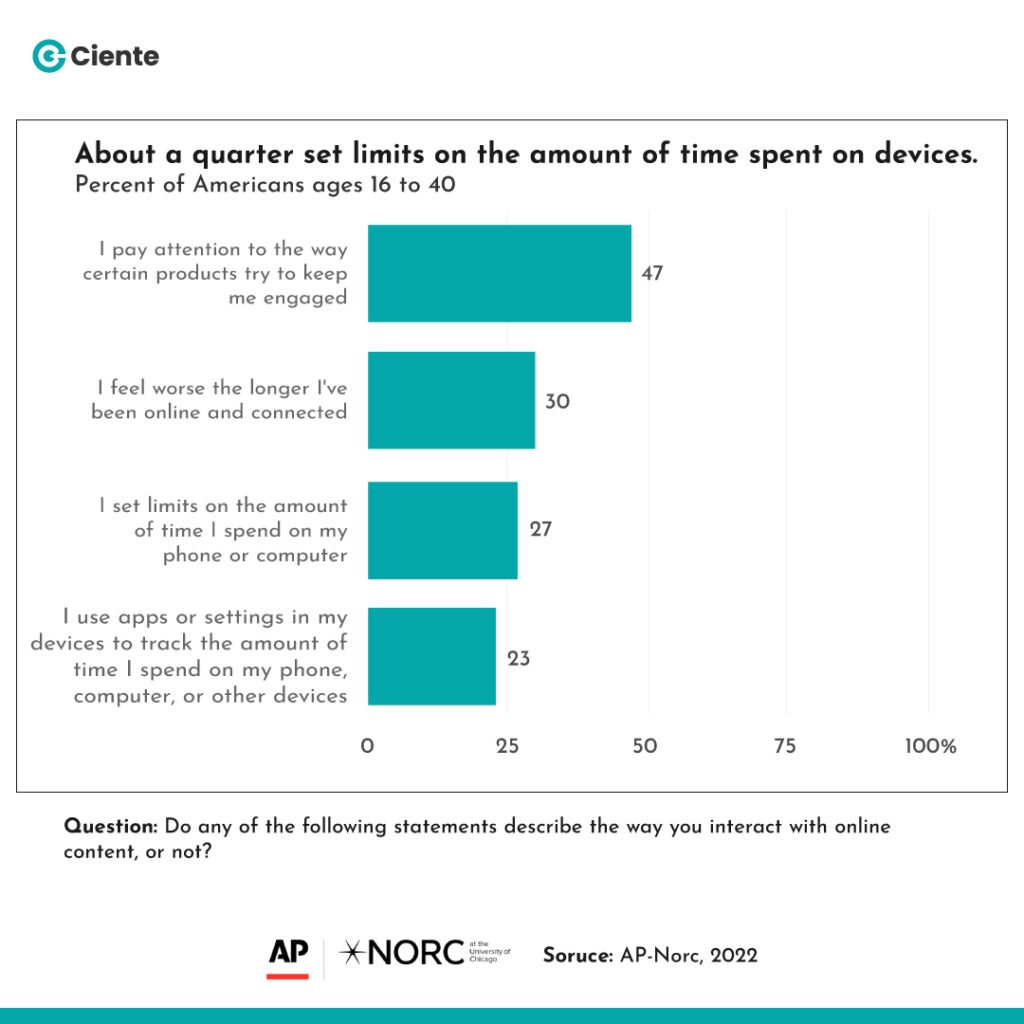
The tech-addled world has gotten most of us spending our days distracted- making it impossible to pay undivided attention to any task at hand. And your customers aren’t any different.

With almost every aspect of our lives shifting online, it feels like it’s time for a break. In the tech space, most people are excited to get back to in-person events and tradeshows to form meaningful connections in ways humans have always known, not just digitally. Aren’t we all tired of this hyper-connected world that keeps pulling us in all possible directions?

bar graph

How it impacts the customer

Information Overload

There is increased access to information and convenient communications, but it hasn’t improved the quality of our lives as previously anticipated. Such deluge often results in frustration, indecision, anxiety, and dwindling attention.

Digital Disconnect and Repercussions

The Internet is now the constant overhang that pervades our lives in more ways than we realize. There’s a massive disconnect that no one wants to address, and yes, it has enormous repercussions on customer behavior.

Audience Saturation

Customers feel inundated with digital experiences that all look like the same version of the same thing. Marketers must create at an elite level to give their audience something refreshing to look at because your audience has tuned out the mediocre stuff.

Revenue Impact

Companies that manage to address the feelings of tech overwhelm in their customers and minimize friction would enjoy higher revenue growth than their counterparts that don’t.

bar graph 1

Too much screen time

Beyond Attention: Real Engagement

Massive volumes wouldn’t help your marketing game anymore. Keeping your customer engaged is the only way forward. Now it’s not about keeping them glued to their screens but more about finding creative ways to engage them without worsening the digital fatigue.

The Human Touch

Marketers need to give a human touch to customer interactions. Sending irrelevant marketing messages at the wrong time is a surefire way to drive your customers away.

Data vs Relevance

The modern sales and marketing imperative is to turn customer interactions into conversations that matter. Marketers have amassed large volumes of data but fail to personalize it and make it relevant to their target market. Customers, on the other hand, are tired of marketing messages that all talk about the same thing.

Break the Pattern

It’s time to stop vying for your customers’ attention how everyone else is; be more human. Now this might sound counter-intuitive, but marketers need to step away from the screen for a bit and find out-of-the-box ways to communicate with their audience and create truly engaging experiences.

We can’t be innovative with our marketing if we are in a rut; the same way of doing things and hoping for different results.

The Editor’s Note

Your customers’ experiences with digital technologies shifted during the pandemic, and the spike of it is making it change again. It’s not about being atavistic but about being more human. People’s desires to digitally disconnect are increasing; make sure it’s not your brand they feel a need to disconnect from!

Don’t design lacklustre digital experiences; design for joy.

Performance-Marketing, Optimizing ROI With 6 Performance Marketing Strategies

Performance Marketing: Optimizing ROI With 6 Performance Marketing Strategies

Performance Marketing: Optimizing ROI With 6 Performance Marketing Strategies

The world of marketing is undergoing a major shift. Explore six groundbreaking ROI-driven performance marketing strategies to excel as a business today.

Marketing is the beating heart of the business world, the mystical potion that bridges the chasm between a product and its consumers. As the digital age ushers in a new era, a significant player is reshaping the arena—Performance Marketing.

Performance marketing is a paradigm shift away from the traditional realm of speculative techniques since it only requires payment for results. Pay-per-action marketing is a method of digital advertising in which clients only pay for results (such as a sale, a lead, or a click) rather than for exposure. Performance marketing is a quickly developing, low-cost alternative to conventional approaches, and its future trajectory is a source of much interest.

So, what does the future hold for performance marketing? As we delve into the topic, we find the answer within growing technological advancements, enriched data, and an increasingly digital society. The ever-growing expanse of social media platforms holds untapped potential for marketers with the right strategies up their sleeves.

Understanding Performance Marketing ROI: A Key Marketing KPI

Brands and businesses are beginning to realize the profound impact of an effective social media marketing strategy on their bottom line. As we look forward to 2023, this trend is likely to rise, shifting focus onto the role of performance marketing in amplifying the marketing ROI.

However, the term ‘ROI’ often echoes in the marketing realm with varied interpretations. In the context of performance marketing , ROI is a crucial marketing KPI, a mirror reflecting the profitability and effectiveness of marketing campaigns. The question of ‘what constitutes a good ROI’ may invite a spectrum of answers, primarily driven by industry type and business size. The general consensus? An ROI justifying the cost and effort of the campaigns.

The ability to optimize ROI is a holy grail for marketers. It’s not just about the marketing strategy with the highest ROI; it’s about identifying, implementing, and mastering strategies that consistently produce impressive returns.

Strategizing for Success: 6 Performance Marketing Strategies to Enhance ROI

Leveraging Data to Refine Strategies:

There’s magic in numbers and patterns, waiting to be harnessed. In the increasingly competitive digital marketing arena, data serves as the secret weapon. It holds the keys to consumer behavior, preferences, and purchasing habits, which can dramatically inform marketing strategies. It’s about looking beyond the sea of data and identifying patterns, trends, and insights that can steer your brand toward success.

A comprehensive understanding of data can transform how we approach marketing, allowing businesses to create strategies that strike a chord with their audience. It’s the amalgamation of art and science, intuition and facts, that leads to a high-performing marketing strategy with an improved ROI. Remember, data is not just a by-product of activities but a vital tool for driving growth and profitability.

Harnessing the Power of Social Media:

Today, social media is not just a platform; it’s a universe of its own, housing diverse demographics. With the expanding reach of platforms like Facebook, Instagram, Twitter, LinkedIn, and more, social media has become a hotbed for targeted marketing. By developing an effective social media marketing plan, brands can penetrate deeper into their target market, facilitating direct engagement with customers. A well-executed targeted ad or an engaging social media campaign can strike a chord with users, building loyalty and encouraging brand advocacy. The trick is to create engaging, relevant, and shareable content. Remember, in the era of social media, your audience can become your most influential promoters.

In the evolving world of marketing, a striking statistic punctuates the importance of our second strategy, Harnessing the Power of Social Media. As per LinkedIn’s 2020 data, a compelling 78% of salespeople engaging in social selling are outselling their counterparts who haven’t yet stepped onto this digital stage. This trend underlines the potential of social selling in boosting ROI, reinforcing the necessity for marketers to adapt and innovate with time.

Content—The Quiet Gamechanger:

Amidst the flashy ads and the aggressive marketing tactics, content quietly weaves its magic. Compelling, relatable content acts as the backbone of online marketing, subtly steering consumers toward your brand. The art of content marketing is to craft content that does more than just sell; it tells a story, incites emotions, and engages. It builds trust and nurtures leads, fostering a strong brand presence that goes beyond simple recognition. When you hit the sweet spot with content that resonates deeply with your audience, you’re bound to see a significant improvement in your ROI.

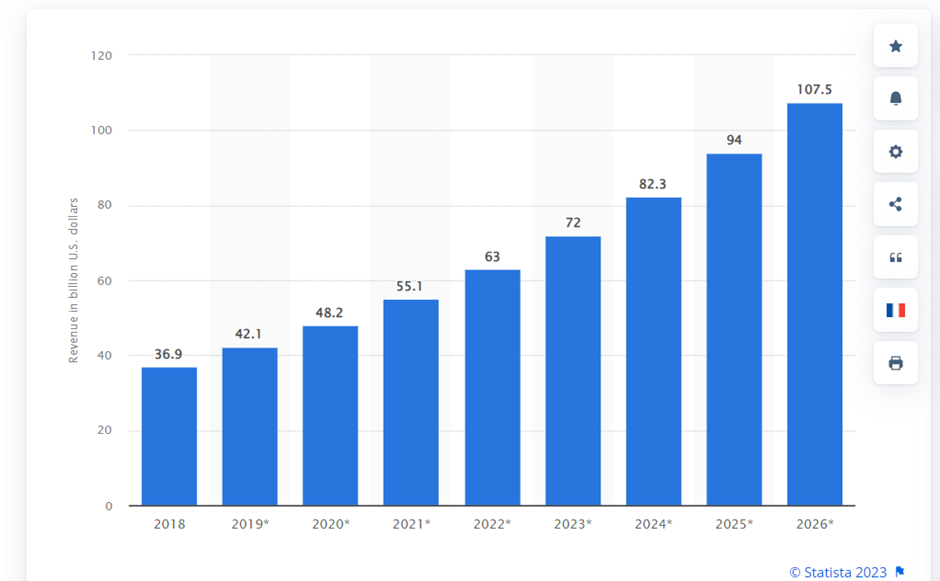
According to Statista, 2022 witnessed the worldwide content marketing industry generating an approximate revenue of 63 billion U.S. dollars. Projections suggest a promising upward trajectory, with an estimated growth of 72 billion in 2023. Looking further into the crystal ball of the industry, experts forecast a continuing upward trend, expecting the revenue to balloon to an impressive 107 billion by 2026.

image 14

Personalizing the Customer Experience:

Today’s consumer wants more than just a product or service; they seek an experience, an emotional connection. Personalization is the key to this kingdom. Tailoring online and social media campaigns to individual preferences and behaviors create unique customer journeys that lead to enhanced engagement and loyalty. It’s about acknowledging that each customer is unique and that one size does not fit all. This commitment to personalization not only elevates the customer experience but also significantly enhances ROI.

Testing, Measuring, and Adjusting:

The world of digital marketing is dynamic, with consumer trends, technology, and competition constantly evolving. Staying ahead of the curve requires the agility to adapt. It’s important to foster a culture of continuous learning, where marketing strategies are not set in stone but are consistently tested, measured, and adjusted. This iterative process provides the flexibility to respond to changes effectively and ensures that every campaign and strategy delivers its maximum potential.

Optimizing SEO and SEM:

In the crowded digital landscape, visibility is the lifeblood of any brand. Effective use of SEO (Search Engine Optimization) and SEM (Search Engine Marketing) can give your brand the boost it needs. SEO focuses on enhancing the website’s organic ranking on search engines, while SEM involves paid strategies to improve visibility. Combined, these can significantly increase brand awareness, drive organic traffic, and enhance your online presence, all contributing to an improved ROI.

These detailed strategies provide a roadmap to navigate the complex landscape of performance marketing. By leveraging these tactics, businesses can optimize their performance marketing campaigns, maximize their reach and engagement, and drive a stronger ROI.

Conclusion: Preparing for the Future of Performance Marketing

Improving ROI in digital marketing is akin to surfing. It’s a constant balancing act, adjusting to the changing waves of technology and audience preferences. But the one who perseveres and learns to ride the wave can witness impressive results.

As we venture into 2023, performance marketing is set to become even more targeted, data-driven, and customer-centric. In this exciting marketing milieu, businesses that are curious and adaptable, armed with a robust performance mkt plan, will find themselves well-equipped to make data-driven decisions, optimize resources, and enhance their ROI amidst a sea of competition.

In the grand scheme of things, performance marketing is not just about being digital; it’s about being curious, resilient, and ahead of the curve. It’s about ensuring every move, every campaign, every strategy, makes a measurable impact. And that is the true beauty of performance marketing—turning the enigma of marketing into a science, ensuring a symphony where every note contributes to the crescendo, the ROI. The world of performance marketing awaits those who wish to dive in and harness its immense potential.

Navigating the Digital Landscape: Essential Elements of Chatbots and AI/ML in 2023

Navigating the Digital Landscape: Essential Elements of Chatbots and AI/ML in 2023

Navigating the Digital Landscape: Essential Elements of Chatbots and AI/ML in 2023

Discover the transformation of chatbots in the era of AI, as they evolve from simple rule-based systems to sophisticated human-like digital assistants.

We’re living in an era where it’s all about the fast-forward. In the dynamic sphere of digital evolution, chatbots powered by conversational AI have become not just a fad but a non-negotiable in customer service, marketing, and sales strategies across diverse industries. As artificial intelligence (AI) and machine learning (ML) technologies continue to evolve, they revolutionize the way chatbots communicate and engage with customers. In this article, we will talk about the indispensable elements of chatbots and AI/ML in 2023.

Chatbots and AI

AI-Powered Evolution in Chatbots

The term ‘chatbot’ is more than a digital buzzword; it represents a new era in our interaction with technology. Chatbots, inherently AI-powered software, are designed to engage in conversation with humans in their natural language. Their domain of influence has grown exponentially, covering a multitude of digital platforms such as websites, social media, and messaging apps.

The projected growth of the chatbot market is expected to exceed $1250 million by 2025, showcasing a substantial expansion with an estimated annual increase of approximately $200 million this year.

image 12

Over the years, the capabilities of these chatbots have undergone a remarkable transformation. Unlike their rudimentary predecessors, which were largely rule-based and offered only predefined responses, the contemporary chatbots leverage the prowess of advanced AI, making their interactions increasingly intricate and human-like.

This leads us to the concept of ‘AI chatbots’. These sophisticated systems utilize cutting-edge AI technologies, including natural language processing (NLP) and machine learning, enabling them to understand, learn from, and react to user inputs.

Today’s AI chatbots have moved past the simplistic construct of preordained responses. They now understand the nuances of context, can respond to sentiment, and are capable of managing free-flowing conversations that closely mimic human interaction. This evolution in AI technology has reshaped the functionality of chatbots, transforming them into digital reflections of our own conversational intellect.

Deconstructing the Chatbot: A Peek Under the Hood

At first glance, chatbots might seem fairly straightforward, but a closer look reveals a different story. Beneath the surface, these digital allies hide an intricate complexity that rivals modern supercomputers. Chatbots are designed with a single goal in mind— to make human interaction feel as natural and spontaneous as possible. This goal is achieved through the strategic integration of various technologies that allow chatbots to understand, respond, and learn from human interactions. So, what’s really inside a chatbot? Let’s talk about it in detail.

The Conversation Engine: Chatbot’s Pulse

Every chatbot has its own pulse, a beating heart that powers its functionality— the conversation engine. This component is typically fueled by Natural Language Processing (NLP), a branch of AI that allows chatbots to understand and interpret human language. This integral part manages a sequence of complex tasks: it breaks down user inputs into understandable parts, deciphers the user’s intent, and finally converts the system’s response into a conversational, human-like dialogue. This engine is the heart of a chatbot, enabling it to establish meaningful and efficient interactions with users.

The field of Natural Language Processing (NLP) is experiencing rapid growth within the Artificial Intelligence market. Statista’s projections suggest that by the year 2028, the NLP market is expected to surpass a staggering value of 127 billion U.S. dollars.

image 13

Machine Learning Algorithms: Chatbot’s Cerebral Power

Chatbots do more than just comprehend and respond to human language. They learn from every interaction and grow smarter over time. This remarkable ‘learning’ aspect is facilitated by another key component— Machine Learning algorithms. Serving as the ‘brain’ of the chatbot, these algorithms process data from past interactions to enhance future responses.

Depending on the sophistication of the bot, machine learning models for chatbots can range from simple decision trees to complex neural networks. Regardless of the complexity, the goal remains constant: to enable the chatbot to deliver increasingly accurate and relevant responses over time.

User Interface: Chatbot’s Persona

The user interface (UI) is the ‘face’ of a chatbot. It’s the first thing users interact with and is essentially the persona of the chatbot. The UI can vary from a simple text interface to an advanced interface featuring dynamic multimedia content. The challenge of crafting a perfect UI lies in ensuring it is user-friendly, intuitive, and responsive. It should facilitate clear communication, easy navigation, and quick access to essential features, thereby enhancing the user experience.

Database: Chatbot’s Treasure Trove

A robust database acts as the ‘memory’ of a chatbot. It is the treasure trove where all user inputs and bot responses are stored. This information is invaluable to a chatbot as it forms the basis for the learning data that fuels ML algorithms. A well-maintained database not only aids the learning process of the bot but also helps in maintaining a record of past interactions, which can be crucial for providing context in ongoing conversations.

Integration Capabilities: Chatbot’s Extensions

A chatbot is as good as its network. It needs robust integration capabilities to be efficient. These capabilities allow chatbots to connect and communicate with other systems and platforms. They can pull the necessary information from these connections, which enhances the bot’s utility to the user. Whether it’s fetching weather data from an external API or retrieving user information from a CRM system, a chatbot’s integration capabilities enable it to function effectively in different environments.

AI/ML in 2023: Unraveling the Future of Intelligent Automation

Artificial Intelligence (AI) and Machine Learning (ML) are like the mythical creatures of our technological landscape, always a step ahead, leading us into a new era of intelligent automation. As we move further into 2023, these beasts of innovation continue to break boundaries and redefine the realm of possibilities. From self-driving cars to personalized shopping experiences, and advanced healthcare diagnostics to smart home devices, AI/ML is embedded so deeply in our everyday lives that it has become almost invisible.

AI/ML Proliferation Across the Spectrum

The proliferation of AI/ML across industries has been nothing short of a technological boom. In healthcare, it has been instrumental in streamlining operations, predicting diseases, and enhancing patient care. In finance, AI/ML is changing the game by automating operations, managing risk, detecting fraud, and providing personalized services to customers. Even in retail, AI/ML is being used to understand customer behavior, predict trends, manage inventory, and provide personalized shopping experiences.

AI/ML Supercharging Chatbot Capabilities

Chatbots and AI/ML share a symbiotic relationship. AI/ML has played a pivotal role in enhancing the capabilities of chatbots. In 2023, chatbots have moved far beyond simple, rule-based systems to become intelligent digital assistants that understand context, manage complex conversations, and provide personalized responses.

Through machine learning, chatbots learn from each interaction, refining their responses to improve over time. AI-powered sentiment analysis enables chatbots to understand the underlying emotions of users and respond empathetically, providing a more human-like interaction.

conclusion

AI/ML in 2023 continues to be at the vanguard of technological innovation, shaping the way we live, work, and interact with the world around us. As we continue to explore the potential of these technologies, the possibilities seem limitless, offering a glimpse of an exciting and intelligent future. Here’s to our journey in this brave new world— may it always be driven by curiosity and wonder!

Connecting with the C-Suite

Connecting with the C-Suite

Connecting with the C-Suite

B2B sales and marketing teams must learn how to get the C-Suite buy-in for continued success. But isn’t it easier said than done?

The sales and marketing teams are underperforming when it comes to engaging the C- level execs. It needs a higher level of communication to sell to the members of the C- suite.

The first step is understanding what the C-suite cares about. Selling to them means tailoring your communication to their preferences. Let’s get deep into it!

What the C-Suite cares about

The C-Suite of any company cares about strategy, vision, and turning ideas into reality. Strapped for time, they only want to share their precious time with people like them- not in terms of titles necessarily, but the mindset.

Establish yourself as an expert in your niche or domain. Build rapport with the connections of the C-level executive you’re trying to connect with and ensure people they trust know you.

It’s crucial to prepare right; know your target, their company, and the industry, in and out. Rather than selling them from a place of exigency, connect with them from a place of great power.

the b2b buyer journey

The Strategy & Execution
 
Go in with a solid, well-thought-out plan. Chart out how you want the conversation to flow and the direction you’d steer it in to make considerable progress toward closing.
 
How will you segue from one point to another? What can be the potential objections, and how will you handle those? Could you possibly build a sphere of influence to accelerate the decision-making process?
 
These are some of the questions you must have answers to before you have a conversation with the C-suite. You can directly talk to your customer’ customers to better understand the end users and create an irresistible value prop.
 
Always send an agenda so they know who needs to be in the discussion, and always leave the meeting with clear next steps and CTAs.
 
Rapport Building
 
The most important thing to connect with the Chiefs of a company is showing you’re worth an investment. Decision-making is the key; it can be an asset or a cost to the balance sheet.
 
If you have the opportunity to talk to the C-suite- be an active listener. With your body language and verbal communication, show them you’re paying attention to each word they speak.
 
C-suite is a group of accountable, focused, and highly influential people. If you have to sell to one or more people from this group, determine the key players and their decision-making roles- engaging the whole buying committee.
 
The Editor’s Note
When you work hard and are strategic enough to crack a deal, go the extra mile and ask for referrals. Overdeliver and deepen your relationship with the C-suite executive.
 
Be someone they feel is at their level and share their wins and challenges with. Because, in the end, it’s all about relationships.

7 Benefits of Intelligent Apps to Increase User Engagement 2023

How does AI Increase User Engagement? 7 Benefits of Intelligent Apps

How does AI Increase User Engagement? 7 Benefits of Intelligent Apps

With the overwhelm of digital content, there has been an increased use of artificial intelligence (AI) and machine learning (ML) to make user experiences more personal, seamless, and relevant. It has become adept at solving user needs by studying a combination of user behaviour, historical data, preferences, and feedback. The use of artificial intelligence has become so ubiquitous that it has become the forefront of how we interact with technology today. E-commerce, media and entertainment, news outlets, and social media are among industries that are reshaping digital consumption by using intelligent apps to deliver tailored experiences to customers. 

In this article, we explore how intelligent apps have made a profound impact on customer engagement and why it benefits both companies and users in an increasingly AI-driven landscape. 

What are intelligent apps? 

Intelligent apps (or AI-powered apps) are software applications that leverage artificial intelligence (AI) and machine learning (ML) technologies to offer advanced functionalities and intelligent capabilities. By analysing user data, learning from user interactions, and adapting to their behaviour, these apps aim to provide personalised experiences on a mass scale—by tailored content, proactive assistance, or predictive insights. It uses techniques such as natural language processing, data analysis, and computer vision to deliver context-specific responses. From virtual assistants and chatbots to recommendation systems and automated workflows, intelligent apps are transforming the way users interact with technology and opening up new possibilities for personalised, efficient, and intelligent experiences.

How intelligence apps increase user engagement in 2023

1. Personalised user experience

AI makes extensive use of user data—including search history, user demographics, user location, preferences, and purchase history to provide tailored solutions for the user. Companies with a diverse target audience can leverage this kind of data to understand a multitude of user patterns with ease and create product streams that align with various segments of their customer base. This ability to provide a personalised user experience also means stronger customer relationships, more leads, and customer loyalty. 

The use of AI in this type of curation is commonly seen in streaming platforms, digital media outlets, search engines, and social media platforms, all of which make content recommendations based on users’ viewing history and ratings. Intelligent apps are also used in e-commerce platforms, food delivery services, ride services, and more.

In a global context, this kind of user data can help multinational companies like Netflix, Amazon, and Uber create a hyper-local presence in different regions of the world and cater to the unique needs of thousands of users at once. 

2. Predictive analytics 

As intelligent apps continue to take in more data about users, they continue to refine and improve their models of analysis. This means, over time, they are capable of using their insights of historical data to predict user needs, behaviour, and inclinations. By continuously learning and adapting to different use cases, it can generate more personalised recommendations, provide tailored notifications, and can provide proactive assistance. In a sense, it picks up on human behaviour faster, which leads to users feeling more satisfied and connected when an intelligent app correctly anticipates their needs. 

In a landscape where speedy and efficient service is key to user satisfaction, integrating intelligent apps that predict user needs ensures overall customer satisfaction and higher customer loyalty. 

3. Detailed user insights

Intelligent apps also use behavioural analysis and sentiment analysis to analyse user preferences, going far beyond a purely quantitative approach. They look at user interactions, engagement patterns, as well as cues of emotions and sentiment in feedback. This helps them gauge user intentions and motivations, allowing them to deliver targeted recommendations, content, and advertisement that resonate with individual users. 

Through natural language processing, they can also understand user responses towards specific products, services, or brand experiences. This enables them to respond to user feedback promptly, identify areas for improvement, and modify responses to meet user expectations. 

4. Cross-Platform Functionality  

A major benefit of intelligent apps is their ability to maintain a consistent and integrated user experience across multiple channels and devices. They seamlessly transition between mobile apps, web browsers, and smart devices, allowing their users to access their information wherever they are. This kind of cross-platform functionality increases accessibility and convenience, allows users to interact with the app through their preferred channels, and safeguards their content and services. 

For instance, an e-commerce app like Amazon provides a seamless shopping experience across desktop, mobile, and voice-enabled devices like Amazon Echo. Users can easily browse, purchase, and track their orders through various touchpoints, contributing to a cohesive and engaging user experience.

5. Context-aware and responsive 

Intelligent apps are designed to understand user context and provide relevant and timely information. Through advanced technologies like natural language processing and machine learning, these apps can interpret user queries and adapt their responses accordingly. They consider factors such as location, time, and user preferences to offer contextually relevant content, recommendations, or actions in real-time. 

For instance, a virtual assistant like Siri or Google Assistant can provide instantaneous weather updates or suggest nearby restaurants based on the user’s location. This context awareness enables intelligent apps to deliver targeted experiences that are prompt, enhancing user engagement and satisfaction.

6. Smart keywords

Intelligent apps employ sophisticated search capabilities, input indirect keywords or natural language (commonly used words rather than targeted keywords) to find the information they need. They use semantic analysis and machine learning data to understand a user’s intent and generate contextually apt results. This includes synonyms and words/phrases that refer to the search term. Intelligent apps enhance user engagement by enabling them to effortlessly discover the content they seek, even if they are unsure about what exactly they are looking for. They also aid users in clarifying their search intent and helping them narrow down on what they are looking for. 

For example, a travel app like Airbnb allows users to search for unique accommodations by describing specific features or preferences, such as “cozy cabin near the beach.” Intelligent apps present them with a comprehensive list of choices that suit their unique combination of requirements, making the research process much more efficient and seamless. By studying the keywords and delivering relevant search results, these apps improve user engagement and satisfaction.

7. Accessibility of information 

Intelligent apps prioritise the accessibility of information, ensuring users can easily find and retrieve the content they need. Through intelligent categorisation, tagging, and content organisation, these apps optimise the user experience by presenting information in a structured and intuitive manner. 

News aggregation sites like Flipboard and Google News, for instance, curate articles based on a user’s interest, commonly browsed topics, location, urgency of news, etc. It helps users curate the kind of news and publications they want to follow. They also prioritise visual accessibility—news is presented in an easy-to-navigate format. Users can quickly browse headlines or summaries, then and more about the stories they’re interested in. 

By making information readily accessible, intelligent apps help users reduce search time, enabling efficient navigation, and facilitating quick decision-making. 

The future of intelligent apps — for companies and their users 

Intelligent apps are set to redefine our relationship with digital technology, with significant advancements in natural language processing, augmented reality, IoT integration, and data analytics. With AI playing a massive role in creating personalised and immersive user experiences, consumers can engage with apps more proactively. 

The use of intelligent apps also helps companies build customer relationships with more efficiency. They provide valuable insights about user behaviour, preferences, and trends, allowing them to make data-driven decisions and develop targeted marketing strategies. Intelligent apps also enable companies to streamline processes, improve operational efficiency, and optimise resource allocation, leading to cost savings and increased productivity. 

Learn About “Why This AI-Powered Coca Cola AD is a Marketing Masterpiece”