Retail Media Advertising and AdTech Companies: The Future of E-commerce Advertisements

Retail Media Advertising and AdTech Companies: The Future of E-commerce Advertisements

Retail Media Advertising and AdTech Companies: The Future of E-commerce Advertisements

Discover the future of e-commerce advertisements through retail media advertising and AdTech companies. Personalization, programmatic technology, and augmented reality redefine digital marketing.

Introduction

Retail media advertising has emerged as a powerful and innovative approach to consumer engagement. As e-commerce continues to witness unprecedented growth, the role of AdTech companies in enabling targeted and effective advertising becomes more crucial than ever. This article explores the rising prominence of retail media advertising in the e-commerce domain and how AdTech companies are shaping the future of digital advertising.

The Evolution of Retail Media Advertising

From Brick-and-Mortar to Digital Shelf

Traditionally, retail media advertising was confined to physical stores, where brands paid for prime shelf space and in-store promotions to capture consumers’ attention. However, with the rapid shift towards e-commerce, the focus has shifted from physical shelves to the digital realm. Now, brands invest in advertising within the online shopping environment, targeting consumers at various stages of the purchase journey.

The Rise of Retail Media Networks

With the growth of e-commerce giants like Amazon, Walmart, and Alibaba, retail media networks have emerged as powerful players in the advertising landscape. These networks leverage the vast data generated by consumers’ online shopping behaviors to deliver highly targeted and personalized ads. Retail media networks offer brands unprecedented reach and impact by aligning ads with consumers’ preferences and purchase intent.

Personalization and Targeting

Retail media advertising allows for granular targeting based on demographics, shopping behavior, and past purchase history. This level of personalization ensures that ads are relevant and timely, significantly increasing the likelihood of conversion. As AdTech companies continue to refine their algorithms, the precision and effectiveness of targeted advertising are only set to improve.

The Role of AdTech Companies

Leveraging Big Data and AI

AdTech companies are at the forefront of the retail media advertising revolution. By harnessing big data and advanced AI algorithms, these companies can analyze vast amounts of consumer data to better understand their preferences and behaviors. This insight enables brands to tailor their ad campaigns exceptionally, leading to higher engagement and return on investment.

Contextual Advertising

Context matters in advertising. AdTech companies excel at delivering ads that are contextually relevant to the consumer’s current browsing or shopping experience. By analyzing page content and user behavior in real-time, contextual advertising ensures that ads complement the consumer’s journey rather than interrupt it.

Programmatic Advertising

Programmatic advertising, driven by automation and AI, has become a driving force in retail media advertising. This approach allows brands to bid for ad placements in real-time auctions, optimizing their ad spend and reaching the right audience at the right moment. As programmatic technology continues to evolve, it will play an even more significant role in shaping the future of retail media advertising.

Challenges and Opportunities

Ad Blocking and Ad Fatigue

While retail media advertising offers unparalleled targeting capabilities, it also faces ad blocking and fatigue challenges. Consumers increasingly use ad blockers to avoid intrusive ads, and the abundance of ads can lead to ad fatigue, reducing their overall effectiveness. AdTech companies must strike a delicate balance between ad frequency and relevance to combat these issues effectively.

Augmented Reality and Immersive Experiences

One exciting opportunity for retail media advertising is leveraging augmented reality (AR) and virtual reality (VR) technologies. AR and VR can create immersive brand experiences, allowing consumers to interact with products virtually before purchasing. Incorporating AR and VR into retail media ads can elevate engagement and give brands a competitive edge.

Editor’s Note

As e-commerce continues to reshape the retail landscape, retail media advertising and AdTech companies are poised to play a vital role in shaping the future of digital advertising. By harnessing the power of big data, AI, and programmatic technology, retail media advertising can deliver personalized and contextually relevant ads, enhancing consumer engagement and driving sales. To stay ahead in this competitive arena, brands must embrace the opportunities offered by immersive technologies and balance frequency and relevance in their ad campaigns.
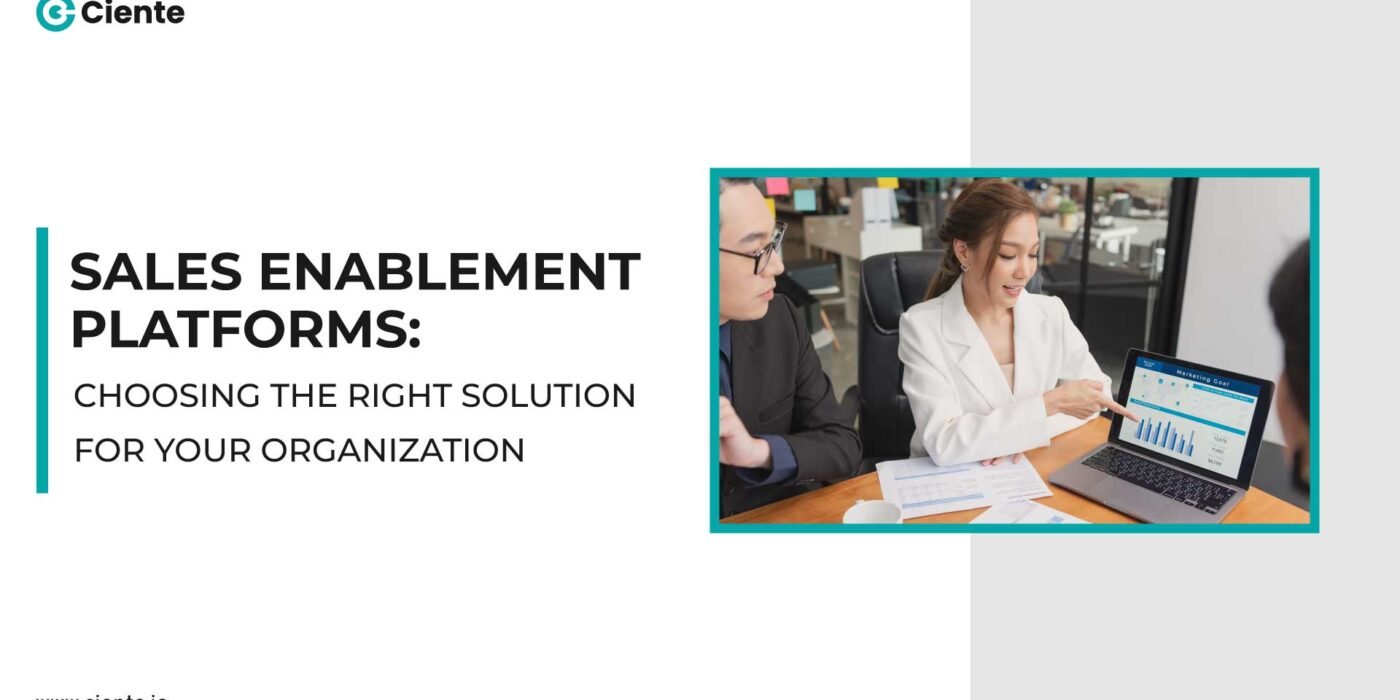

Sales-Enablement-Platforms-Choosing-the-Right-Solution-for-Your-Organization-2023

Sales Enablement Platforms: Choosing the Right Solution for Your Organization 2023

Sales Enablement Platforms: Choosing the Right Solution for Your Organization 2023

Explore key factors in selecting the ideal sales enablement platform for 2023 to drive efficiency and amplify your team’s success.

If you’ve been following business news over the last decade, you’ve probably heard the term “sales enablement.” Sales enablement is essential as more companies move to a digital-first approach. With the use of a standard set of resources and processes, this initiative aims to improve lead generation, sales pipeline management, and sale closing. The sales industry will have fully embraced the digital age by the end of 2023. Sales teams can no longer succeed with just cold calling and proposals. Tools like customer relationship management applications, sales management systems, and comprehensive sales enablement platforms are available to them. In this article, we’ll take a look at sales enablement tools, highlighting their benefits and outlining the elements that matter most.

The Evolution of Sales Enablement

You may be wondering why your company needs a sales enablement platform. Well, these systems aren’t simply about keeping up with technologically adept rivals. They present a novel approach to handling sales, boosting productivity, and meeting objectives.

With good sales enablement software, you can see every aspect of the selling cycle. It consolidates the features of numerous sales apps into a single user-friendly interface. It reduces mundane administrative work so your sales teams can concentrate on closing deals.

Furthermore, these platforms provide a novel setting in which to onboard and educate sales staff. Your staff will be ready to wow potential consumers with cutting-edge sales techniques and information thanks to their efforts. Successful sales strategies always include a sales enablement platform.

Why Use a Sales Enablement Platforms ?

How often have you found a useful product or appliance and thought to yourself, “How did I ever get by without this?” If you have this question, you might want to learn more about sales enablement tools. The sales landscape has always been complicated because of the constant need to balance a variety of resources, pieces of information, and methods. This is where sales enablement platforms are most useful.

All Your Sales Tools in One Place

The sales enablement platform is the equivalent of a Swiss Army knife for your sales force. The days of juggling different tools, losing track of information across multiple tabs, and generally feeling disorganized are over. Now picture all of your resources—customer relationship management, high qualified lead management, and analytics—in a single, convenient bundle. The goal is to ensure that your staff complements rather than fights against technology, so it’s not simply about ease of use.

Get More Done, Faster

According to Hubspot, over 50% of the salespeople’s time is lost on ineffective prospecting. Time is more than just money in the sales business; it’s also the currency of building rapport, learning about customers’ wants and requirements, and ultimately making a sale. Using a sales enablement platform, you can streamline or automate activities like data input and email follow-up that used to take hours but now take minutes. It’s like having a reliable assistant who understands exactly when to step in, allowing you to focus on things like cultivating relationships with clients.

Quick and Easy Training

Think back to your first week or so on the job. Information overload, worried about making mistakes, and excitement before making a sale for the first time all at once? These days are precisely why sales enablement solutions exist.

Recent studies show that over half of all sales managers report feeling too busy to invest in employee training and development. For this purpose, these platforms are ideal.

Training modules, knowledge bases, and interactive sessions help new team members get up to speed quickly and confidently. But what about the seasoned pros? Well, they can always benefit from a refresher course or familiarization with the latest developments in the field.

Teamwork Makes the Dream Work

This classic saying holds truer than ever for modern marketing and sales departments. Sales enablement platforms mediate between marketing and sales by providing a central hub for the exchange of information and insight. It’s not simply about pooling resources; it’s also about establishing a cadence, a coordinated effort in which both groups move in step with one another, coordinating their messages to the client at all times.

Let the Numbers Talk

If you ever find yourself in a position where you need to defend a strategy or direction in a meeting, you will quickly realize the significance of statistics. It’s not all about the numbers; the stories they convey are crucial, too. Sales enablement tools equip you with analytics you can use to back your decisions, anticipate trends, and adjust course as needed. In an era where data is the new gold, you might think of these services as your own private vault.

What Should You Look for in a Sales Enablement Platform?

Keeping up with the competition in today’s sales environment requires sales teams to have access to resources designed specifically for them. When it comes to assisting salespeople in their interactions with customers and prospects, a sales enablement platform is invaluable. You must take into account the following criteria while assessing a sales enablement platform:

1. Ease of Integration

It is crucial that your sales enablement platform easily connects to your current CRM and other digital tools. Your sales staff will always have instant, complete access to the relevant information thanks to this streamlined communication system.

2. Content Management

Implementing a powerful content management system equips your sales staff with the means to quickly identify, organize, and share relevant content with prospective clients. In addition to helping you track the success of your material, this instrument can shed light on the tastes of your niche demographic.

3. Training and Onboarding

Finding a system with good training and onboarding options is crucial. Everyone in the company can benefit from this training strategy since it helps new hires learn quickly and promotes consistency.

4. Analytics and Reporting

Having a reliable analytics and reporting system in place is crucial for keeping track of your leads, opportunities, and deals. Sales managers could utilize this data to provide tailored training to their staff.

5. Collaboration Tools

In today’s fast-paced world, you want your team to be on the same page, always. To do this, it is necessary to use a medium that goes beyond simple communication to promote actual collaboration.

6. Personalization and Automation

A platform that not only lets users tailor their interactions with customers but also simplifies and automates the mundane, time-consuming tasks that might get in the way is the one you should look out for. This results in less time spent on monotonous administrative activities and more time spent on meaningful interactions with clients.

7. Compliance and Security

In an age where data breaches make headlines, robust security isn’t optional; it’s vital. Not only is there value in preventing damage, but also in preventing violations of the law and other regulations.

8. Scalability

Pick your platform with an eye toward the future as well as the present. Make sure your platform can handle, and even thrive with future business expansion.

9. Technical support

problems can arise with even the best equipment. This may be an issue with the platform itself or with the way your team is attempting to use it. If you or your team ever hit a snag, you should be able to reach out to the platform’s helpful customer support staff at any time of day or night.

10. Cost

The price of the platform is obviously a key factor. However, the most important thing is the value the platform provides. Seek out a system that offers first-rate functionality at a price that doesn’t break the bank.

Conclusion

We anticipate sales enablement platforms to reach even greater heights of success in the coming year of 2023. Therefore, now is the time to make an investment in them and locate one that is a good fit for your company. You should be on the lookout for a sales enablement platform that incorporates analytical, collaborative, and flexible capabilities to help you expand your organization. Having a solid foundation in place can help your business run smoothly and quickly expand into other areas.

Sophisticated tech is good; byzantine is not

Sophisticated tech is good; Byzantine is not

Sophisticated tech is good; Byzantine is not

If you’re investing more time in technology than it’s freeing up for you- is it an investment or a mere liability?

We’ve all had our fair share of experiences with complicated technologies that make most of us want to pull our hair out. It’s frustrating, to say the least.

We’ve also had experiences that are the polar opposite- they make life easy. These platforms and technologies are smooth and intuitive. You get what you need without racking your brains too hard.

Simplicity wins in the digital world. Your customers want seamless experiences with the products and services they interact with; brands that provide ease and convenience with a solid backbone of technology will continue to leapfrog their counterparts that don’t. Because complicated doesn’t always mean intelligent.

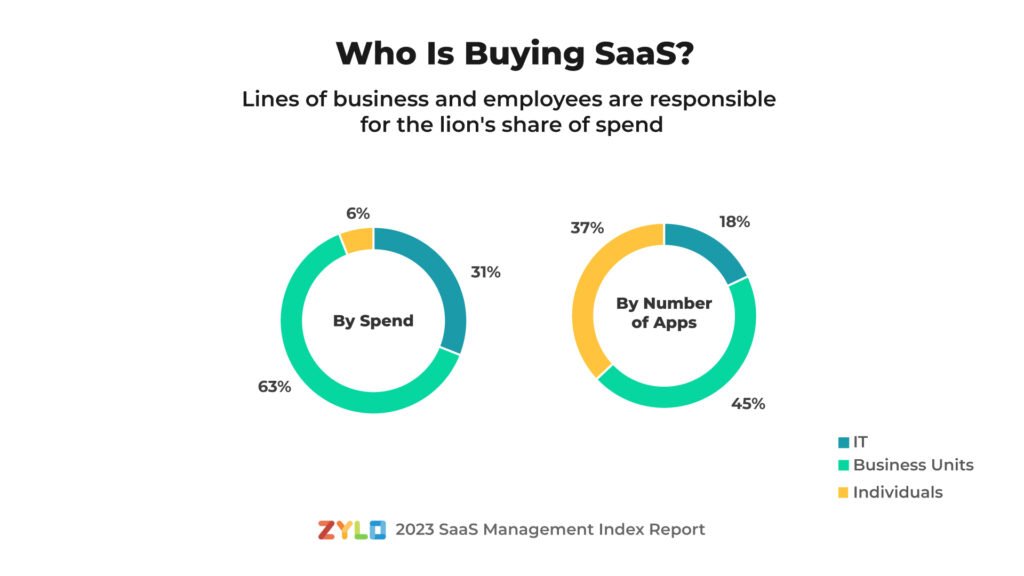
who is buying Saas

The stacks

If your tech stack is causing your team more problems than it solves, you might be going about building it all wrong. Tech leaders must bring transparency at all levels to break down organizational silos and ensure no team or department is sitting on data it doesn’t share across the business.

If you want to keep your customer, keep it simple- the entire customer experience with tech, processes, and people.

There’s a massive opportunity in simplifying your tech stack. Start with not building any process in isolation- bring it all together. As leaders, it’s imperative to gauge how the dots connect. Ask your team some crucial questions related to the tech stack- which technology acquisition made sense and which didn’t in terms of usage, training, and ROI. Prioritize the processes you want to automate first without jumping on the bandwagon.

Not every fad becomes a trend, and not every product is worth your investment.

who is buying Saas 1

What’s it getting you

Every business unit will face complications, but it’s the difference between complicated and byzantine that matters. If you’re investing more time in technology than it’s freeing up for you- is it an investment or a mere liability?

Have a customer-centric mindset when you buy, manage, or scrap technologies. What makes the end goal easier? New technologies keep emerging in the market with added features; this has also led to tech leaders choosing the best-of-the-breed approach rather than relying on a single vendor.

Modern organizations need specialized, more focused solutions that align with the overall business objectives.

Tech complexity has implications on team composition too. The kind of tools we need and build today rely on different skill sets and constant collaboration; cross-functional teams are the new competitive advantage.

The Editor’s Note

The tech industry works on the premise of adaptive learning, but it’s crucial to gauge the value of technology before you decide to invest in it. Each technology adoption comes with opportunities and risks, and it’s up to the leader to weigh the pros and cons to interpret what makes the most sense for the business requisites and customer satisfaction.

It’s time tech leaders manage change with a result-driven approach because technical debt doesn’t look good on anyone.

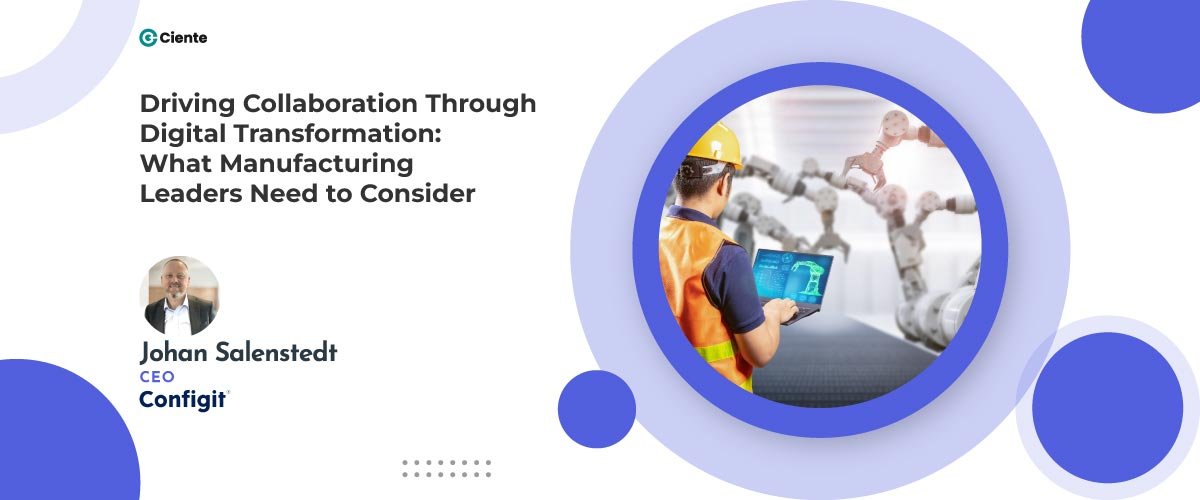
Johan-Salenstedt-1200x500

Driving Collaboration Through Digital Transformation: What Manufacturing Leaders Need to Consider

Driving Collaboration Through Digital Transformation: What Manufacturing Leaders Need to Consider

For manufacturing enterprises, especially those with complex products that have multiple configuration options, the issues of digital fiefdoms are particularly pronounced. Each department owns its own data and often doesn’t share it across functions.

Manufacturers need a new approach that allows for easy collaboration and provides a single source of truth for product configuration data across the business to ensure customer satisfaction and agility. In this scenario, all people, processes and systems are aligned, and all product configuration data is accessible and aligned amongst departments like manufacturing, engineering and sales. Configuration Lifecycle Management (CLM) solutions can help organizations address the collaboration barriers to digital transformation of the product configuration process.

Factors driving change in manufacturing

For many companies, the digital transformation journey is initiated with the goal of creating simpler products with a simple sales process. However, the pandemic (and the ensuing shutdowns) ushered in a new urgency for many organizations to quickly enable remote work and keep operations going. And putting a digital transformation process on steroids and trying to go from idea to implementation in three to six months was just not doable.

As a result, some companies took the easy way out for the sake of speed. Now they’re starting to realize that what they have implemented is not sustainable. It’s not fixing the real problem. Some manufacturers have tried to address their digital transformation journey using other types of tools, like CRM. Then they remember that the CRM vendor said they could do some CPQ, but that only fixed some problems in the sales department. Or maybe they implemented a much smarter ecommerce system; that still won’t fix the underlying problem: linking the processes cross-functionally. Manufacturers need a leadership team willing to recognize and admit that this is a fundamental business problem. It’s not just a backbone IT architecture problem.

The need for collaboration

When manufacturing complex products that are configurable in many ways, leaders need to include people from the engineering and manufacturing functions as well as from the sales and post-sales service department. This will create a common ground, a way of looking at the products and at how the configuration takes place with all the rules that apply. That’s true collaboration. And unless they develop a single source of truth and a unified vocabulary for how to talk about these things, it’s going to be very hard. If you can’t address the culture and IT shifts, you will fail.

How CLM helps with digital transformation

Vendors of complex configurable products struggle with the lack of master product data. Master data is about keeping track of the fundamentals: data on products, combinations, rules and so on. Many manufacturing companies are still to this day running their configuration process on spreadsheets. They can end up with thousands of them – hardly a simple or error-free process.

If a change is made, all these data sources must be updated, but that’s nearly impossible to do using spreadsheets or a homegrown system, which might have been developed 30 years ago. This needs to become a modern, digital system.

Products are manufactured in a very specific order because there are rules that govern, for instance, when a certain valve can be installed before the gas tank is mounted. All such rules need to be globally available and visible in one common view. That’s Configuration Lifecycle Management.

In parallel, adopting a PIM system can help ensure that product information remains consistent, accurate, and easily accessible across departments.

Moving from ETO to CTO

Many B2B manufacturers have relied on an engineer-to-order (ETO) approach. This approach is costly in both time and resources, leading many vendors to consider new business models that allow them to offer more competitive pricing.

Today, they are beginning to switch from an ETO to a configure-to-order (CTO) perspective. The goal is to be more efficient by using already-compiled product or component combinations that continue to satisfy the engineering-to-order need for the customers but do it in a more configurable way.

The changing market dynamics play a role, too. What CLM also provides is the ability to be agile and act quickly as needed. Supply chain resilience is one example. If a company is in control of its data and processes, it can easily adapt to new situations. Such agility is a competitive advantage.

Collaborate to transform

In the modern world of highly complex configurable products, manufacturers need a new approach that allows for easy collaboration and provides a single source of truth for product configuration data across the business to ensure customer satisfaction. Configuration Lifecycle Management solutions can help organizations address the collaboration barriers to digital transformation and foster a single source of configuration truth.

Modern-Data-Stack-A-Guide-for-Businesses-2023

Modern Data Stack: A Guide for Businesses 2023

Modern Data Stack: A Guide for Businesses 2023

As technology advances, so does the data stack. Before you go into deploying a modern data stack at your company, here are some important things to know.

The modern data stack has transformed the way businesses approach data management, allowing them to use data to make educated decisions and plan strategically. The modern stack provides enterprises with a comprehensive solution for gathering, storing, processing, and analyzing data through its integrated array of technologies and applications for data warehousing, cloud-based analytics platforms, ETL pipelines, and machine learning algorithms. Companies may obtain more detailed information, make informed choices, and eventually drive development and success in today’s hyper-competitive marketplace by harnessing the power of the modern data stack.

This article will explore what a modern data stack is, how it evolved, its benefits, and the core differences between a legacy stack and a modern stack.

What Is a Modern Data Stack?

A data stack is an array of tools and technologies used for data collection, analysis, and storage. The term “modern data stack” refers to a cloud-centric strategy for data handling that stresses flexibility and prioritizes the delivery of processed data. It consists of numerous applications that work together to deliver a comprehensive data processing solution.

Evolution of Modern Data Stack

The modern data stack has its roots in the early 2010s, with the advent of large-scale data commoditization. During this time, two significant events occurred that resulted in an evolution beyond conventional stacks.

The first was the widespread use of cloud computing, which allowed data to be viewed and processed from any location. Various cloud computing platforms provide scalable infrastructure. This implies that businesses may scale up or down their data operations depending on the requirements without investing in and operating on-premises hardware. These considerations boosted the popularity of modern data stacks significantly.

The second event that led to the advent of modern data stacks was the transformation from ETL -Extract, Transform, Load analysis procedures to ELT -Extract, Load, Transform. ELT enables enterprises to handle enormous quantities and a wide range of data types by employing distributed storage and computation frameworks at ease. Furthermore, ELT’s low cost and interoperability with current data architectures like data lakes and cloud computing make it an appealing alternative for enterprises looking to maximize the value of their data in a constantly shifting data landscape.

Legacy Data Stack vs. Modern Data Stack

The major difference between a traditional and modern data stack is related to cloud-based tools and on-premises hardware. Legacy data stacks are totally on-premises, which means that the hardware must be separately provisioned, managed, and expanded with the changing needs of the business.

Modern data stacks, on the other hand, are completely hosted in the cloud, which means that all of the primary maintenance associated with managing hardware is handled effortlessly as a service. Cloud and SaaS-based products relieve users of a significant load by allowing them to focus on business objectives rather than technology. Modern data stacks are also significantly less expensive because users only pay for usage rather than having to buy the underlying resources themselves. This is made possible by the massive economies of scale that major SaaS systems provide.

Benefits Of a Modern Data Stack

Besides substantially reducing the technological hurdle to entry, a modern data stack has other advantages. To begin, contemporary data stacks are designed with corporate clients in mind. The cloud-based architecture’s modular design minimizes vendor lock-in, eliminates data silos, and integrates everything into a single central data warehouse. Second, SaaS applications are highly scalable and cost-effective. Companies may simply be charged for consumption and manage resources up or down instantly based on demand, rather than provisioning equipment and estimating usage over the following year. By adopting off-the-shelf connectivity, data engineering and analytics teams save substantial time and are able to concentrate their time and attention on delivering business objectives.

Summing Up

The modern data stack is an interesting field, with a lot of new vendors entering the market on a daily basis. However, the current stack should not only serve the requirements of major tech organizations but also a broader set of people within the organization, with a greater emphasis on corporate results. It is likely that, with the deployment of the Sub-ML use case strategy, it will soon become verticalized, integrating with small and medium-sized organizations.

The most important reason to use a modern data stack is that it reduces the time it takes to arrive at vital insights. Your data stack is essential for enhancing your data strategy while making solid business decisions. This means enhanced products, a more efficient go-to-market strategy, and improved data maturity. However, it is critical not to get caught up in the digital hype and update only for the sake of upgrading. To genuinely benefit from an MDS, considerable preparation is required to ensure a positive user experience. Develop a good MDS and let your people do their tasks, and the result will be tremendous.

Unlocking-Sales-Success-Top-CRM-Solutions-for-2023-new

Unlocking Sales Success: Top CRM Solutions for 2023

Unlocking Sales Success: Top CRM Solutions for 2023

From Nimble Nurturing to Copper’s Customer Magic: Meet the CRM All-Stars of 2023 and uncover the secrets behind seamless sales and personalized experiences.

Introduction

Customer relationship management (CRM) has become critical for every successful enterprise. CRM solutions are pivotal in organizing, managing, and optimizing sales activities, allowing businesses to forge lasting connections with customers, enhance lead generation, and boost revenue. This blog post explores the top CRM solutions for 2023, equipped with cutting-edge features to ensure a seamless and efficient sales process. Investing in the right CRM system can be the key to unlocking your sales success, whether you are a startup, a small business, or an established corporation.

Why CRM Matters in 2023

Before we delve into the top CRM solutions, let’s understand why CRM matters more than ever in 2023. Customers expect personalized experiences, instant support, and seamless business interactions in this digital age. A robust CRM system empowers sales teams to deliver on these expectations, fostering customer loyalty and satisfaction. Additionally, CRM solutions provide valuable insights through data analytics, enabling businesses to proactively make data-driven decisions and anticipate customer needs.

The Criteria for Selecting the Top CRM Solutions

Selecting the right CRM solution for your business requires carefully considering and evaluating various factors. The following criteria are essential for identifying the top CRM solutions for 2023:

1. Feature Set and Customization Options

The best CRM solutions should offer comprehensive features, including high qualified lead management, contact organization, sales forecasting, and reporting. Furthermore, the ability to customize the CRM to fit your business needs is vital to ensure seamless integration with existing processes.

2. User Interface and User Experience

A user-friendly interface is crucial for the sales team’s easy adoption and efficient use of the CRM system. An intuitive layout, streamlined navigation, and minimal learning curve create a positive user experience.

3. Integration Capabilities

Seamless integration with other essential business tools like email clients, marketing automation platforms, and project management software enhances overall efficiency and productivity.

4. Mobile Accessibility

In the era of remote work and on-the-go sales, mobile accessibility is a must-have feature for a CRM solution. This ensures that sales representatives can access vital information and update records anytime.

5. Security and Data Privacy

Data security is paramount for any CRM system, especially when handling sensitive customer information. The top CRM solutions should have robust security measures and comply with data privacy regulations.

Top CRM Solutions for 2023

Now that we understand the significance of CRM and the criteria for selecting the right one let’s explore the top CRM solutions for 2023:

1. Salesforce

Salesforce remains a top player in the CRM market, renowned for its versatility and scalability. With a wide array of features, including lead management, opportunity tracking, and customizable dashboards, Salesforce caters to businesses of all sizes. Its AI-powered analytics and forecasting tools provide valuable insights, enabling data-driven decision-making. Moreover, Salesforce’s vast app marketplace allows seamless integration with various third-party tools, extending its functionalities further.

Real-life Example: Imagine a sales representative at a tech company using Salesforce’s AI-driven lead scoring to identify high-potential prospects. The AI algorithm analyzes customer behavior, interactions, and historical data to prioritize leads, helping the sales rep focus on opportunities with the highest chances of conversion.

2. HubSpot CRM

HubSpot CRM’s user-friendly interface and comprehensive features tailored to inbound marketing and sales stand out. The platform offers a centralized dashboard to manage contacts, deals, tasks, and email marketing campaigns. It also provides real-time notifications and updates, ensuring sales reps never miss a critical interaction. Additionally, HubSpot’s CRM integrates seamlessly with other HubSpot marketing and sales tools, creating a unified platform for your business needs.

Real-life Example: A small business owner uses HubSpot CRM to automate email marketing campaigns. With personalized email templates and automated follow-ups, the owner can nurture leads effectively without spending hours on manual outreach.

3. Zoho CRM

Zoho CRM is an excellent choice for small to medium-sized businesses seeking a cost-effective yet powerful CRM solution. Zoho offers a user-friendly interface, customizable workflows, and automation features that enhance productivity. Its AI-powered sales assistant provides sales reps with insightful tips and reminders, guiding them through the sales process. Moreover, Zoho’s mobile app ensures sales teams can stay productive while moving.

Real-life Example: A sales team at an e-commerce startup uses Zoho CRM to track customer interactions across multiple channels, such as website inquiries, social media interactions, and live chat conversations. The CRM’s centralized database helps the team gain a holistic view of each customer, enabling personalized and targeted marketing strategies.

4. Pipedrive

Pipedrive focuses on boosting efficiency and streamlining the sales process. It offers a visual sales pipeline that allows sales reps to track deals and progress intuitively. With automation and customizable workflows, Pipedrive helps sales teams save time and focus on building meaningful relationships with prospects.

5. Freshsales

Freshsales emphasizes personalized engagement through its user-friendly CRM platform. It provides valuable insights into customer behavior, allowing sales reps to tailor their approach and communication to individual needs, increasing the chances of successful conversions.

6. Nimble

Nimble is all about nurturing relationships with customers. It offers a unified view of customer data, social media integrations, and contact management, enabling sales reps to build authentic and lasting connections with prospects.

7. Salesflare

Salesflare leverages AI to automate administrative tasks, freeing up valuable time for sales reps to focus on selling. The CRM’s intuitive interface and intelligent features provide a seamless and efficient sales process.

8. Insightly

Insightly empowers businesses to leverage AI for enhanced decision-making and sales forecasting. With powerful integration capabilities, Insightly ensures that your CRM works seamlessly with other essential business tools.

9. Agile CRM

Agile CRM unifies sales and marketing efforts, offering a holistic view of customer interactions and engagement. Its marketing automation and lead-scoring features help drive lead conversion and revenue growth.

10. Copper

Copper prioritizes enhancing customer experience through seamless CRM functionality. Its user-friendly interface and integration capabilities streamline sales processes and enable personalized customer interactions.

11. Microsoft Dynamics 365 Sales

Microsoft Dynamics 365 Sales is a comprehensive CRM solution that transforms sales operations with data-driven insights, AI-driven analytics, and seamless Microsoft Office 365 integration.

12. Nutshell

Nutshell strengthens sales teams with its easy-to-use CRM platform, offering features like sales automation, reporting, and forecasting, ensuring efficient and data-driven sales strategies.

13. Creatio CRM

Creatio focuses on closing deals efficiently with its process-driven approach. The CRM’s automation capabilities and customer journey tracking provide a streamlined sales process.

The Final Word

In conclusion, investing in the right CRM solution is vital for unlocking sales success in 2023. The top CRM solutions, including Salesforce, HubSpot CRM, Zoho CRM, Pipedrive, Freshsales, Nimble, Salesflare, Insightly, Agile CRM, Copper, Microsoft Dynamics 365 Sales, Nutshell, and bpm’online CRM, offer a range of features to cater to diverse business needs. Consider the unique requirements of your business, user-friendliness, and security aspects when making your CRM selection. With the right CRM partner, your sales team can thrive and build long-lasting customer relationships, ultimately driving business growth and success.