
How Software Development Will Evolve in 2023: Insights from Gartner and Other Experts

How Software Development Will Evolve in 2023: Insights from Gartner and Other Experts

How Software Development Will Evolve in 2023: Insights from Gartner and Other Experts

Curious about the future of software? Uncover predictions for 2023, covering sustainability, AI mainstreaming, and other leading trends reshaping the industry.

Software development is not only a technical activity but also a strategic one. It can help organizations optimize their resilience, operations, and trust, scale their solutions and products, and pioneer new forms of engagement and opportunity. As we approach 2023, software developers must be aware of the latest trends and technologies shaping the industry and the world. In this blog post, we will share some insights from Gartner and other experts on the top software development trends for 2023.

Trend 1: Sustainability
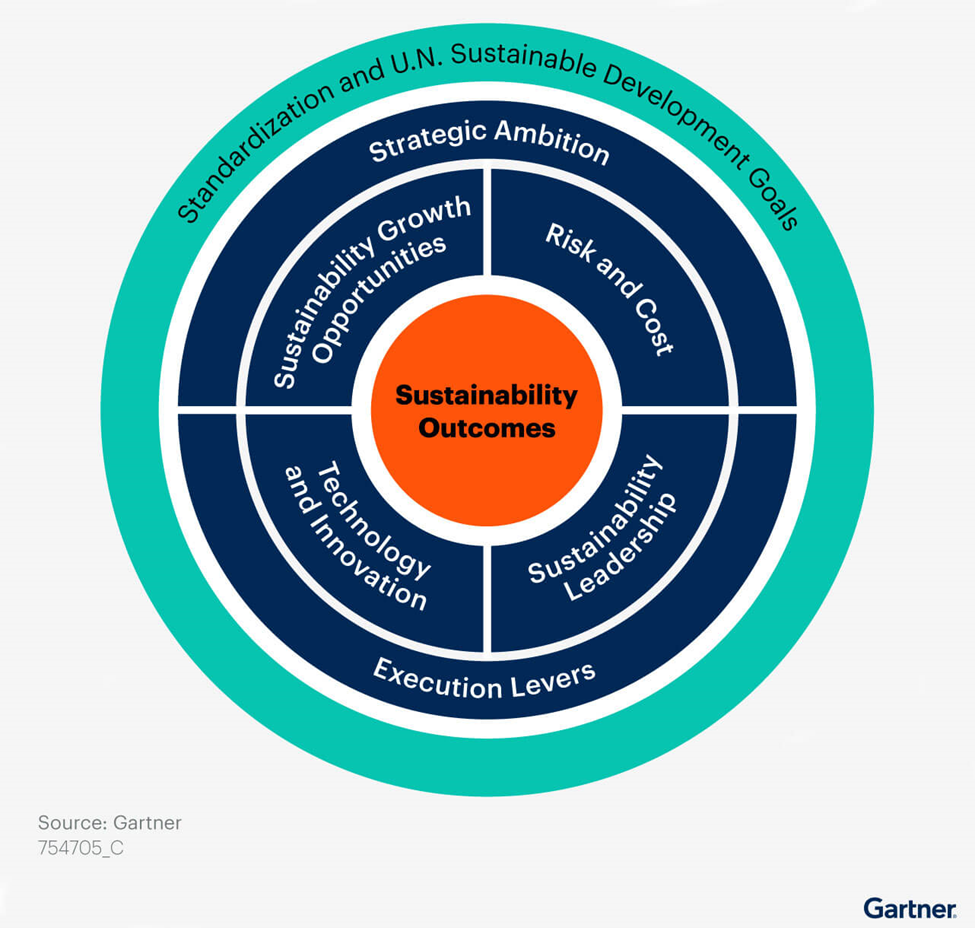
image 5
Source

Sustainability is not just a buzzword but a necessity and an opportunity for software developers. Sustainability traverses all of the strategic technology trends for 2023. Software developers need to consider how their products can reduce environmental and social impact and support green initiatives such as renewable energy sources, circular economy, or smart cities. According to Gartner, 83% of organizations have attested to the remarkable impact of their sustainability programs. These programs generate immediate value and establish a lasting positive influence on their overall success.

For example, software developers can use cloud computing to lower their carbon footprint or use blockchain to enable transparent and ethical supply chains.

Trend 2: AI becomes mainstream

image 6

Artificial intelligence (AI) is already transforming every aspect of software development, from automating tasks, enhancing quality, optimizing performance, and generating code, to creating new user experiences. A 2023 McKinsey survey results show that the top AI performers are going all in on artificial intelligence, with generative AI and other traditional AI capabilities. As more organizations leverage artificial intelligence to gain competitive advantage, improve customer satisfaction, and increase efficiency. Software developers must keep up with the latest AI tools, frameworks, and platforms that make integrating AI into software applications easier.

Trend 3: Digital Immune System

The COVID-19 pandemic has impacted defense mechanisms of many software systems and applications to external threats and disruptions. To ensure greater resilience and reliability, software developers need to adopt the concept of a digital immune system, which is the ability of software systems to detect, prevent and recover from cyberattacks, errors, and failures. The digital immune system is one of the top strategic technology trends in 2023. Software developers can achieve digital immunity by implementing security best practices, such as encryption, authentication, authorization, and auditing, and using technologies such as blockchain, edge computing, and quantum computing that offer higher security and performance.

Trend 4: Industry Cloud Platforms

Cloud computing is not a new trend, but it is evolving to meet different industries’ specific needs and challenges. Industry cloud platforms are cloud services tailored for a particular vertical market, such as healthcare, education, manufacturing, or retail. They offer specialized features, functionalities, and integrations that address each industry’s unique requirements and regulations. Software developers must be familiar with the industry cloud platforms relevant to their target markets and customers.

Trend 5: Platform Engineering
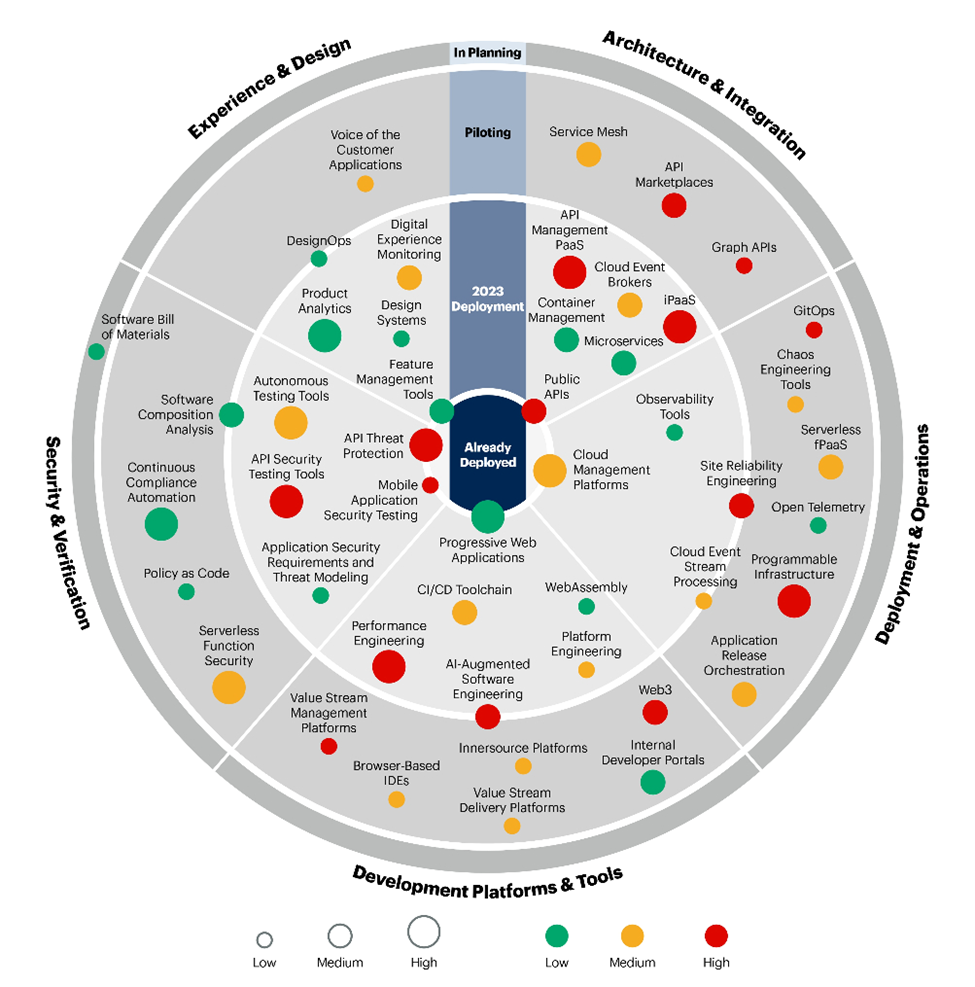
image 7
Source

Platform engineering is a new approach to software development that focuses on building scalable, reliable, and adaptable platforms that can support multiple applications and services. Platform engineering involves using technologies such as microservices architecture, containers, Kubernetes, serverless computing, and DevOps practices to simplify the deployment and scaling of software systems. A Gartner Report, platform engineering is one of the most valuable and widely adopted technologies for software development in 2023. Software developers must master platform engineering skills and tools to create modern software solutions.

Trend 6: Metaverse

Metaverse is a term that describes a virtual reality environment where people can interact with each other and with digital content in immersive ways. Metaverse can enable new forms of entertainment, education, socialization, and commerce. According to Gartner, By 2026, 30% of organizations worldwide will have products and services ready for the metaverse, up from negligible now. Software developers must explore how to create engaging and innovative experiences for users in the metaverse using technologies such as AR (augmented reality), VR (virtual reality), 3D graphics, and spatial audio.

The Final Word

Software development is not a static field but a dynamic and evolving one. Various factors influence it, such as customer needs, market demands, social changes, environmental issues, and technological innovations. Software developers must be aware of these factors and adapt accordingly. In 2023, we expect to see exciting and challenging trends and technologies shaping the software industry and the world. By staying updated on these trends, software developers can prepare themselves for the future and create software solutions that can optimize, scale, and pioneer in their respective domains.

blog (2)

Navigating Tomorrow: Unveiling Augmented Reality’s 2023 Breakthroughs

Navigating Tomorrow: Unveiling Augmented Reality’s 2023 Breakthroughs

Step into the future of augmented reality as we unveil the key trends and breakthroughs that are reshaping the way we interact with technology in 2023.

Introduction

Augmented Reality (AR) has emerged as the vanguard of innovation, in the epoch characterized by monumental technological leaps, reshaping our perception and experience. AR masterfully blends digital information with the physical world at its heart, forging a symbiosis between reality and the virtual realm. This disruptive technology has revolutionalized entertainment, permeating diverse healthcare, commerce, education, and other verticals. This article embarks on a captivating exploration of AR’s evolution in 2023, dissecting its transformative trends and far-reaching implications.

Evolving AR Landscape

The ubiquitous integration of AR across industries is a testament to its burgeoning influence. By seamlessly overlaying digital imagery onto the tangible world, AR pioneers novel user experiences, igniting engagement and immersion. This harmonious interplay between technology and reality catapults AR into an indispensable solution for sectors yearning for innovative breakthroughs.

AR Shaping the Future – 2023 and Beyond

Immersive Realities: Propelling AR Visualization to New Frontiers

The realm of AR experiences a revolution through the advancement of spatial computing and real-time interaction. Spatial computing liberates us from the confines of static screens, ushering in dynamic engagements with holograms and intricate 3D models. Further elevating our AR encounters, refined object recognition and tracking mechanisms breathe life into the technology, enabling unparalleled precision in object identification.

Augmented Commerce: Redefining Retail and E-Commerce Landscapes

AR casts an enchanting spell upon the retail landscape. Virtual try-on experiences empower customers to virtually ‘try out’ products before committing, paving the way for informed purchasing decisions. Beyond this, AR empowers e-commerce platforms with interactive product visualization, transcending conventional displays and enhancing the shopping experience.

Healthcare Transformation Through AR

The fusion of AR and healthcare transcends mere experimentation, heralding a fundamental shift in medical practices. Surgical procedures and training attain new dimensions with the aid of AR, providing practitioners with real-time guidance. In the same vein, patients reap the benefits of AR through personalized education and rehabilitation programs that enhance their engagement and recovery.

AR in Entertainment and Gaming

Gaming and entertainment continue to be fervent proponents of AR’s immense potential. Immersive gaming experiences whisk players into digital realms intertwined with reality, blurring the lines between fiction and actuality: interactive storytelling and virtual events further leverage AR’s prowess to reshape the fabric of narrative experiences.

Innovations Propelling AR Development

Advances in Hardware Technology

AR hardware evolves to heighten user comfort and engagement. Lightweight wearables redefine convenience, ensuring prolonged periods of immersive interaction. By integrating Artificial Intelligence (AI) and dedicated AR processing units, devices unleash their full potential, enhancing real-time interactions and responsiveness.

Software and Platform Enhancements

The rise of AR toolkits democratizes content creation, empowering developers to craft immersive experiences effortlessly. The advent of cloud-based applications takes accessibility and scalability to new heights, bestowing users with seamless AR encounters spanning various devices.

Navigating Challenges and Considerations

Privacy and Data Security Concerns

The ascent of AR inevitably ushers in concerns about data privacy. The delicate equilibrium between data collection and user consent takes center stage, preserving the trust between technology and its users. Robust measures against potential misuse of AR technologies emerge as ethical pillars guiding responsible applications.

Ethical Reflections on AR

The nexus of the digital and real worlds invites profound ethical inquiries. As reality intertwines with the virtual, the authenticity of information comes under scrutiny. AR’s impact on human interaction necessitates contemplation on sustaining genuine connections amid the augmentation of our surroundings.

Peering into the Future of AR

Collaborative and Shared AR Experiences

The trajectory of AR leads to collaborative ventures that bridge geographical chasms. Shared AR interactions, whether for work or leisure, herald an era where virtual exchanges rival the tangible world, enhancing connectivity and engagement.

Integration of AR in Education and Training

Educational landscapes stand poised for an AR revolution. Abstract concepts metamorphose into tangible entities, enabling students to visualize intricate ideas in real-world contexts. The professional training arena, too, benefits immensely from AR’s capacity to simulate real-world scenarios.

Anticipating Technological Breakthroughs in AR

The dynamic nature of technology foreshadows groundbreaking advancements. AR’s evolution could encompass heightened realism, elevated interactivity, and a more profound integration with AI, further expanding its transformative potential.

Conclusion

As the tapestry of reality undergoes continual shifts, AR stands as a beacon of innovation, illuminating the path toward a future unshackled by conventional boundaries. The trends of 2023 cast a spotlight on AR’s extraordinary journey, underscoring its potency in reshaping industries, human encounters, and our fundamental perception of the world. With each stride forward, AR draws closer to becoming an indelible facet of our digital existence, offering a vista of uncharted prospects.

Asaf-Darash Consolidation in the Activities Market: Bridging the Gap in a Fragmented Landscape

Consolidation in the Activities Market: Bridging the Gap in a Fragmented Landscape

Consolidation in the Activities Market: Bridging the Gap in a Fragmented Landscape

The activities market is an expansive and dynamic ecosystem, encompassing various industries like education, events, conferences, camps, and more. The industries in this market are growing rapidly. For example, the summer camp market in the US alone is a 3.5 billion dollar market. The events and conference markets are expected to reach 2 trillion by 2028. In spite of the market size and importance, the market is still underserved, mainly due to the fact that no software has consolidated the market and created standard best practices. Fragmentation has its costs in the form of inefficiencies, lower retention rates, employee burnout, and hindered growth. To consolidate the activities market, there is a strong need for a singular software solution to unify the complex payment and onboarding process needs within each business. A Shopify for services if you will.

Why So Fragmented?

What does it mean that the market is fragmented? To shed light on this concept, let’s consider an analogy. Imagine starting a new business that sells items online, such as pens or watches. In this scenario, you would look for software that allows you to sell a range of products, without the need for specific software tailored exclusively to pens or watches. However, in the activities market, the situation differs. If you were to open a camp, you’d seek out “camp software,” and for an event, you’d search for “event software.” Why does this disparity exist? The root of the issue lies in the onboarding process.

Service-based businesses, in contrast to those dealing in merchandise, inherently involve an onboarding process. While purchasing a pen involves selecting, checking out, and concluding the transaction, registering for an event, or enrolling a child in a camp demands supplying personal information, often e-signing documents, making selections, and finally, making a payment. Payment, in this context, represents just the concluding step of a much more intricate procedure – the onboarding process.

This market fragmentation is rooted in the distinct requirements of each onboarding process. The onboarding process for a camp substantially varies from that of an event. This divergence might suggest that these are separate markets and consolidation is unfeasible. However, shared characteristics link these seemingly different entities. The most conspicuous commonality is that all service-oriented businesses are connected to specific times and places. Each service has a designated time for delivery and a particular space, whether virtual or physical, where it will be provided. These shared elements underpin unique software demands that are not adequately met by existing solutions. This inadequacy results in multiple software solutions replicating these demands, often ineffectively. Consequently, service-based businesses, which are pivotal to developed economies’ economic activity, are left with inferior software solutions. The many educational institutions that offer camps, sports programs, and events grapple with multiple onboarding requirements for each distinct activity, leading to superfluous operational complexities. Employees are burdened with mastering and navigating various software solutions, diverting their cognitive resources from delivering the actual services.

Additionally, many software companies striving to address this fragmentation are themselves affected by it. They repeatedly develop technologies to address the time and space aspects inherent in service offerings. However, different logical structures are created that still cannot connect to one another and, in spite of the effort these companies exert, they see low retention rates, high churn, and need to spend manpower and resources to constantly regain new clients to fill the leaking bucket. The definition of software client onboarding inefficiency.

Is it possible to solve this fragmentation?

In the activities market, there is an urgent need to shift away from traditional vertical-specific software and embrace a horizontal solution that can cater to the diverse needs of different industries. Such software can act as a centralized hub and enable companies with varying activities to efficiently streamline their onboarding processes – fostering connections, collaboration, and growth.

To ensure the success of this approach, it’s essential that the various verticals retain the ability to create their unique onboarding processes. Standardization should not be imposed. For example–forcing an event to include medical questions, as required for a children’s camp, would be unnecessary and unwieldy, while the software would be unusable for the camp if these specific questions weren’t integrated. Therefore, the technology must possess the capability to dynamically generate database structures on-the-fly. This functionality would enable the creation of distinct processes for each business while also accommodating tools that can be shared across different verticals. To achieve this, the famous and very hard-to-create “meta programming system” needs to be developed.

Recent developments in databases and AI make this once hard-to-achieve goal attainable. Document-based databases such as MongoDB now allow the creation of databases that are schemaless and therefore can still function with the unique onboarding processing of each organization. This obviously creates problems connected to searchability, consolidation of data, and attributing meaning to the data. Yet these problems are solvable if the right minds are put to it.

Conclusion

The consolidation of the activities market is imperative for the growth and efficiency of businesses in various industries. Regpack stands out as the forerunner in this endeavor, providing the much-needed technology and customizable onboarding solutions to address the market’s challenges. By consolidating the fragmented market and creating a unified platform, Regpack paves the way for a more connected, efficient, and successful future for companies in the activities market.


Author Bio :-

Asaf Darash is the founder and CEO of Regpack, an online payment management platform with advanced onboarding capabilities to serve the activities market. With extensive experience as a developer, system architect, entrepreneur, and investor, Asaf has an innate ability to build versatile products based on achievable business models, which has helped him build three successful companies to date. He holds a Ph.D. from the Hebrew University of Jerusalem specializing in the way computer languages affect human action and has served as a visiting scholar and Fulbright scholar at the University of California, Berkeley.

Why-Is-Customer-Success-Important

Why Is Customer Success Important?

Why Is Customer Success Important?

Customer success is focused on ensuring that customers achieve what they want. How will assisting your customers help your business thrive?

Why Is Customer Success Important? It has become increasingly important for businesses over the past few years due to a convergence of cultural trends, consumer expectations, and commercial realities. Businesses know that customers must initially feel satisfied using the product for its lifetime value to develop. However, there is a lot of uncertainty about how to guarantee consumers’ success. Are there particular metrics that one must adhere to? Is there a precise strategy that businesses can use to guarantee success? And many such similar questions.

In this blog, we provide an overview of what customer success is and why it is important. Read on!

What Is Customer Success?

The key to customer success is foreseeing their problems or inquiries and proactively offering solutions. Increased customer retention and contentment lead to higher sales and more devoted clients. It’s a strategy your company employs to get the greatest benefit from its goods and services and aid clients in achieving their goals. Client relationship management prioritizes your customers’ satisfaction and makes sure they are consistently making progress toward their goals, aligning them with your company’s objectives.

Customer success and customer retention go hand in hand, ensuring that customers continue to benefit from your product during their relationship. It must satisfy the particular requirements of your customers and help them succeed in using your product. It puts a strong emphasis on customer satisfaction and leads to word-of-mouth marketing by having people recommend your product to their networks. It all comes down to creating solid bonds with clients and comprehending their objectives. You can achieve customer success when there are opportunities for more profound and significant engagement during each customer interaction.

Why Is Customer Success Important?

Your business success is tied to your customer success. When you assist your customers in succeeding, they become your biggest supporters and advocates which increases client satisfaction and loyalty. Customer success affects your bottom line because it lowers churn rates, increases renewal and customer satisfaction, and consequently increases revenue.

Customer success enables businesses to maximize the potential of their offerings and provide impressive returns on investment. Customer success teams can tell a product or service is valuable to users when they assist customers in achieving their objectives. As a result, the relationship is strengthened, trust is established, and satisfaction levels are raised.

Customer success communications also give businesses the chance to get insightful data about their customers that could help with everything from product development to marketing and sales. Teams are better able to provide quality experiences and foster a longer customer lifetime as they get deeper insights into their customers and their needs.

Wrapping Up

One of the many cornerstones of good customer experience and strong customer retention is customer success- giving customers a great experience keeps them coming back. To increase success and growth rates, businesses must construct effective customer success teams that lay a strong customer success foundation for their organization. You can transform your customers into strong brand advocates by developing a customer success strategy at your company and making sure they feel supported during their experience with you.

You’re on the right path to creating a culture of customer success in your company when your emphasis switches from obtaining maximum revenue from your customers to adding the most value to their businesses and assisting them in succeeding. Building enduring relationships with your consumers is essential since they are the ones who can make or break your business.

Elon-Musk-Renames-Twitter

Elon Musk Renames Twitter

Elon Musk Renames Twitter

The renowned blue bird logo for Twitter has been eliminated, and the 17-year-old social media platform is now referred to as “X.”

Twitter to X

For over 10 years, the blue and white bird logo has served as a symbol of the social network’s distinct culture and lexicon, making Twitter easily recognizable. The word “tweet” became a verb. A “tweet” was a post. The term “Tweeps” was adopted to refer to Twitter staff. Elon Musk, the SpaceX and Tesla billionaire who purchased the platform for over $44 billion late last year has officially changed the company’s renowned bird icon to an “X” as part of a comprehensive revamp.

He recently declared that the company would “bid adieu to the Twitter brand and, gradually, all the birds.” Currently, X.com points users to Twitter’s home page, however, Twitter.com is still active. For a lot of users, branding in the mobile application is not yet changed.

X as “everything app”

The transformation from Twitter to X is a reflection of Musk’s goal to make his platform into what he defines as an “everything app.” According to Twitter CEO Linda Yaccarino, the platform will also be backed by artificial intelligence and will be “centered in video, audio, messaging, payments/banking” as part of the revamp.

The simple “X” logo that was decided on has generated a lot of controversy; some people are making fun of it and suggesting other designs. One alternative reimagines the recognizable Twitter bird icon with an “X” inside of it. Musk picked “X” ostensibly because he “likes the letter X,” and it seems an on-brand choice given that one of his earliest businesses was an online bank called X.com, and he also created the spacecraft manufacturer SpaceX and the AI startup X.AI.

The modifications, which remain in the making, are the most obvious ones that Musk has implemented for Twitter since he finalized the agreement to acquire the business last year. He has already changed the platform’s features, such as badges intended to verify users and the regulations dictating what can and cannot be stated on the site, in addition to firing thousands of workers. Yet it was impossible to overlook the name and logo alterations.

By beginning to erase the Twitter name, Elon Musk eliminated a long-standing brand that had been in place since the company’s founding in 2006 and that had simultaneously delighted and irritated politicians, celebrities, and other users. Twitter’s blue bird mascot first debuted in 2010 and then changed two years later.

The take

Business analysts view Twitter’s redesign, which undoes years of branding behind its blue bird logo and makes it one of the most recognizable social media brands, as a hazardous move. As a result of Musk’s modifications to the site, Twitter has already had trouble keeping advertisers since some people now worry that it is a risky place for businesses to market.

In recent years, various technology businesses have changed their names. Google changed its name to Alphabet Inc. to enable several businesses inside the organization to expand independently of search. Facebook changed its name to Meta Platforms Inc. to highlight its dedication to the metaverse. But the brand names persisted, and we still use Google to search for stuff.

It’s uncommon for business names to become so ingrained in our daily conversations that people use them as verbs. Even more rarely does the owner of such a brand indicate plans to deliberately compromise it. With or without the designation X, Musk’s own brand is already closely entwined with that of Twitter. One thing working in Elon Musk’s favor now is his personal brand, which might be more potent than the Twitter brand.

Trends-Shaping-MarTech-Strategy-in-2023

MarTech Strategy Trends in 2023

MarTech Strategy Trends in 2023

MarTech trends are revolutionizing the way marketers attract clients. Gain insights on how to optimize your marketing technology for success.

MarTech or marketing technology refers to software and tools that assist professionals and organizations achieve marketing targets. Professionals are already using such tools to implement, track and measure their campaigns. Nowadays, every organization has unique MarTech requirements, and those which are adopting this trend are benefitting at the earliest.

In this article, we shall explore the top 7 trends shaping marketing technologies to look out for.

An Upsurge Of No-Code Platforms

The global market for no-code platforms is expected to be approximately $300 billion. Gartner just published a study that ‘70% of newly built enterprise apps shall employ no-code or low-code technology by 2025.’ These enterprise apps are fulfilling increasing demands for well-customized automation workflows & speeding application delivery. Once you equip your in-house team of IT and non-IT professionals with divergent no-code tools, entities can achieve the digital competency level & delivery speed that they need for the current agile environment.

Activation of cloud data warehouses

You need to follow a unified data strategy like customer data platforms (CDPs) to stay ahead of your competitors. However, at the base, you have cloud data warehouses through which your marketing teams can house and analyze data in bulk. These warehouses have become interactive marketing stack components apart from being static repositories. We are also witnessing an expansion in the type of data you can house at the warehouse level. Such a facility allows the content layer to intersect between content data and customer data.

Introduction of “Genuinfluencers” Age

Nowadays, influencers have left celebrities behind if you consider their ability to shape consumer preferences. Consumers have changed their thinking regarding social media influencers during the pandemic era. During the pandemic, people were online more often, and their e-commerce spending increased after watching the influencers online. Hence, such influencers are being addressed as ‘Genuinfluencers’ or even ‘corporate watchdogs’ to promote ideas instead of products.

The rising popularity of Video-first content

Professionals use video-first content trends to increase brand exposure and engagement among millennials and Generation Z members. Providing comprehensible content of short durations is a dynamic approach to capturing viewers’ attention quickly.

Brands utilize user-generated video-first content to shoot engaging and authentic content. That’s the best way to encourage users to explore their creativity by creating videos and sharing them with their social community so that users can feel a sense of loyalty towards the brand.

Blooming of communities and ecosystems

Modern marketers follow this hybrid approach where they amalgamate the security that open platforms offer with specific third-party apps embedded in large ecosystems. Nowadays, niche software tools provide app libraries connected to their services with the option to customize them.

There is an exponential increase in your services once you build your app community or ecosystem. By collaborating with partner ecosystems, you can focus on additional functionalities. You are feeding on second-party data provided by such relationships, which automatically provides you with new martech opportunities.

The Advent of Generation Alpha

Gen Alpha is infusing change as digital ninjas by being mature beyond years. Brands have recognized that alphas expect more from product innovations. Marketers rely on tediously researched insights to connect with these Alpha youngsters. Professionals are relying on actionable initiatives through digital media to reach out to Gen Alpha.

AI and Machine Learning (ML) gaining momentum

AI and ML have already automated routine tasks like lead scoring and email marketing, with more to follow. By leveraging AI & ML, platforms like ChatGPT are aiming to provide superpowers to content marketers especially, so that they can leverage AI to accelerate their performances. .

We are already witnessing how marketers are utilizing AI and ML to optimize ad campaigns, personalize content, and even generate the latest ideas. Such AI and ML-based tools analyze the vast amount of data and spots insights & patterns which even human pros can’t spot. The tech enhances your ability to deliver personalized and real-time customer experiences once you add AI and ML features to such tools.

Adopt MarTech Trends Now To Stay Ahead In The Game

These MarTech trends are prompting marketers to be equipped to change their customer interaction strategies by switching to smarter and more targeted interactions. They should invest in tools that are useful in achieving organizational marketing goals. MarTech trends provide companies with unique opportunities to connect with clients and drive success. Today’s clients value authenticity, inclusivity, privacy, and, transparency more than before. By embracing such values along with MarTech trends and staying agile, entities can thrive in their marketing campaigns in the coming years!