guest blog - Shama-Hyder

Marketers, It’s Time to Work With AI—Not Against It

Marketers, It’s Time to Work With AI—Not Against It

Remember how excited we were to use voice search, location-based recommendations, and predictive text? While there may have been a small learning curve, smart features built into our phones, tablets, and computers turned into essentials that help us with just about every task.

But as technology continues to evolve, where do we draw the line? When does a convenient suggestion turn into a cause for concern?

The Rise of Adaptive and Generative AI

Adaptive and generative artificial intelligence (AI) models are the latest technological advances making waves, promising to simplify our lives and disrupt nearly every industry in the process. With its ability to quickly learn, adapt, improve, and churn out results, it’s no wonder everyone keeps asking whether or not AI is coming for our jobs. In fact, Forbes found that 77% of people worry AI will cause job loss over the next year.

The truth is, it might. In a study, McKinsey said AI could displace a whopping 400-800 million workers by 2030, while research conducted by the World Economic Forum estimates AI will create 97 million new jobs.

AI has been met with a mixture of excitement and concern from both employees and business leaders. As marketers, introducing AI to our workflows can feel like a betrayal of everything we know, especially since so much of our profession relies on creating clever, relatable, and interesting content.

Instead of fearing AI or ignoring it altogether, we should accept its inevitable integration into our industry and embrace the technology, learning how to work with it rather than against it early on in the process to avoid lagging behind later. After all, between constant updates to SEO best practices, keeping up with an endless stream of trending topics, and managing the latest social media apps, modern B2B marketers know a thing or two about flexibility and making technology work for them.

Don’t Underestimate AI

Let’s go back to 1999 for a minute. People are talking about the new millennium and it’s an exciting time for technology. Digital music is the new kid on the block—will it replace CDs? AOL and Microsoft are at war to see who will become the ultimate tech leader (Microsoft is 2-0 after taking the desktop and browser categories). And Google was around, but it wasn’t anywhere near the behemoth it is now.

Of course, Google has become the backbone of the marketing industry, leading and creating digital trends, even joining the AI race with Bard, its own chat-based AI tool. While the technology might not have been as disruptive in that moment, we now know just how vital the search engine site is for modern society. And even this early in its lifecycle, we can already predict that AI will continue to rule and shape the tech space—and our lives—for years to come.

Refuse It And Lose It.

By now, most of us know not to underestimate AI’s capabilities. Just look at ChatGPT, an AI language model capable of churning out thousands of words on an extremely technical topic in mere seconds. This is because it uses data and deep learning algorithms to generate human-like responses.

Instead of worrying about AI taking our jobs, marketers can leverage tech like ChatGPT as a content creation tool. Ask it to generate a list of engaging potential blog post topics and outlines, create a storyboard for a social media series, optimize headings for SEO, craft compelling email intros, summarize a lengthy white paper, or guide your next content calendar.

Consider other elements of your marketing strategy and see where you can add or build on existing usage of AI tools. For example, PR professionals use AI across several different platforms to track coverage, compile media lists, draft email pitches, and monitor response rates and engagement. But PR is rapidly evolving to meet the current media landscape, meaning old school PR tactics simply won’t work.

It’s easy for PR teams to settle into a routine of recycling the same press release or email templates when reaching out to journalists, causing them to miss out on vital opportunities to secure coverage. In fact, out of 500,000 pitches sent, research found that journalists responded to fewer than 3% of the pitches they received. Additionally, 28% of journalists reportedly receive more than 100 pitches per week, so how can you ensure yours stands out? Use AI that is designed by PR experts to rate your press release, and provide tips on how to improve it. Snooze or News is a press release rating and editing tool powered by AI that my company’s PR team created based on their decades of experience. While it doesn’t create newsworthy press releases out of thin air, the AI ranks them, offers actionable feedback, and suggests distribution channels based on the topics covered.

Rather than relying on AI to produce each piece of content, use it to supplement your team’s talents. AI can help conduct research, review your work, brainstorm ideas, organize your thoughts, amplify your content, and spark creativity. Embrace the technology or risk falling behind faster than you can ask ChatGPT how to incorporate AI into your marketing strategy.

AI’s Smart, But Humans Are Smarter.

For every impressive stat we learn about AI, it’s important to remember one crucial fact: It relies on humans to feed it information and review responses. Assuming an AI-generated article will compare to the carefully crafted wordsmithing of trained, seasoned writers is as useless as pretending AI won’t become as essential as SEO.

You can’t just use ChatGPT to write all of your content and expect it to perform well. This is because human error factors into the quality of responses. How was the prompt worded? Was it too vague? Could it have been misinterpreted in some way?

To really leverage AI’s power, you need smart humans who can train the technology, set parameters, review its accuracy and relevance, and screen responses to ensure they align with your brand identity. This means making adjustments to prompts and responses until they fit your brand style and deliver the right message. And because ChatGPT relies on the data it’s fed to create its content, you might find responses with biased, harmful, or wrong information, rendering it unusable. Plagiarism, data privacy, and security are additional issues to consider when working with AI-powered language models.

Once your team has figured out how to use AI, adding the human touch is the final, crucial step to reaching its full potential. While AI can mimic a brand’s voice, it isn’t capable of expressing emotional nuances and inserting personal touches the way human writers do. AI isn’t just a trendy tool, it’s an extension of your team, so treat it like one. Bounce ideas off of its responses and edit its content. Provide guidance and recommendations to improve results until you get it just right. Only when we stop thinking of AI as a faceless, intangible enemy will we realize it can actually be the marketing solution we’ve been waiting for.

ABOUT AUTHOR :
Shama Hyder, Founder & CEO of Zen Media

Shama Hyder is the Founder & CEO of Zen Media, an international keynote speaker, and a bestselling author. Fast Company calls her a “millennial master of the universe” and a “zen master of marketing.” She’s a Forbes and Inc. 30 under 30 alum, and LinkedIn has called her a Top Voice in Marketing four years in a row. Shama was recognized as a top 100 entrepreneur under the age of 30 by The White House and a top 100 entrepreneur under the age of 35 by the United Nations.

About 30% of businesses in the U.S. are owned by women—only 2% break $1 million in revenue. When you look at women of color, this number drops even more dramatically. Shama is no stranger to navigating uncharted territory.

Zen Media is a PR and marketing agency serving tech-driven B2B companies around the globe, including brands like Chase Business, Dwolla, ATB Ventures, Cox Communications, and more. Shama has been a media correspondent for Fox Business, MSNBC, Bloomberg, and CNBC, and she’s one of the world’s leading experts on marketing and PR in the digital age.

The-Power-of-Audience-Data-in-B2B-Marketing

The Power of Audience Data in B2B Marketing

The Power of Audience Data in B2B Marketing

Strategic decisions are based on in-depth research and varied inputs. How can you revolutionize your B2B marketing by unleashing the power of data?

In the realm of B2B marketing, understanding your target market is essential. Reaching the right people with the right message at the right time is important. However, how can you be sure you’re doing that? Audience data holds the key.

Making decisions based on data analysis rather than gut or emotion has become second nature in today’s data-driven culture. We have access to a lot more data than before. You shouldn’t assume what your prospects need, want, or have previously looked into. With AI and intent data, it is now feasible to have a far better understanding of certain prospects and to create communications tailored to them.

By utilizing the power of data, you may gain greater insight into your target market, improve business outcomes, and forge closer bonds with customers. This blog walks you through audience data and its importance in B2B marketing.

What is Audience Data?

Without audience data, many of your advertising campaigns and product designs are little more than wild guesses. It’s exceedingly tough to succeed as a business if you don’t know who’s viewing your advertisements, visiting your website, or purchasing your goods. You can choose more wisely when it comes to branding, marketing, and other factors if you know as much as you can about your audience.

Audience data covers the specific information available about customers and potential clients. It can include intent, interests, past purchases, product ownership, demography, brand affinities, education, firmographics, and employment. Given the expanding sophistication of account-based marketing capabilities, audience data is becoming more important for B2B businesses.

Importance of Audience Data for B2B Marketing

Enhanced Targeting

By gathering and analyzing audience data, B2B marketers may pinpoint the precise businesses and decision-makers who are most likely to be interested in their goods or services. As a result, there is less chance of squandering money on fruitless marketing initiatives because they can now design more targeted and successful campaigns.

Improved Segmentation

Marketers are constantly seeking methods to segment their audiences better. Data enrichment makes it feasible for you to completely utilize the potential of audience segmentation by enabling you to better understand your clients. Businesses can create new segments using the additional information that comes with a consolidated audience data set. A competitive advantage comes from better segmentation.

Increased Personalization

Audience data is used to personalize and make marketing messages and content more valuable and appealing to target audiences. B2B marketers can raise the possibility that their target audience will interact with their brand by offering pertinent information and solving particular pain points.

Lead Generation

Marketers can generate leads and identify prospective clients who are most likely interested in a company’s goods or services using audience data. B2B marketers can discover prospective clients and develop focused marketing programs to nurture those leads through the sales funnel by analyzing data such as website behavior, social media activity, and search history.

Improved Customer Experience

B2B marketers can better understand the requirements and desires of their target audience by analyzing audience data. This data guides product development as well as marketing and advertising tactics, assisting companies in producing goods and services that are better suited to the demands of their target market.

Greater ROI

B2B marketers can boost return on investment for their marketing initiatives by using audience data to develop more focused and successful marketing campaigns. They can produce more leads and, eventually, increase their company’s revenue by speaking to the right individuals and conveying the correct message.

Better Customer Retention

B2B marketers can better understand their clients with audience data to develop more successful retention tactics. Marketers can find opportunities to increase customer loyalty and improve customer satisfaction by analyzing consumer behavior and preferences. Identifying upselling opportunities and unexplored ways to boost revenue among your existing clients with access to high-quality audience data is simpler.

Final Word

In B2B marketing, leveraging data has emerged as a game-changer, offering a way to develop personalized experiences that boost customer engagement and satisfaction. When used properly, data may provide insights that not only meet but frequently surpass customer expectations, resulting in a better connection that benefits both parties. This ultimately fuels explosive growth, which translates to achieving business success. Embrace the potential of B2B data and change the way you do business in this dynamic and ever-evolving industry.

How-Is-IoT-Transforming-Businesses

How Is IoT Transforming Businesses

How Is IoT Transforming Businesses

IoT is facilitating better data collection and sharing. From cost savings to enhanced customer experiences, how is IoT revolutionizing business operations?

The Internet of Things is the fastest-evolving technology, opening new perspectives and business opportunities in almost every industry, including manufacturing, retail, healthcare products, transportation, tourism, and logistics. This technology provides us with real-time information, rather than predicting the future or reporting on the past. Globally, there are more than 13 billion linked IoT devices, and by 2024, it is anticipated that the market will be worth more than $1 trillion. We live in a smart world today. The internet is being connected to more and more formerly standalone devices and technologies every day. All smart devices contain sensors that let users watch and operate them from a distance while gathering lots of data. The Internet of Things (IoT), which includes all of these devices, is revolutionizing contemporary industries.

What is IoT?

The Internet of Things, often known as IoT, is a cutting-edge idea transforming how businesses operate worldwide. IoT is the concept of linking devices to one another and the internet. It’s a network of intelligent technology that facilitates better data collection and sharing. IoT technology can significantly affect many aspects of a business. For instance, devices that monitor global supply chains encompass IoT technology. In addition to data recorders, this can also apply to phones, RFID tags, sensors, GPS trackers, and other devices.

Benefits of IoT for businesses

The Internet of Things (IoT) has the power to change industries and provide organizations with the competitive edge they need. IoT helps businesses cut expenses, improve customer experiences, optimize operational performances, and make smarter business decisions due to its intelligent applications.

Reduced Costs: 

For organizations, this is one of the IoT’s most appealing advantages. Smart technology and embedded sensors can reduce expenses and help identify potential problems. IoT’s role in machine management is to assist in finding a more efficient way to operate them so businesses can lower operating costs. Additionally, maintenance procedures will be simpler, which can mean that some technological issues won’t need a professional’s assistance.

Enhanced Efficiency: 

IoT enables businesses to gather and evaluate customer data, giving them the capacity to foresee demands and provide tailored experiences. Additionally, IoT may help coordinate a significant amount of automation and offer immediate feedback on operational effectiveness. These upgrades will empower businesses to run more efficiently, leading to immense growth as insertion costs decrease and production becomes more feasible.

Improved Customer Experience: 

Ensuring users don’t get frustrated, perplexed, or run into issues when using the product is essential to creating a great user experience. One needs to make necessary, user-friendly improvements to give users the most pleasant experience possible. IoT is crucial to improving the customer experience as devices collect data from all accessible touchpoints. The process considers the user’s demands while analyzing data from mobile apps, home gadgets, social media interactions, customer communications, website surfing, and sales history to create tailored customer experiences.

Summing Up

The Internet of Things is here to stay due to the necessity for global connectivity. It is currently a component of all business technology, and in the coming years, its market is anticipated to grow even more. Therefore, implementing this cutting-edge technology in enterprises has numerous advantages, particularly in terms of productivity and profitability.

IoT fundamentally transforms businesses and the way they operate. Technology advancements and the integration of both physical and digital systems are driving the growth of IoT. Businesses can benefit from IoT in a number of ways, including increased productivity, better data analysis, cost savings, better customer experiences, fresh revenue opportunities, automated monitoring and regular upkeep, and enhanced security. The adoption of IoT does, however, come with some drawbacks. The two main issues are undoubtedly cybersecurity and privacy. In light of this, businesses attempting to use IoT in their operations should likewise plan to increase their network security.

Integrating-CRM-with-Marketing-Automation

Integrating CRM with Marketing Automation

Integrating CRM with Marketing Automation

Seamless integration of marketing automation and CRM maximizes efficiency, boosts sales, and nurtures customer relationships. How can you harness this power?

Integrating CRM with Marketing Automation

Managing customer relationships and planning successful marketing initiatives have become essential to corporate success in today’s digital world. Businesses are heavily investing in digital transformation to get the best returns. To add to that the integration of CRM software and marketing automation technologies has the potential to improve the efficiency of your business operations and the quality of the client experiences they offer.

CRM systems assist your sales staff to effectively manage their pipelines while marketing automation technologies enable your marketing team to execute extensive campaigns and obtain lead information. Integration of these systems is only logical given that sales and marketing engage with prospective customers and depend on the same information to be more effective. However, you must think carefully before integrating your platforms. Integration can become chaotic if you don’t approach it strategically. Dive into this blog to get insights on why integrating marketing automation with your CRM will have immense opportunities for your business in boosting demand generation

What Is A CRM?

Although a customer relationship management system can be utilized by any department within your company, sales are the main focus. Applications for CRM are built to manage contacts and sales, agent output, and customer connections. CRMs track the activity of high quality leads, prospective clients, and customers across several touchpoints, such as interactions with the corporate website, associated social media platforms, or customer service.

Additional data is added, such as contact details, consumer preferences, and purchase histories. Then, a central database is used to hold all customer data. Every person, from marketing to customer support representatives, can access this information at any stage of the sales process. When specific conditions are satisfied, CRMs can proactively direct customers by sending emails and messages. CRMs can use artificial intelligence to foresee prospective sales opportunities or notify employees of critical status changes.

What is Marketing Automation?

Any system a marketing department employs to analyze, streamline, and automate operations and workflows unique to the marketing team is considered marketing automation. Activities like reporting on marketing campaigns, looking at click-through rates, and gathering and nurturing prospects are frequently at the top of the sales funnel.

In general, anything about potential lead information, previous customer interactions, and user behavior is what marketing automation solutions are made to store in a central database. These platforms automate simple tasks like recording user interactions, sending bulk emails, and entering data for reports. They offer intuitive user interfaces or programs that make it simpler for marketing teams to generate and manage campaign content. These systems use analytics to examine pertinent data to assess the success of marketing initiatives.

“By integrating your CRM with marketing automation, you can better align sales and marketing efforts and increase your potential for success with prospective clients and devoted customers.”

Why Integrate Marketing Automation With Your CRM?

By successfully integrating your marketing automation and CRM, you can take full advantage of each tool’s potential and redefine how you interact and connect with clients. The transition from visitor to customer is simple for your customers with the integration of marketing automation and CRM software. Your sales representatives will have a complete understanding of a prospect’s interactions with your business once the two systems are integrated. Your sales representative is aware of the prospects’ marketing background. Here’s how this integration helps:

  • The sales and marketing teams will work together on the same objective, ultimately boosting productivity and ROI.                                         
  • Increased conversion as sales representatives know when to contact leads and the usage of automation throughout the sales pitch. 
  • With accurate consumer data and behavior, it is simple and efficient to target the lead. CRM and marketing automation integration boost productivity while reducing costs. 
  • You enable a smooth transfer of information about leads between the two systems by their integration. It guarantees that the right message is delivered at the right moment.

Marketers may utilize marketing automation to deliver sales enablement methods inside CRM and have better insight and control over the lead generation process. Your marketing and sales teams can accomplish so much more if you have the correct marketing automation platform effectively integrated with the right CRM. Streamlined sales dialogues result in shorter sales cycles, clearer conversion paths, and more deals being closed.

Sales and marketing frequently use distinct language or aim to address various pain areas when communicating with prospects and consumers. Integrating CRM and marketing automation improves visibility and ensures consistent and targeted messages to different audiences and people. Both teams can monitor any updates or changes to communications and make the necessary adjustments.

Wrapping Up

Many marketing automation platforms demand labor-intensive, complicated CRM interfaces, or they prevent you from moving your data if you decide to no longer work with the vendor. Select a platform that easily integrates with the most widely used and advanced CRMs. A real-time data sync from your technology stack should enable you to gain better insights into your customers’ preferences and behaviors while advancing your business.

Consider CRM as the steering wheel that directs decision-making, while marketing automation serves as the engine that propels your marketing initiatives forward. A constant flow of data and insights between marketing automation and CRM allows marketers to develop individualized, targeted programs and gather insightful feedback on customer behavior. Seamless integration of these two technologies results in a dynamic and all-encompassing marketing and consumer engagement strategy. Take the plunge, close the gap, and unleash the full potential of CRM and marketing automation to advance your company. The opportunities are limitless, and the benefits are substantial!

The-Changing-Responsibilities-of-the-CIO

The Changing Responsibilities Of The CIO: Avoiding Common Pitfalls

The Changing Responsibilities Of The CIO: Avoiding Common Pitfalls

A tighter economy means the enterprise needs to realize benefits even faster. Will the enterprise’s digital initiatives support the kind of tech impact CIOs want?

Organizations are eager to embrace technological advancements swiftly but encounter a formidable challenge: the increasingly arduous task of acquiring the essential talent to drive this transformation. In the current fervent job market, securing professionals for key tech-centric positions, ranging from visionary Chief Information Officers (CIOs) to proficient developers, has become an uphill battle.

Digital initiatives frequently need more time to avoid delays, primarily due to human and organizational factors, including siloed behaviors, talent deficiencies, resistance to change, and conflicting priorities. To overcome these challenges, current technology leaders must keenly tune in to the signals conveying the preferences and apprehensions of top-level executives. Subsequently, they should proactively identify a business partner who shares their dedication to an initiative aligned with the organization’s highest priorities. This collaborative approach ensures smoother execution and greater success in achieving strategic objectives.

Introduction

Conversations regarding digital transformation currently revolve around five critical areas. In this blog, we organize these topics into actionable steps that CIOs emphasize as immediate and essential for the present and near future. These steps lay the foundation for the broader, strategic moves shaping their approach. As you peer into the end of your organization’s digital journey, use these insights as litmus tests for your strategy, helping you pinpoint areas that may require closer tactical examination.

In this blog post, we have highlighted five critical areas that are taking center stage to streamline the most pressing, real-world actions that CIOs emphasize as vital both in the present and in the near future. These immediate steps lay the groundwork before delving into the broader, strategic maneuvers that mold their approach. As you peer into the horizon of your tech strategy, consider using these insights as litmus tests to gauge your approach and pinpoint aspects that warrant more tactical attention.

Pitfall 1: Communicating Your Personal Brand

Every transition to a fresh organization presents a unique opportunity to showcase your identity and mold new perspectives of who you are and the value you bring. Over time, these perceptions amalgamate to form your personal brand. Interestingly, many of the choices a CIO makes during those early days in a new role are the defining moments that shape this personal brand, whether by design or accident.

Therefore, it’s imperative to be acutely aware and purposeful in crafting your desired personal brand. Consider whether your explicit or implicit communications align with or undermine the image you wish to project. In essence, your brand should be a deliberate and consistent reflection of your identity, values, and the value you bring to your organization.

Recommendations to Avoid this Pitfall

Understand Top Management Expectations

To dodge this pitfall of misinterpreting your organizational priorities, start by deeply comprehending what your top management anticipates from the CIO role. This expectation changes widely, from pushing business transformation to managing costs. You can customize your strategy to align with the business’s overarching objectives and goals by assessing where the priority lies.

Craft Your Leadership Brand Statement

Your personal brand as a CIO is pivotal in shaping your success. Create a clear and straightforward leadership brand statement that defines what you want to be known for and what you aim to deliver. For example, it could be something like, “I desire to be recognized as an innovator (x) so that I can drive transformative change (y).” This statement will guide your actions and decisions, ensuring they align with your intended brand.

Identify and Reinforce Desired Behaviors

To avoid projecting an unintended personal brand, create a list of behaviors reinforcing your desired image. Think about the specific situations where these behaviors are most impactful and make a conscious effort to practice them consistently. Simultaneously, identify behaviors associated with your old brand or your previous role. Recognize where stakeholders might still associate you with these old behaviors and actively avoid replicating them.

Pitfall 2: Assessing IT Perception Too Quickly

Almost every organization has a certain level of discontent regarding IT services. The heavy reliance on technology often frustrates stakeholders if their needs aren’t met promptly. Moreover, the arrival of a new leader tends to amplify these grievances, as people seize the opportunity to voice their concerns in the hopes of addressing their issues. This natural tendency to focus on the negatives can cloud the true perception of IT within the organization.

The pitfall here arises when a new CIO rushes to gauge these perceptions too hastily, relying solely on initial feedback during the early days of their tenure. Assessing the true state of IT perception within the organization requires a more nuanced approach that allows for a deeper exploration of the prevailing sentiments and whether they align with reality. Only then can the CIO accurately determine which issues demand attention.

Addressing the Pitfall:

Here are some recommended measures to avoid falling into this pitfall and to establish a clearer understanding of the organization’s IT landscape:

Dive into the Current IT Operating Model

Begin by immersing yourself in the organization’s existing IT operating model. Spend quality time with your direct reports and team members to comprehend how IT currently operates. Evaluate whether it aligns with and supports the enterprise’s business model and strategic objectives. This basic learning is necessary before making any significant assessments or changes.

Recognize Talent and Operational Gaps

Engage in open discussions with your direct reports and team members to identify gaps in talent, operating methods, and tools. Understand the nature of these gaps, whether they relate to skills, motivation, or workload capacity. Identifying these areas of improvement is essential for setting the stage for effective changes and enhancements.

Listen to Stakeholder Feedback

To gain a comprehensive view of IT effectiveness and contribution, seek feedback from a diverse set of stakeholders, including members of the C-suite. Understand the organization’s mission-critical priorities and the role that IT plays in achieving them. Compare the feedback received with your findings from the previous two steps. If necessary, create a plan to address the root causes of any discrepancies, aligning IT more closely with the organization’s objectives.

Pitfall 3: Avoiding Unfavorable Comparisons

Among the pitfalls new CIOs should avoid, one of the simplest yet potentially damaging is the inclination to let their ego overshadow their effectiveness. This often manifests as self-aggrandizement, where they boast about their achievements in previous roles or organizations. Such comparisons can inadvertently lead to explicit criticism of the current situation they have inherited, a move that can be particularly offensive if their prior experience was in a different country or culture.

During leadership transitions, you are constantly in the spotlight. Whether intentional or unintentional, every word, action, or comment will be observed, shared, discussed, and dissected. Moreover, in these early days, you may not be familiar with who was responsible for the aspects you criticize, nor their network of friends, allies, and agendas. Your new staff may form hasty opinions about you, and observers may develop a negative perception that can be challenging to reset.

Addressing the Pitfall:

Here are practical measures to avoid falling into the pitfall of making unfavorable comparisons and ensure a smoother transition into your new role:

Steer Clear of Self-Indulgence

Resist the urge to indulge in frequent boasting about your past accomplishments or how your previous organization did things better, even if it’s true. Instead of telling people how you did something, focus on understanding how and why things are done in your new environment. Adopt a listening-first approach, asking questions and learning from your colleagues and team members.

Prioritize Relationship Building

As your first order of business, establish connections with your direct reports. Recognize that forming, norming, storming, and performing are phases your inherited team will go through. Foster close relationships with them and get to know them personally. Your team members should become staunch allies and the vehicles for realizing your vision and objectives. In turn, they will rely on you as their advocate and coach.

 Empathize and Reflect

Put yourself in the shoes of your predecessor and imagine how you would like people to speak of you when you’ve moved on and your replacement is navigating the role you once held. This cycle is likely happening in your previous position concurrently and will recur in future parts. Empathizing with your predecessor’s journey can help you appreciate the importance of leaving a positive legacy and how your words and actions can impact your reputation.

Pitfall 4: Grasping the Organization’s True Priorities

Navigating the intricate landscape of an organization can be akin to exploring a complex maze. Priorities may not always be apparent and lurk beneath the surface, waiting to be unveiled. Organizations frequently grapple with conflicting priorities, where different divisions advocate for their needs, making it challenging to discern the genuine “top” priorities demanding immediate attention.

CIOs who hastily assume they know the organization’s priorities risk stumbling into a common pitfall. They might set a course based on these assumptions, only to discover later that their chosen direction needs to be corrected or revised. Before embarking on significant, high-visibility initiatives, investing time in comprehending the organization’s true priorities is paramount. An initial misjudgment can prove costlier and more conspicuous than similar errors made later in their tenure, potentially tarnishing their nascent reputation and impeding their effectiveness.

Addressing the Pitfall:

To evade this pitfall and make informed decisions aligned with the organization’s priorities, consider the following measures:

Pause and Reflect to Gain Time

Even if pressure mounts for immediate action, resist the urge to make decisions hastily. Instead, maintain the status quo temporarily, allowing yourself a window to listen, learn, and enrich your insights. Use this time to explore various scenarios and alternatives before taking significant, highly visible actions. Strive to strike a balance among the inevitable urgent demands you’ll encounter.

Secure Executive Sponsorship

Gaining executive sponsorship for your decisions and priorities is crucial, especially during the transition period. Seek buy-in from key stakeholders who can champion your initiatives. This support can differ between a smooth journey and a bumpy, short-lived one.

Practice Empathetic Inquiry

When confronted with urgent matters, engage in careful inquiry and active listening. Show empathy by acknowledging the urgency and expressing your understanding. For instance, you can say, “I understand why this is so urgent for you.” Follow up with, “I’m committed to conducting thorough research, but as I’m new here, I’ll need some time to get up to speed.” If you feel compelled to take action, present a well-considered analysis with alternative solutions, demonstrating diligence and care in the face of pressure.

Pitfall 5: Grasping Business Capabilities Effectively

In the dynamic landscape of a new role as a CIO, it’s not uncommon to fall into the trap of prematurely making assumptions about an organization’s capabilities and capacity. Past experiences may inadvertently tint your perspective, leading to confirmation bias, where you see what you expect rather than what’s genuinely present.

The wise approach to sidestep this pitfall involves investing more time in gathering concrete evidence of the existing capabilities and capacity within the organization before succumbing to the temptation of making quick commitments that may not align with reality. A deep understanding of these elements can ensure that your early endeavors are executed smoothly and deliver tangible value.

Addressing the Pitfall:

Here are actionable measures to help CIOs avoid the pitfall of misjudging organizational capabilities and capacity:

Align Initiatives with Capabilities and Capacity

Determine how the organization’s current initiatives must be adapted to meet future objectives. Collaborate with stakeholders within and outside your department or division to ensure the organization’s capabilities and capacity align with these goals. Assess whether the organization has a capacity deficit that can be addressed through external resources or alternative strategies. Consider factors such as your current budget, company performance, and organizational priorities. These aspects can serve as additional checks to validate your assumptions before proceeding.

Understand Business Capabilities

Take the time to comprehend the business capabilities necessary to deliver the existing business model and anticipate future needs. Ensure that the strategic plan for IT is intricately connected to the broader business strategic plan. This alignment guarantees that your IT initiatives directly support and enhance the organization’s objectives.

Leverage Experience and Expertise

Draw upon your accumulated experience and training as a CIO to confidently navigate the path forward. Your background equips you with valuable insights and problem-solving skills that can guide your decision-making and help you avoid costly missteps.

The Final Wrap

The ever-evolving role of a CIO needs constant transformation and adaptation to new strategies and tactics that are derived from experience and career transitions. These become the most invaluable tools for any organization, which can be your shield and sword when undergoing a critical failure. 

These measures help prevent or overcome while strengthening your organizational core. Mitigating situational risks is grounded in something other than technical expertise but rather arises from your mastery of crucial skills: listening, empathizing, and envisioning. Honing these skills would help you navigate the complexities swiftly and allow you grace and confidence in the long run.

10-ways-Infotech-has-improved-business-today

10 ways Infotech has improved business today

10 ways Infotech has improved business today

Infotech’s impact on business is profound. Explore 10 ways it’s reshaping industries, supercharging revenue by 58%, and defining the digital age.

The 21st century has witnessed a monumental shift in the realm of business, largely attributed to the dynamic and ever-evolving landscape of information technology or, more fondly termed, ‘infotech‘. The realm of business today is almost unrecognizable compared to its pre-digital counterpart. At the epicenter of this metamorphosis is digital transformation and technology. In this article, we’re taking a closer look at 10 ways infotech has improved and refined the business world today.

1. Seamless Digital Transformation

Since the beginning of time, businesses have utilized manual and paper-based processes. Then came computers, but it wasn’t until the digital revolution that anything truly groundbreaking happened. Digitization is only part of the process; it is also necessary to reevaluate long-standing practices, models, and approaches. The objective is to spread a data-driven, digital-first mentality.

Today’s businesses, no matter how big or small, can’t function without being digitally present. For example, technologies such as customer relationship management (CRM) systems help businesses record all contacts with customers and AI-driven insights are directing market strategy, both of which are changing the dynamics of business.

2. Introduction of New Technology

There has always been a steady rate of improvement in technology over a decade, but the velocity and breadth of development in the last few years have been unprecedented. There are many practical applications for both technologies such as blockchain technology and quantum computing at this point. There is no doubt that once these technologies are implemented, a company’s productivity, safety, and competitiveness will all increase. Businesses that invest in cutting-edge technologies will be better able to adapt to their customers’ ever-shifting wants and demands.

3. Business Tech: The New Paradigm

Businesses have expanded to new heights because of advancements in technology. Technology is employed across the board in today’s enterprises, from human resources to marketing. Enterprise resource planning (ERP) software is one way that companies may monitor and control their most crucial activities in real-time. Collaboration tools like Slack and Zoom have revolutionized the method by which teams communicate and collaborate. This indicates that technology is rapidly becoming an integral part of modern businesses.

4. A Leap Towards Digital Business Transformation

Slowly but surely, businesses are adjusting and transforming to survive in the digital era as they realize its importance. Today’s technologies allow for things like online product demonstrations in virtual reality, international online retail, and analytics that go deep into consumer behavior. Companies are no longer limited by their physical location when looking for potentially lucrative business opportunities, all thanks to the global nature of the digital economy.

5. Embracing Modern Technology for Modern Problems

Only cutting-edge technology can tackle today’s challenges. Think about the development of large data sets. The emergence of fresh data formats has prompted the creation of cutting-edge data processing methods. For example, Hadoop and Spark are two innovative programs that help businesses deal with and get insight from enormous data sets. As new cyber dangers appear, cybersecurity solutions must evolve and change as well. Companies can keep one step ahead of would-be attackers with the help of cutting-edge technology like AI-driven threat detection and quantum encryption.

6. Digital Technology: More Than Just Computers

We usually picture computer hardware and program code when we hear the term “digital technology.” But it’s useful in many different contexts in the modern world. The Internet of Things gives life to inanimate items by imbuing them with awareness and allowing them to metamorphose into different forms of data. To illustrate, think about “smart cities,” which use data in real-time to manage things like traffic and energy consumption.

Then, there’s the advent of technologies like VR and AR, which are altering the ways we interact with the digital and physical worlds. Virtual property tours are just one example of how cutting-edge technology like augmented reality (AR) is allowing companies to better serve their clients. This area is beyond the limits of traditional computers, opening up novel settings for business innovation and collaboration.

7. Understanding that Digital Transformation is Continuous

The quest to become digitally transformed is endless. It’s a common misconception that it only needs to be done once, but maintaining it takes consistent effort. Since technology is always improving, even the most innovative ideas of today will be outdated in a few years. The best companies encourage a mindset of continuous improvement.

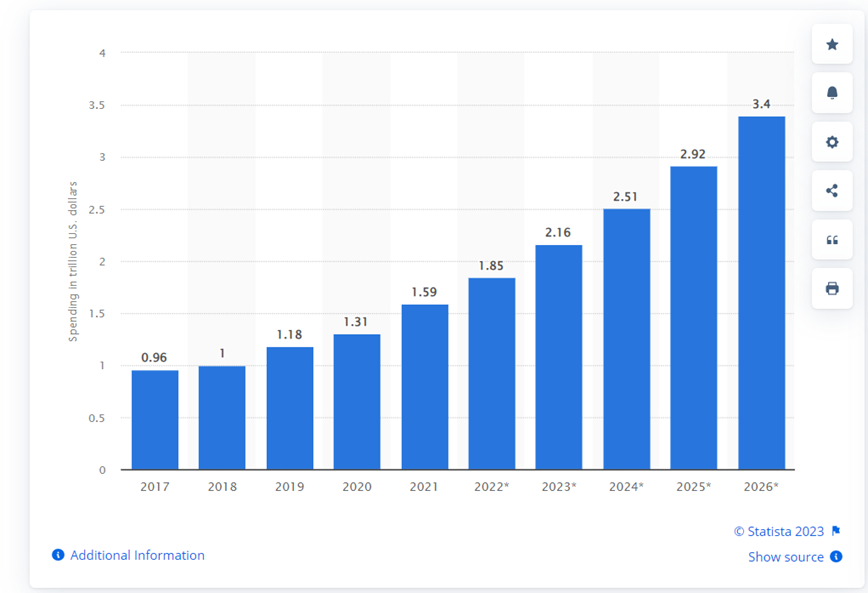
According to recent studies, global spending on digital transformation is projected to hit 3.4 trillion U.S. dollars by 2026.

image

Continuous digital transformation is the practice of continuously updating systems, incorporating new technologies into current ones, and reevaluating company strategies in light of technology developments. To stay ahead of the competition, you need to do more than just keep up with modern trends.

8. Offering Tailored Technology Solutions

In today’s intricate economic world, a one-size-fits-all approach won’t cut it. Technology nowadays is a reflection of the value placed on uniqueness. By leveraging IT, businesses may devise and implement solutions tailored to their unique needs and objectives. A fintech company would employ blockchain to ensure secure and transparent financial transactions, while a multinational retailer might utilize big data analytics to learn more about customer tastes in different parts of the world.

As a bonus, AI may be taught to carry out specialized functions across many industries, from medicine (through predictive diagnosis) to journalism (by content recommendation). Such tailored strategies not only increase output but also ensure that businesses stand out from the competition by delivering exceptional customer value.

9. Bridging the Gap with Businesses Technology

As time goes on, the lines between corporate strategy and technology blur. It’s tricky to determine where one ends and the other begins. Today’s corporations are more than just reliant on technology; they constitute it. There would be tight integration between, say, a company’s search engine optimization (SEO), content management system (CMS), data analytics, and other digital marketing platforms. The options and data offered by these sources inform and develop their strategies.

Algorithms and traditional business subjects like finance and strategy are so intertwined that they may one day be taught together in business school. Businesses and technology may work together to create integrated solutions, rapid innovation, and a constantly moving business landscape.

10. Finding a Place for Business in Technology

With businesses now actively developing and being shaped by technological progress, this is an exciting time to be in the business world. Business opportunities arise as a result of the development of new technologies that address these issues. Consider how the need for remote work opportunities has led to the creation of cutting-edge virtual meeting spaces. Industries like e-commerce, for instance, have contributed to the development of secure means of conducting online payments.

More practical, user-friendly, and consequential technology advances are created when businesses become involved. As businesses continue to expand their presence inside the technological fabric, we may soon be living in a world where technological solutions are not only effective but also comprehensive, sustainable, and in tune with the needs of society.

Conclusion

Infotech is now fundamental to the development of businesses in this age of rapid technological advancement. As per Oracle, companies diving headfirst into at least three cutting-edge technologies aren’t just staying afloat—they’re racing ahead! On average, they’re turbocharging their revenue growth by 58% faster than their more-traditional counterparts. And if that wasn’t impressive enough, they’re also boosting their profitability at a blistering rate that’s 80% quicker.

The connection between business and technology is growing as it merges processes and motivates new ideas. As we’ve seen, the impact of Infotech is widespread, and successful companies need to not only adapt to the changing technology landscape but also actively participate in it. In the future, a company’s success will depend not simply on its use of technology, but on how well it adapts to it, maintains its relevance in the market, and fuels its expansion. This partnership portends a prosperous and maybe revolutionary future as technology becomes increasingly integrated into every element of business.