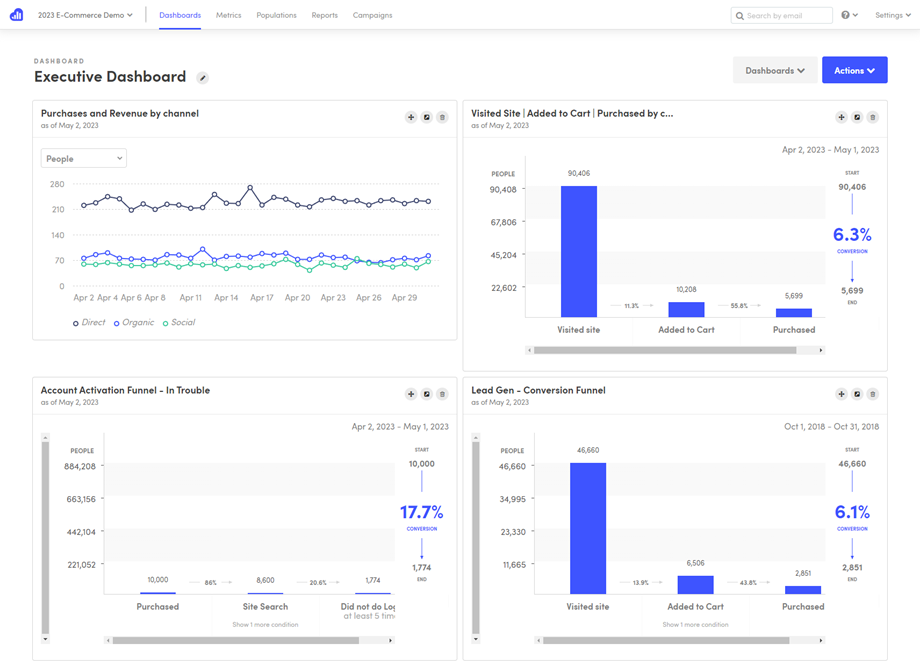
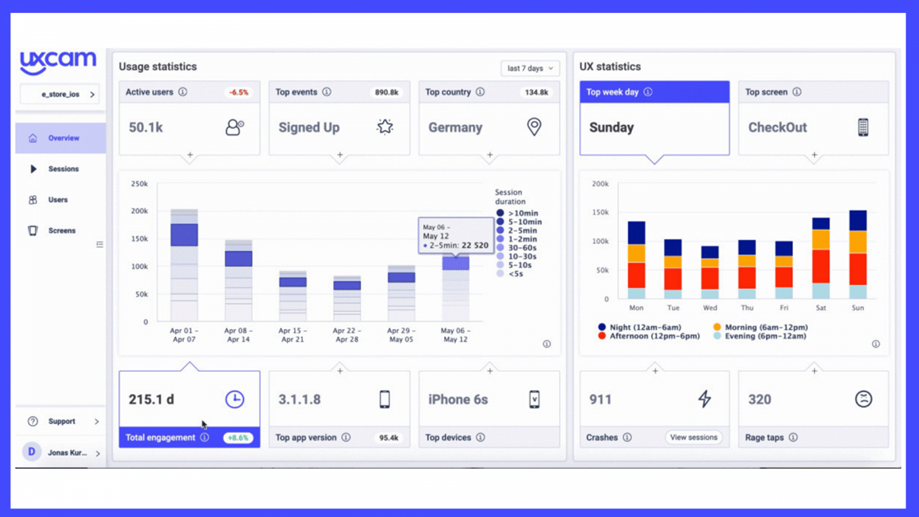
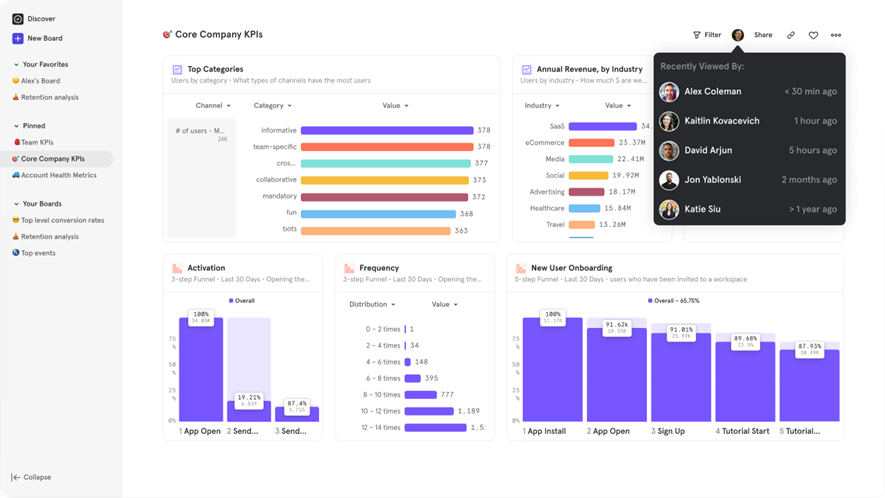
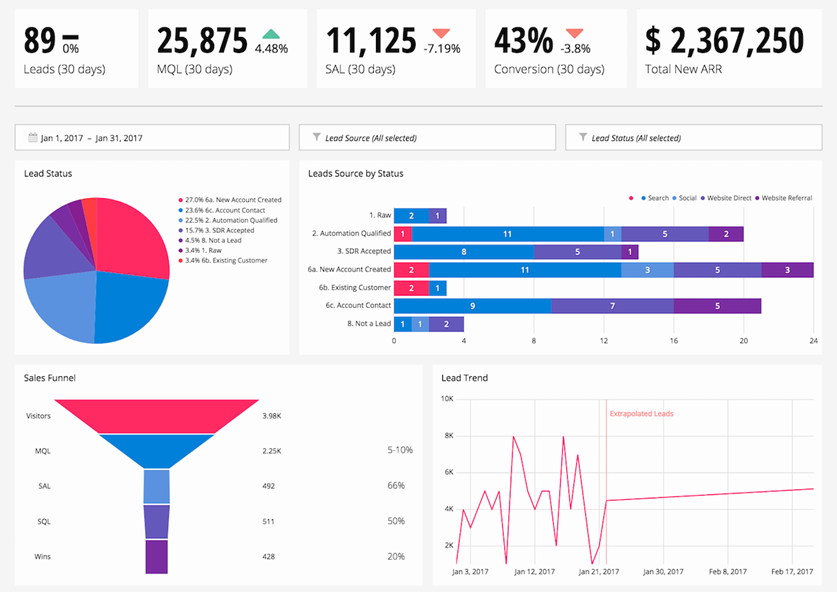
Data is a critical component of a successful ABM strategy. How can you leverage data-driven insights for effective marketing?
Designing a winning ABM strategy begins with market research, understanding your prospects and their buying patterns, and aligning sales and marketing teams to pursue the accounts. In this article, we have compiled resources to help you utilize data-driven insights to enhance the performance of ABM campaigns and achieve the desired outcomes.
Accelerating ABM with data
The success of ABM is paramount, with the tailored messages and personalized customer experience. And without data-driven insights, it can be challenging to hit the mark. The secret to accelerating the performance of ABM programs is to use the right database. A data-driven ABM approach will enable you to understand your best prospects and curate campaigns that resonate with them. An ABM program driven by data helps to launch a fast, effective start and makes it convenient to identify high-performing content.
Gathering and analyzing customer data is an essential ingredient of ABM’s targeted approach. You need current and accurate data to evaluate relevant target accounts, their pain points, preferences, and needs. You can procure relevant information using various routes, such as surveys, customer interactions (emails, cold calls, social media channels), and website analytics. The goal is to find out whether the target accounts resonate with your offerings and how you can tailor campaigns to win their interest.
Optimizing data
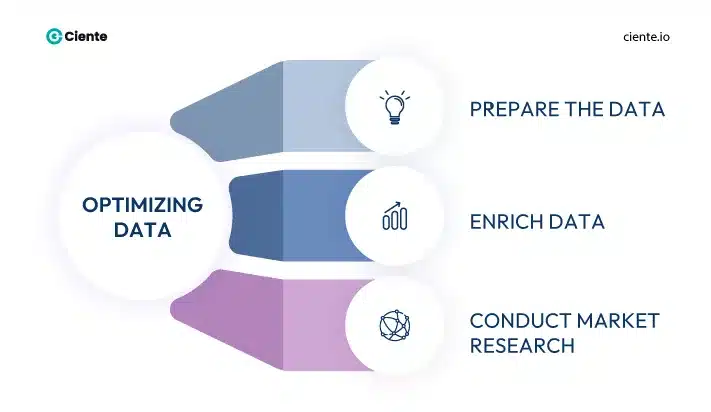
In the digital age, when information is abundant, you need to strategically use data to optimize the buyer’s journey. There are three steps to accomplish this:
Prepare the Data
The first step is consolidating information from all corners of your business. Bring all the data in one place and clean them to get a clear overview.
Enrich Data
You can enrich existing data by adding unique data points to get clarity about the customers. The more you know about them, the easier it gets to curate personalized campaigns.
Conduct Market research
Utilize data visualization tools to identify the segments where your strengths lie and where you have scope for growth. It also helps align sales and marketing teams to pursue the target accounts. Without a shared understanding between these departments, discrepancies may arise while utilizing organized data and implementing personalized ABM initiatives.
Data-driven insights for Targeting specific accounts
Precise targeting is the highlighting feature of data-driven ABM. When you identify the pain points and ideal solutions of prospects, you can personalize messages that help build strong customer-brand relationships. Categorize the data into segments, making it easier to identify the accounts you want to target first.
Implementing Predictive analytics
Analyze customer data using relevant information and statistical algorithms to understand the future outcomes of customer behavior. Predictive analytics can be utilized to identify the ideal customers for your business based on the data collected, including historical buying patterns. It saves time you would rather invest on accounts less likely to respond.
Segment data for ideal profiles
ABM allows account targeting and segmentation to divide potential accounts into groups based on relevant characteristics aligned with the brand’s goals. These are some types of data that can be used for account segmentation and targeting, such as demographic, behavioral, and customer feedback.
Demographic: gives an overview of the characteristics of the customers within the target accounts, including age, gender, designation, location, etc.
Behavioral: looks into the buying patterns of the target account segments, their actions, and interactions with a company’s offerings. You can utilize this information to understand their purchase history.
Feedback from customers: this can be a valuable resource to improve ABM by identifying the key accounts interested in the brand’s offerings and the decision-makers.
Integrate ABM customer base into sales and marketing data
Combine customer information for an ABM campaign with data outsourced from other marketing and sales efforts. This would give you a holistic view of the campaign performance by providing an idea of its impact on the sales and marketing efforts. The integration allows you to understand how the campaign impacts their efforts, thereby allowing informed decision-making. For instance, if a brand is launching an ABM campaign to target a specific group of accounts, they can learn how these prospects interact with other marketing initiatives like email campaigns, webinars, etc.
Wrapping it up
For your ABM strategy to be effective, the target-specific database must be robust. You need to know your ideal prospects at a deeper level. One way to achieve this is through data-driven ABM insights. While incorporating such information, identify the key metrics important to your brand like customer lifetime value, acquisition cost, and retention rate. Then, using a CRM system you can track and analyse them. The data can be utilized to create customer segments based on shared characteristics. You can utilize this data to deliver personalized messages and design customized campaigns. These can be launched on social media channels frequented by the prospects.
Digital Asset Management (DAM): Benefits, Features, Use Cases
All aspects of business operations are transforming into digital, and data is no exception. How can you use DAM software to improve performance efficiency?
Given the flux of digital technologies, managing and organizing digital assets, such as documents, images, videos, and media files, has become a top priority. Digital asset management is the need of the hour. It helps businesses of all sizes seamlessly manage various types of online data.
With this system, you can streamline workflows and maintain brand consistency. It’s like a centralized place to access various media assets of a company. One of the core features of a DAM solution is to optimize the production of rich media, especially within the sales and marketing sectors. What’s more— it can help you establish brand consistency through automatic asset updates and reinforcement of brand guidelines.
Digital Asset Management: Key Benefits
Effective digital asset management is a must-have due to the various benefits it offers:
Reduced production costs
Asset centralization within a DAM system enables organizations to find and reuse assets, reducing production costs and duplicate workstreams. The resulting efficiency helps to bring assets and solutions to the market faster.
Improves organizational transparency
When you implement a DAM system, you experience a clear and comprehensive view of digital assets. In this way, it helps you positively impact management, content planning, and execution. If you are looking for better collaboration among various stakeholders, then DAM software can help you accomplish this goal. It eliminates redundant projects, thus introducing impactful workstreams.
More lead conversion and customer retention
The chances of customer retention are high when you deliver a personalized experience. And with DAM, it gets easy to accomplish this. You can launch relevant marketing materials at the right time to enhance customer engagement. This can accelerate the buying cycle and nurture strong customer relationships with your brand. When there is more customer satisfaction, they are likely to convert into paying accounts and possibly come back for your products/services.
Improved brand consistency
While creating digital materials, be it webinar content, videos, or images, it is important to maintain consistency and align with the brand’s voice. When you use DAM software, it creates consistency across all messaging, visual representation, and other means of brand adherence. Moreover, it allows functional areas and business units to reuse creative files and other assets for conveying the same voice to the market. DAM solutions protect brand identity, irrespective of the teams that share the digital data. By maintaining consistency, it simplifies brand management and the delivery of a positive customer experience.
Better compliance
You cannot deny that it is essential to comply with licenses, legal documentation, archives, and other assets that are important for meeting industry-driven regulatory compliance requirements. This applies to industries of all domains and sizes. With improved compliance, you can easily organize and rapidly retrieve digital materials, which saves you time and resources. DAM also makes sure that your sales and marketing teams utilize only digital assets they have usage rights on.
Increased Content Value
Incorporating a digital management solution allows you to streamline your content strategy, delivering high value throughout the asset lifecycle. With this system, you can swiftly find, organize, or repurpose the existing content. Your sales and marketing teams can easily share digital files, which increases brand reach.
Boosts productivity
Since DAM seamlessly aligns the marketing teams, strategy, and digital assets. It allows you to invest more time towards asset creation, thereby increasing productivity. With better performance efficiency, customer engagement is also likely to improve.
Steps involved in the application of DAM Software
When using digital asset management software, these steps will enable successful implementation:
1. Creating the asset
The first step of the DAM process involves creating and preparing different multimedia files using standardized templates and formats. Standardization helps to easily capture, recognize, and sort out documents for simplifying search and data retrieval.
2. Encoding and indexing
The next step is to work on the metadata— descriptive information added to the assets for context. It is an essential ingredient of the DAM process, helping with indexing—the process of systematically cataloging and organizing digital assets that makes asset search easier.
3. Implementing workflows
In the third step of using the DAM system, you integrate digital assets into relevant workflows, projects, or processes. You can link them to specific tasks, projects, or campaigns. By this stage, you have already assigned metadata and completed the indexing. Now, you can apply task and process automation to streamline DAM.
4. Version control
B2B businesses are dynamic, where the data is in a state of flux. Given such circumstances, companies may experience a regular inflow and outflow of resources and restructuring. Version control helps to update the data that is continuously changing. With this feature, you can ensure that the digital assets you utilize are up-to-date. It allows you to keep tabs on the changes, revisions, and data updates. This applies to the multiple versions or iterations of a digital asset.
5. Governance through permissions
In this step of the DAM process, focus on establishing policies, procedures, and guidelines. With each of these deliverables, you can govern the creation, use, management, and lifecycle of digital assets. This will allow you to authorize personnel and conserve resources from unauthorized use, corruption, or loss.
The Key Functions of DAM Software
When you integrate a digital asset management solution, it helps you organize, store, and retrieve different digital files seamlessly. From creating and redistributing assets to archiving, reusing, and retiring, these solutions go through a lifecycle of digital assets. Let’s take a closer look at these:
Create Digital Assets:
Some DAM tools may come with built-in image and video editing features that fast-track the asset creation process.
Edit & Review:
A digital asset management solution makes it easy to collaborate with built-in tools for commenting, annotation, and version control. This function allows multiple users to share feedback and suggestions on the same asset.
Integrations:
DAM offers users the flexibility to integrate with other tools like content management systems and project management platforms.
Distribution:
Integration of DAM allows you to effectively manage the distribution of finalized assets along with other tools like content management systems or social media platforms.
Tracking and archiving:
After a project is completed, DAM solutions ensure that your assets are organized as per the categories, such as date, metadata tags, or file type.
Safe storage:
These solutions can safeguard digital assets from unauthorized access or modification. You can achieve this by setting user permissions and roles and implementing encryption for an extra layer of protection.
Data search and retrieval:
When the files are archived, you can access tools for organizing, indexing, and searching digital assets. Some of these include AI-powered search functionality.
DAM: Use Cases
Businesses across various domains utilize digital assets for the benefits they offer. Let’s take a look at some of the use cases of this software in the tech domain:
Your management department can use digital asset management for delivering systematic records and streamlining operations such as talent acquisitions and payroll receipts.
Your sales and marketing teams can utilize this software for better brand management.
When the access control depends on the business unit, functional department, or designation, DAM allows you to control access to digital data.
Integrating DAM into your business
You can seamlessly integrate DAM systems into your project management software, image editing software, productivity tools, distribution platforms, and other tools. Since all data assets are now digital, you can almost instantly access the files. Moreover, the production of new marketing materials can be accelerated due to its easy integration. Sales and marketing teams can quickly access approved content and utilize it for social media channels or marketing campaigns.
Summing up
With the world going digital, data and assets such as media files, images, and documents are also being stored online. Digital assets eliminate the hassle of disorganized or incorrect information. If you want to deliver brand consistency while maintaining high productivity, digital assets are your go-to solution. An effective digital asset management software comprises features that enable management of access control to digital data. Having up-to-date assets is simplified with DAM, which allows sales and marketing teams to instantly access and share information directly from the platform. Incorporate DAM throughout the buyer’s journey and experience seamless data management.
How to Use Data Analytics to Improve Customer Experience
A good CX can bring you closer to your brand advocates. How can data analytics help you deliver a seamless experience?
Customer experience is what connects your brand to your customers. It is a bridge between brands and their brand advocates that can be defined as the way a consumer perceives your brand. Every interaction your customer has with your brand has the potential to either weaken or strengthen the bond and having an optimized website or a good SDR is just the starting point for providing a positive customer experience.
Good CX involves building relationships by understanding what people want, need, and value. The complete experience includes pre-purchase associations with the brand (via marketing or awareness), the process of researching and making the purchase (either in-store or online), and post-purchase interactions (regarding service, repairs, extras, and more). The goal is to build meaningful connections between the brand and the customer.
Now that we know how customer experience affects our brand, let us understand how data analytics can help us optimize it.
What is data analytics for customer experience?
Analyzing data from customer interactions can give you a lot of valuable insights. You can get a clear idea of customer satisfaction, loyalty, and other metrics that reflect how your customers interact with your product.
You can also utilize data analytics to improve customer experience and overall improve customer satisfaction — thus increasing customer retention in the long term.
Importance of using data analytics for customer experience
Customer experience analytics is obligatory for companies that want to prioritize their customers. It lets companies understand their customers’ journeys, helping them to personalize experiences to meet individual tastes. By interpreting customer behavior, businesses can target their offerings better.
Also, customer experience analytics helps specify pain points in the customer journey. It motivates businesses to proactively resolve issues, resulting in higher customer satisfaction and less customer churn. Predictive analytics also plays a role in strategic planning by foretelling future customer behavior.
Customer experience analytics is a vital factor in driving customer loyalty, growing conversion rates, and enabling business growth.
Steps for analyzing customer data with customer experience analytics
Here’s the 5-step technique you can follow to get the best results of your customer experience analytics:
Let’s take a closer look at each of these measures below!
Decide your goal
Before you even begin to collect data or look at customer experience analytics, you must first extrapolate what you’re trying to identify. You must set SMART goals to ensure that you understand the data points that reflect customer needs and business goals.
Collect customer data
When analyzing customer experience data, you will typically consider two main types of feedback: direct and indirect.
Direct customer feedback
Direct customer feedback consists of metrics like:
Net Promoter Score (NPS)
Customer Satisfaction Score (CSAT)
Customer Effort Score (CES)
Voice of the Customer (VoC)
These are the CX analytics that most product marketers think about as they offer a direct understandings of customer behavior. Direct customer feedback could also comprise responses you receive on social media or comments from feedback surveys.
Indirect customer feedback – Rather than monitoring behavior, indirect customer feedback is influenced by customer behavior. This includes metrics like:
Average Handle Time (AHT)
Customer Lifetime Value (LTV)
Average spend
Customer churn rate
Customer renewal rate
Whenever you calculate the LTV, you get an indirect look at how delighted customers are with your product (since they wouldn’t continue paying for a flawed solution, much less upgrade their subscription). Other ways to accumulate indirect customer feedback include social listening, customer review monitoring, and analyzing voice chat transcripts.
These data points may not be as direct as NPS or CSAT scores, but they’ll help you drill down on the business outcomes that result from the customer experience.
Visualize collected data with different dashboards.
Once you have gathered data on customer satisfaction scores, lifetime value, and churn rates, then it is time to visualize everything using different dashboards.
Choose an analytics method and analyze customer data.
There are various data analytics solutions and procedures that you can use to filter through your customer analytics insights. Each process has pros and cons, so you must be acquainted with the options available to you. A few different analytics processes to consider include:
Descriptive analytics
Descriptive analytics uses real-time and historical data to spot trends and the relationships between certain metrics.
Diagnostic analytics
Diagnostic analytics uses data to understand why certain events occurred, whether a rise in churn rates, a reduction in lifetime value, or other shifts in the makeup of your SaaS business.
Predictive analytics
Predictive analytics uses models and algorithms to forecast future performance or the probability of certain outcomes.
Prescriptive analytics
Prescriptive analytics uses data to figure out what the best course of action is and make decisions based on multiple factors.
Which one you go with will ultimately depend on the data you collect, which insights you expect to gather, and the business outcomes you are trying to achieve. For instance, predictive analytics is often adequate for businesses attempting to decrease risk or lower costs.
Use the insights to improve customer experience.
Finally, it is time to use your conclusions to improve the customer experience. Remember, collecting and analyzing data is only beneficial if you utilize those insights to make everlasting, favorable changes to your product.
Collecting customer journey analytics but never making changes to the onboarding process or customer engagement strategy would be a total waste of time. As such, you should proactively fix negative patterns you recognize and double down on the features that get new customers in the door.
Conclusion
CX is quintessential to sustaining customers, and various industries are placing importance on data analytics to better comprehend customer behavior, preferences, and needs. You can use this information to create better products and services. Data analytics can help you improve the customer experience by reducing friction, personalizing the journey, and adapting your marketing based on the needs of your users. So, if you thought data analytics was required only for those marketing campaigns, it is time to rethink your strategies!
Understanding clients and their buyer’s journey is a total game-changer for your business. How can you select the best tools to provide reliable insights?
The sales and marketing teams of every B2B brand invest so much time and effort in building the target customer base. It can be exhausting to find the right combination of platforms to gather client data. A range of customer analytics platforms to evaluate the information will direct insights from users and interpret their responses. As you browse through these, you probably realize it can be challenging to find reliable information.
We’ve curated a list of the ten best customer analytics software options to help you understand your buyers more deeply. You’ll learn how these tools work, how to combine them, and how they can help you make informed business decisions and achieve your goals. Learning how these platforms function and how to implement them for good decision-making can bring you closer to your goals.
Let’s dive in!
What are customer analytics tools?
Simply put, customer analytics are metrics that enable you to gather valuable data about your target audience, evaluate them, and visualize them as graphs, charts, etc. With these platforms, you can collect and analyze customer data, thereby gaining insights into their behavior, preferences, and motivations. They help you look into customer segmentation, sentiment analysis, and personalized marketing. You can accomplish this using various features, including issue analytics, lifecycle optimization, real-time Support Vector Classification (SVC), and AI-powered health scoring. Your customer service teams can utilize customer analytics tools to employ advanced data techniques for informed decision-making to drive business growth.
Top 10 Customer Analytics Tools
For businesses, customer data is a precious resource. Keeping up with the trending tools will save hours spent on downloading information and looking closely at every customer interaction. It’s quite cumbersome!
We’ve curated a list of the best platforms to help you through the journey of customer analysis. When you are familiar with each of these and their key features, you can select the right tool for your brand.
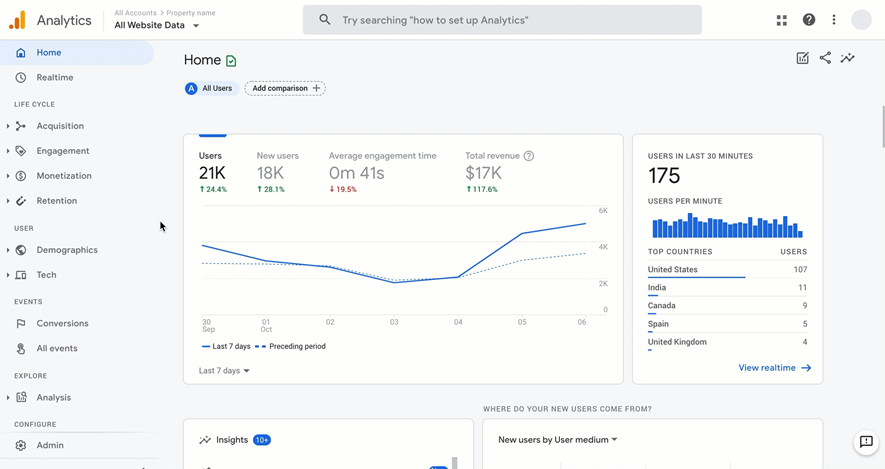
1. Google Analytics
(Source: Google Analytics)
One of the most popular analytics platforms, offering you extensive website assessment capabilities. The best part is— it’s free! Since it requires no cost, it is popular among businesses worldwide. With Google Analytics, you can track customer behavior from their actions, such as clicks or site visits. The reports created in this platform will enable you to understand your customers and their needs with marketing results.
Let us take a look at other striking features of this customer analytics tool-
Traffic analysis– enables you to get a complete overview of the audience journeys. You can also optimize channels like social media or websites having high traffic.
Segmentation- this feature categorizes customers and website visitors into segments, making it easier for you to understand the engagement.
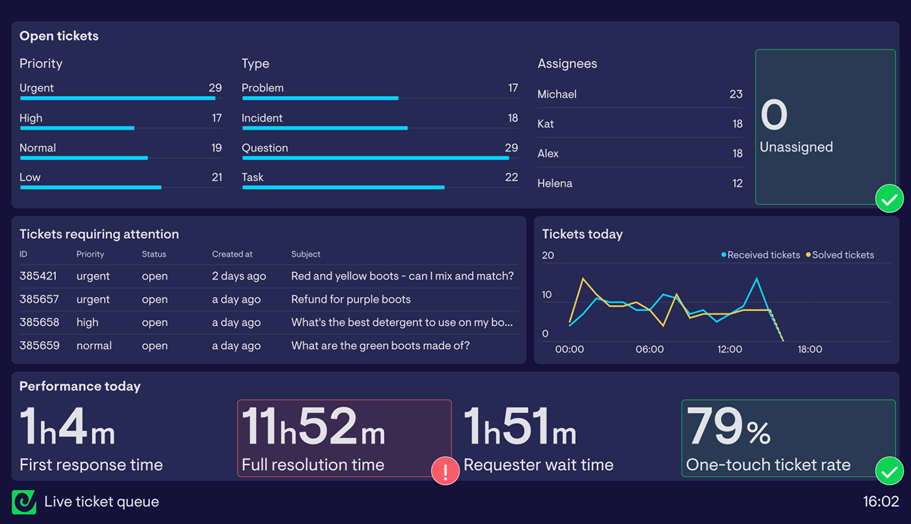
2. Zendesk
(Source: Zendesk)
Sorting through data can be overwhelming; Zendesk simplifies things for you. The charts and spreadsheets can be analyzed in a matter of minutes. You no longer need to fret about handling massive volumes of data to filter what you need. Zendesk allows you to blend data from multiple sources, such as email, chat, or social media, into a single dashboard that can be analyzed and compared seamlessly. It is the best tool for optimizing customer service. With Zendesk, you no longer struggle with reporting due to its capability to fine-tune and deliver customer insights accurately.
There are Zendex integrations- applications that can be connected to the Zendex platform for elaborating its functionality, automation, and enhancing efficiency. The integrations can be one or two ways. In a 1-way Zendesk integration, data can be synced from an external product to the tool or vice-versa, but not both ways. If you want to swap data both ways, you will require a 2-way integration.
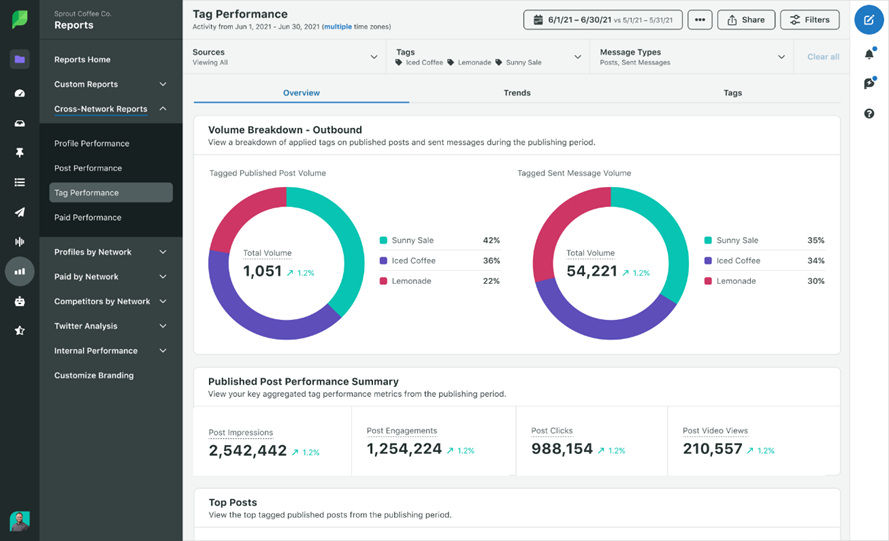
3. Sprout Social
(Source: Sprout Social)
This customer analytics tool is ideal when you want to evaluate engagement on social media channels. It can manage large volumes of responses. The additional features such as automating urgent concerns and alerts for high activity, make it a good go-to platform for managing social media responses. Like other metrics, this also offers performance tracking, with the added feature of distinguishing between paid and organic reach. This platform simplifies the process of going through data swiftly, giving an idea to choose the best time to upload posts.
Thus, with Sprout Social, you can amplify your marketing efforts seamlessly.
4. Kissmetrics
(Source: Kissmetrics)
To increase brand visibility, your sales and marketing teams are probably going to great lengths. Launching events may be one of them. This cloud-based customer engagement solution is a must-have if you want to analyze event performance. Some features of a Kissmetrics platform include in-depth and accurate sales funnel reports outlining the buyer’s journey throughout the sales cycle.
Knowledge of these helps to discover the gap areas to enhance engagement and consumer experience. A key characteristic of Kissmetrics is to segment users as per variables like demographics or actions. This information can be collated from a specific segment to create a comprehensive analysis report. So, you have all the valuable data to help you understand your audience, and build a better relationship and brand credibility.
5. UXCam
(Source: UXCam)
It’s a product analytics software that gives optimized insights on mobile devices. Some features of UXCam that stand out include retention analytics, issue analytics, and dashboards. Let’s walk through each of these:
Retention analytics– UXCam can sort through customer databases to help you understand the key actions that lead to retention.
Crash analytics– You receive alerts as and when crashes happen without wasting time.
Dashboards– present a report that gives an overview of performance engagement and scope for improvement.
6. Mixpanel
(Source: Mixpanel)
What makes Mixpanel different is its in-app product engagement analytics for web-based and mobile applications
Key features:
Engagement analysis– overview of customer engagement with a comprehensive report
Impact analysis– Whether it’s a new release or updates with a large dataset, measuring the impacts helps you understand customer response.
Reporting– What’s best about the Mixpanel tool is it lets you mix different metrics on the dashboard and visualize the data as reports.
7. Treasure Data
(Source: Treasure Data)
If you are struggling with a complex data-related issue, then Treasure Data must be your go-to analytics. It is integrated with the customer data platform, making it reliable for predicting critical insights based on customer feedback. A striking feature is its real-time Support Vector Classification (SVC) dashboard. This provides a quick insight into customer profiles, segmentation, behavioral patterns, and other metrics.
8. Tableau
(Source: Tableau)
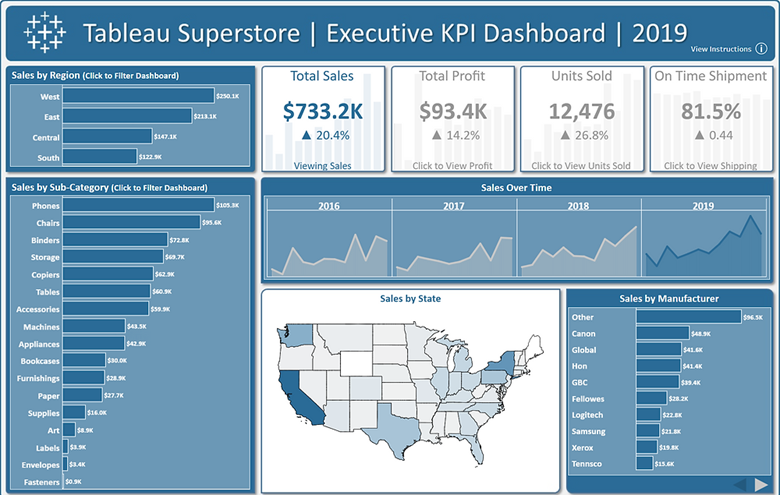
Its specialty lies in visualizing data and integrating AI. With Tableau, you can access real-time visual analytics, promoting actionable insights. The best part is— There is no coding required. The built-in AI and ML take customer analytics tools a notch higher. You can generate AI-driven reports to support informed decision-making for business growth. What’s more— you can create dashboards using its library of pre-built dashboards. Once created, these can be shared through cloud networks, promoting the exchange of industry-specific dashboards.
9. Hotjar
(Source: Hotjar)
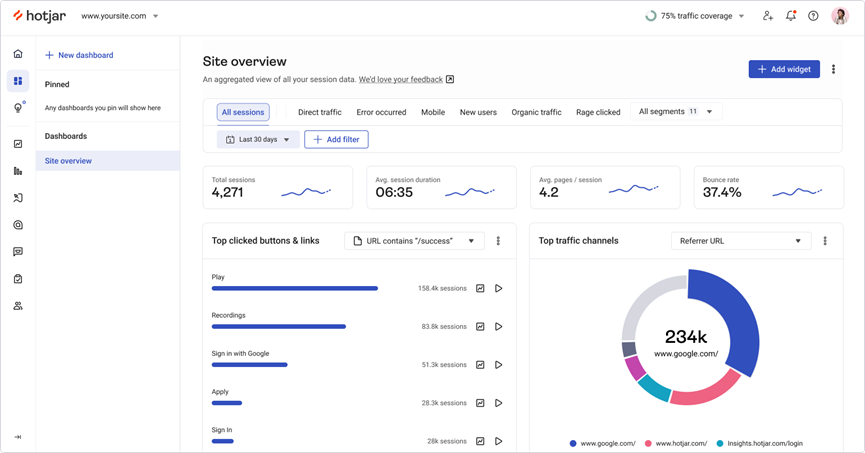
There are two striking features of Hotjar analytics: heatmaps and session recordings. With heatmaps, you can extract qualitative data on user behaviors. It lets you observe the elements of your brand that the users like the most. The scroll maps feature integrated with this feature allows you to assess the scroll patterns of customers. Once you know this valuable information, you can effectively design marketing campaigns.
With the session recordings, you can dive into user actions and not just that. You can also connect them with impactful actions that provide qualitative data.
Apart from these, the Hotjar analytics also comes with a funnel feature that collects data on every interaction with your brand. This includes all interactions throughout the sales cycle. When you get these insights, you can depict how many users converted into paying accounts and how many didn’t follow through. Such valuable data can help build on the gaps and grow customer engagement.
10. Gainsight
(Source: Gainsight)
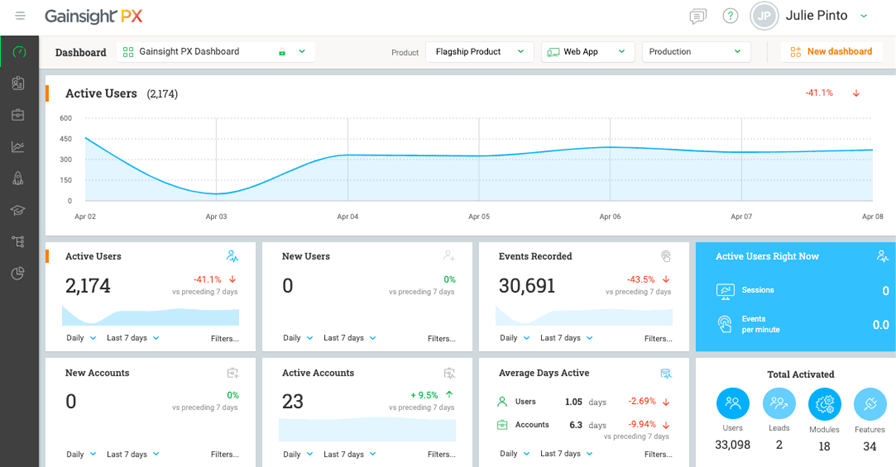
The features of this customer analytics platform remain robust due to three pillars: Customer Success (CS), Product Experience (PX), and Digital Hub (DH). CS provides customer feedback analysis, and when clubbed with NLP (natural language processing), you can get an idea of actionable insights. The striking trait of Gainsight is the AI-powered playbooks curated to customer challenges. The AI integration can detect possibilities and recommend the right action plan. It also has a health scoring component that predicts customer expansion and renewals. The added advantage allows brands to focus on accounts with a higher score and improve their experience.
11. Salesforce
(Source: Salesforce)
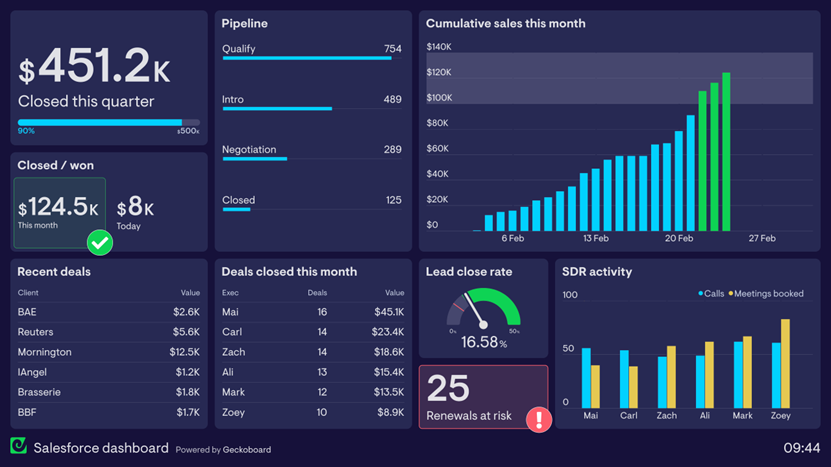
This customer relationship management software will be an asset for your sales teams. The CRM analytics of Salesforce are compatible with different devices. You can utilize its AI integration that comes with augmented analytics, thus promoting automated workflows. The built-in actions menu is the highlighting feature, enabling decision-making without leaving the portal. You can conveniently schedule meetings, update campaigns, and so on.
12. CleverTap
(Source: Clevertap)
Understanding customer data is possible with a wide range of metrics. But what about getting an idea about their buying pattern? That’s where CleverTap comes into the picture. It sends billions of notifications in one day, offering you trend and pattern recognition features. It also has a lifecycle optimization feature that smoothens your interactions with customers throughout the buyer’s journey.
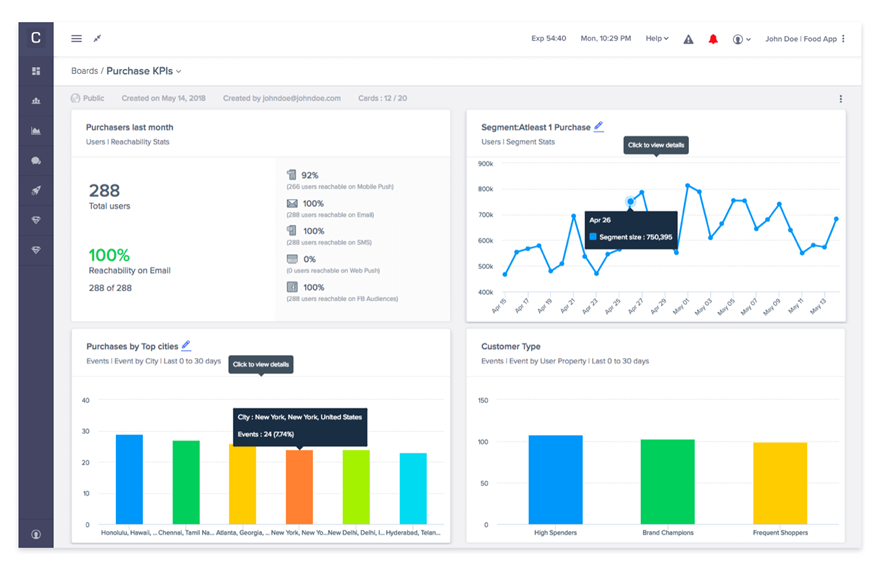
13. CRM Creatio
(Source: CRM Creatio)
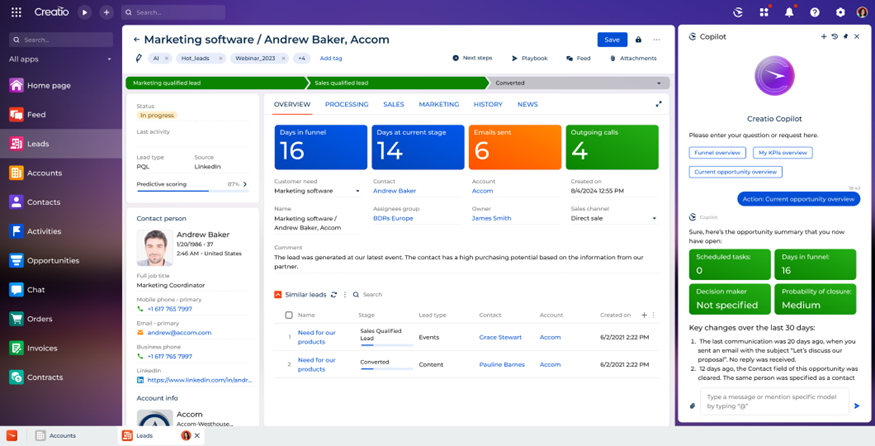
If you are looking for an innovative customer relationship platform, this is the perfect choice. With CRM Creatio, you can streamline and enhance various responsibilities effortlessly.
And the best part is— it is applicable to companies of all sizes and domains. Its key features are data visualization and workflow optimization, made simple with a process modeling tool. A CRM Creatio offers multi-channel marketing, improving performance engagement.
14. Amplitude
(Source: Amplitude)
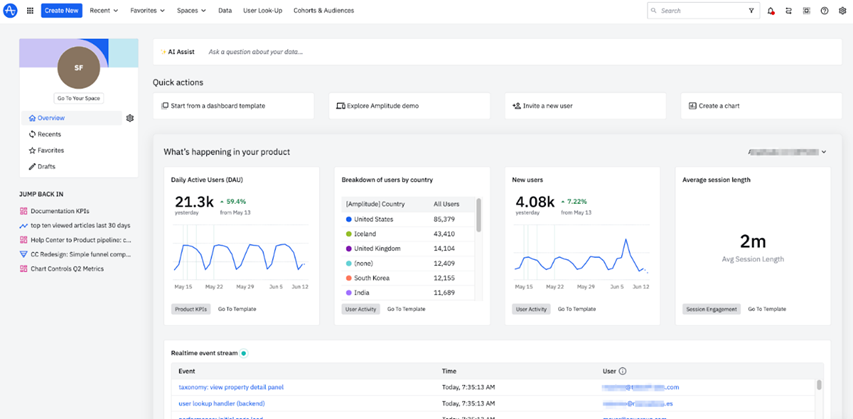
Coming to Amplitude—specializing in analytics for buyers’ journeys and the customers who convert into leads. This platform enables brands to evaluate user actions, thus supporting data-driven decisions.
Any action that customers take related to your offering is termed an event. And for most businesses, events are the main objective of using Amplitude. It helps you get a complete overview of user engagement clicks, likes, follows, etc. This analytics offers five default events to which you can add events and analyze customer response. The standout of this customer analytics tool is event segmentation, a feature that promotes analysis of events and gives an idea of what the audience prefers. You can run simple to complex analyses and view reports in an easy-to-interpret manner. The thing to note here is that dashboards are restricted to Amplitude users.
15. InMoment
(Source: InMoment)
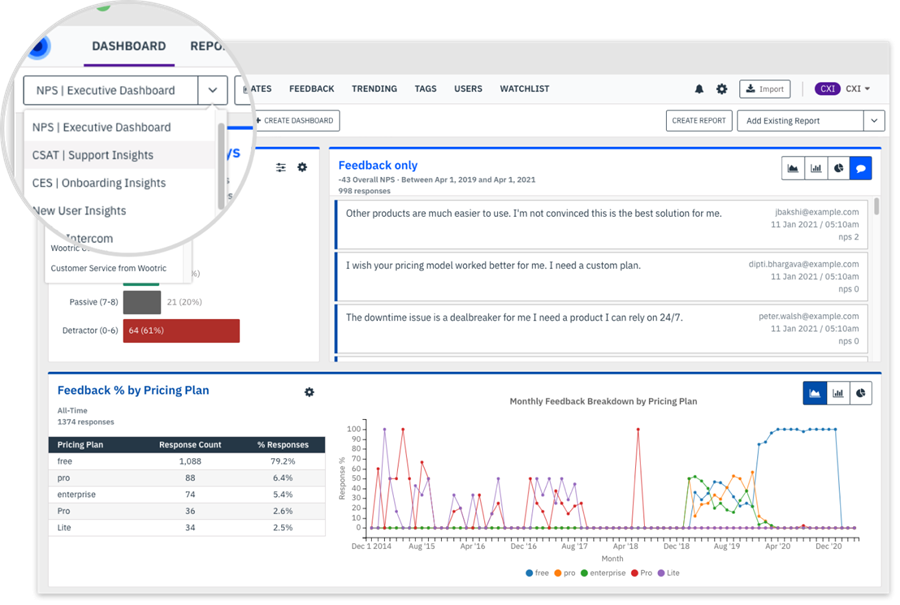
It’s an AI-driven platform to enhance customer experience that is best fitted for analyzing feedback.
Here’s a brief overview of this customer experience analytics tool:
Conversational intelligence– gathers data from different information sources and creates a report to give an overview of customer experiences.
Engagement engine– incorporates AI to engage in personalized communication with customers, promoting a more valuable response.
Rounding off
Customer analytics tools provide valuable insights about your target audience. It’s like the pinnacle of customer retention and a flourishing sales funnel. The expertise of these tools helps brands dive into user engagement and provide valuable feedback. When you incorporate the right analytics, it becomes easier to segment customers based on criteria such as demographic, location, device, etc. Overall, the standout feature of customer assessment is path analysis, which allows you to visualize the actions taken by the customers while engaging with your offerings.
When you acquire data on customer insights, it also helps to optimize the buyer’s journey. If you can track the user behavior through each phase of the sales cycle, it enables you to address any gaps in the sales funnel. Similarly, monitoring the retention rates is a valuable insight for your business for estimating brand growth and reach. If you can promptly respond to changing customer behavior patterns, it would give you a cutting edge in the competitive market. The list of these customer analytics platforms will help you accomplish this goal swiftly.
How to Develop a Winning B2B Content Marketing Plan?
There’s a stark difference between a marketing strategy that generates an action and one that fails to do so. How can you build long-term brand loyalty through high-quality content?
2024 is the year when the content marketing sector is estimated to continue expanding, reaching a whopping $600 billion! A successful strategy can facilitate brand awareness among potential customers, but how do you get it right? To establish a brand that offers value, designing tactics centered around distributing content that will drive awareness, engage prospects, and boost your ROI is the way to go.
You can articulate words to empower your business and communicate to prospects the highlighting features of your services/products. Different types of content like emails, blogs, or E-books will generate a response depending on what the customers prefer. However, the shining star is personalization.
An effective plan must address the audience’s pain points such that they can connect the dots to your business offerings. When you launch personalized content, the audience is more inclined to trust your brand. Let’s explore this strategy to understand these in detail.
More about B2B Content Marketing
The number one advantage of a content strategy is presenting your brand to the right audience and helping you resolve their concerns with substance. It makes more customers want to choose your brand over the competitors. The bottom line— your content must inspire brand loyalty.
It’s not as simple as putting together a list of key phrases or several posts on social media in one week. The marketing plan for content must begin with thorough research of customers, followed by aligning with your overall business plan. The framework has to focus on creating various forms of content and distributing them to attract other businesses, ultimately converting them into high-paying leads.
Additionally, creating an AI generated presentation can simplify internal communication, helping teams quickly understand the strategy, content formats, and distribution channels.
Why go for it
A robust digital marketing strategy comprises a series of components, content being one of them. Any form of write-up composed of high-value keywords and addresses pain points can bring more target accounts to your website, ultimately increasing the overall lead generation.
Here’s a list of benefits of a content marketing plan:
Helps You Know Your Competitors
The thought of analyzing your competitors may seem a little counterintuitive, but it holds much value. You need to look into the steps they implement and the type of content they generate that promotes business growth. How is their website marketing? What strategies could help you create a better plan than them? Finding answers to these will help you figure out why a company would choose your offerings more than that of your competitors. And also provides insights into what measures must be in place so you can consistently maintain the sales dynamics in your favor.
Defines Clear Goals
Without defining clear objectives, your marketing team will navigate like a ship without a compass, vague and clueless. While setting the business targets, develop a framework with achievable goals and timelines. The next step would be aligning these with the company’s overall objectives for market growth and customer satisfaction.
Provides Consistency
Your marketing team is like a combination of a diverse set of expertise. They need to work cohesively to be on the same page. A successful marketing plan would foster consistency concerning brand messaging, visual identity, strategy, and campaigns.
Identifies Your Ideal Customers
When you start developing a marketing plan, one of the main aspects to consider is your target audience, what interests them, their challenges, and ideal solutions. Once you narrow down the different categories of prospects, you can dive deep into the characteristics of those niche audiences. You want your target clientele to read your content and engage with you, and avoid wasting resources on those less likely to convert into paying accounts.
Evaluate KPIs to Measure Marketing Success
Consider this scenario where you have decided to launch a marketing campaign to boost website traffic by around 30% over the next quarter. The success of this campaign can be measured by more than one metric. To get a real lay of the ground, you should employ KPIs such as daily site visitors, bounce rates, most visited pages, and session duration. This is where a remarkable marketing plan comes into the picture. It not only makes it easier to define the vital metrics, but also keeps you updated with real-time feedback.
Key Components of a B2B Content Marketing Plan
An impactful strategy becomes a success due to a variety of determinants-
Clear Understanding of Your Target Audience
Getting to know your audience forms the core of an effective B2B marketing plan. This involves identifying their pain points, what interests them, and what social media channels they are active on. There is a connection between getting what your prospects want and what they prefer. The data collected can work as a simulator for crafting messages the audience can relate to. You can obtain the necessary information through surveys, market research, and mapping the buyer’s journey. The customer personas will vary with demographics, designation, roadblocks, and idea solutions.
Focus On the ROI
Since marketing campaigns can be expensive, it is important to make sure you generate a positive return for every dollar invested. There are different ways to measure revenue returns- hence, integrating SEO is a good idea to attract high-value leads to your brand.
Use Relevant Content to Nurture Your Leads
Relevant content is the key to attracting B2B clients and winning their interest. This means creating write-ups on topics that add value and help them with their concerns. Publishing and re-publishing relevant content is an effective way to attract B2B clients and foster long-term relationships with them.
Multi-channel Approach to Marketing
Every business may have its preference for marketing channels and the type of content they publish. What’s important is to know the platforms the target audience frequents and launch a campaign. It puts you one step closer to connecting with them, enhancing engagement, and ultimately garnering more leads. Sometimes, you could use a mix of channels, making sure it aligns with your company’s goals and objectives. Once you identify these, the next bit is to tailor the content for a potentially positive response. Depending on your capacity and budget, select multiple channels where your content pitches to the specific needs of the client niche. You can also monitor the performance efficiency and modify your strategy if needed.
Emphasize the Customer Journey
The essence of value-driven marketing is mapping the buyer’s journey. This involves evaluating how your prospects transcend through the journey from awareness to the purchase stage. Learning about their roadmap helps you align the marketing plan addressing their pain points. In your brand’s content, you can add data that will increase the chances of prospects converting into high-paying accounts.
The Route to a Successful Content Strategy
A well-documented content highlights your business offerings and how you address the audience’s pain points. According to the Content Marketing Institute, 64% of the most successful companies maintain a documented strategy.
Let’s dive into the guide to create the best content plan:
Define your goals
The first step to a powerful content plan is to define the why— Why is your brand creating a strategy in the first place? Identify what you are trying to achieve through content and then brainstorm ideas on what would work best. The marketing strategy will cater to the objectives you are setting yourself up for and shape the plan. Whether it is getting more engagement or better rankings in Google? Or more traffic, a certain percentile growth in the sales funnel, be clear about your goals.
Identify the Buyer’s Persona
In the B2B arena, understanding the buyer’s persona- their needs, pain points, the solutions they seek, and the content they find valuable will go a long way. This information will help you develop an effective plan to publish material that resonates with the target accounts. When you know your audience well, you can tailor content as per their challenges, increasing the chances of the content being consumed and shared. Aligning with the prospects will enable your content to speak to them at every stage of the customer’s journey.
Shortlist topics to cover
Carefully research each topic, based on relevance and prioritize those with high potential for organic search rankings. Identify the type of content you want to deliver and choose the genre accordingly. Understanding what effective content looks like to your target audience will also help you ideate topics that attract them. Incorporate keyword analytics tools to determine topics offering the potential for a high search volume. An important pointer to keep in mind while nurturing leads is to ensure consistency across all forms of content such as educational blogs, webinars, case studies, E-books, white papers, etc.
Create a Content Calendar
While designing your strategy, a content calendar is a must-have. It should include a detailed plan covering all stages of the sales funnel. Also commonly referred to as an editorial calendar, it helps you organize and schedule content for publication across the chosen channels. Any data must be communicated to the relevant audience for the desired results. When you maintain a content schedule, specify the channels for each publication.
A calendar is more like a roadmap for creating different types of content and defining a timeline for publishing and distributing them. Each content mentioned in the calendar aligns with your overall objectives.
At each stage of the sales cycle, tailor the content to match the buyer’s journey and integrate it into multiple marketing channels. You can also decide to re-purpose the best-performing content to improve customer engagement and lead conversion.
When prospects show interest in your offerings, it increases the probability of converting them into paying accounts by nurturing them with relevant content. Since the sales cycle can become extensive, nurturing leads will simulate conversations and likely maximize the ROI.
Measuring Success
Metrics analyze whether or not a content campaign served its purpose. It tracks the response through views, clicks, downloads, shares, and lead conversions. What can add to the efficacy is tracking the time spent on each page and the engagement received. These metrics serve as a guideline to adjust your strategy and make changes to the content as and when needed.
Optimize the content
This process involves making sure that the message conveyed is rich in high-value keywords, educational, and provides the information the audience is seeking. Search engine optimization amplifies the audience reach and improves organic search ranking. Once you have gone through this step, promote the information through social media, emails, and other relevant channels.
Prioritize link building
If more companies know your business and understand how it can help with their concerns, it will enhance brand exposure. This is where link building comes in. When you earn links from reputable sites, it improves brand authenticity and increases audience reach. Your business gets more credibility, and customers can trust your offerings more. In this way, you have more chances of getting high-value clients and a higher revenue cycle.
Rounding off
A B2B content marketing plan can amp up business awareness and brand loyalty. However, getting it right may not always be easy. Tailoring your strategy specific to the needs of a company will increase the chances of success and drive the ROI cycle. A robust content framework comprises essential components such as goal-setting, audience profiling, content mapping, channel selection, content promotion, optimization, and analysis.
Top 10 Identity Resolution Software Solutions of 2025
Meeting customer expectations is necessary to accelerate growth. How can marketers use identity resolution software to understand and reach customers?
Let us understand it through an example: your target customer could be interacting with your brand using different platforms and devices. They could find you through their laptop, and follow up with your brand updates through their phones or tablets. They may read your newsletter, engage with you on social media, and purchase from your website.
An identity resolution software links all of these interactions to the real person who’s engaging.It links these separate interactions to a single person so you can get a more comprehensive view of their engagement with your brand—and create more personalized experiences. But it doesn’t stop at the device or the person identifier. True identity resolution goes beyond device recognition. It understands the person in real-time – in the moments that matter to them so you can better know about their choices. So, you can achieve a unified and in-depth customer view.
Advantages of Identity Identity Resolution Software
The importance of identity resolution is growing due to growing consumer concerns about data privacy. In response, governments are implementing laws like GDPR and CCPA to protect and regulate marketers’ use of consumer data. GDPR and CCPA offer a significant opportunity for marketers to prioritize privacy and data security, and the tech industry is responding accordingly.
With tech giants such as Apple and Google announcing the phase-out or deprecation of common identifiers, marketers are now working to understand what cookieless advertising will entail. Soon, we will no longer be able to rely on identifiers like third-party cookies or mobile ad IDs (MAIDs), such as Apple’s Identifier for Advertisers (IDFA) and Google’s Google Advertising ID (AAID).
Many brands have relied heavily on these identifiers to pinpoint, understand, and reach their customers. As these identifiers disappear, brands without a backup plan are losing visibility into customer interactions and the ability to effectively reach these customers with their messaging. In response, some brands are shifting back to less effective contextual advertising. However, targeted and personalized marketing is still achievable with a strong first-party data strategy and a privacy-focused identity resolution solution.
Top 10 Identity Resolution Software in 2025
Zeta CDP+
Zeta CDP+ is an innovative marketing solution that centralizes first-party customer data, maintaining data integrity while activating it for real-time market use. The primary function of the software is to gather and analyze customer trends and behaviors, intending to align marketing strategies and achieve improved decision-making.
Fundamental features of the product include real-time data processing, scalability, and aid for integration. Zeta CDP+ delivers a unified, actionable view of customers, ensuring a single source of truth. It also puts marketing execution to the forefront, instantly linking its insightful capabilities to its engagement system.
In addition, the system’s design allows for flexible growth, expanding existing tech stacks and supplying a modern marketing infrastructure. This capacity positions Zeta CDP+ as a premium solution for businesses wanting to grow their identity resolution capabilities and incorporate proprietary datasets.
Zeta CDP+ offers multiple benefits beyond the rudimentary customer data management, including top-line profitable growth and the ability to strengthen existing technology. Its data analysis capabilities centralize enterprise insights and enable businesses to learn and grow. The tool is ideal for organizations seeking to improve consumer experiences, enhance digital growth, and drive brand awareness.
Vericast Consumer Graph
Vericast Consumer Graph is a client onboarding solution developed to improve customer engagement through an exhaustive understanding of consumer behavior. It allows businesses to use their current customer lists to reach larger audiences across various channels, enhancing campaign engagement.
The top characteristics of Vericast Consumer Graph include delivering the ability to carry out niche-based campaigns crafted distinctly for a specific customer group. It can also pinpoint look-alike audiences that mirror existing customers’ behaviors. Vericast offers a systematic way to upload a customer list to a secure server, check information for targeting, and use look-alike modeling to specify top prospects.
Vericast Consumer Graph delivers industry-leading identity resolution, offering a comprehensive view of customers and prospects through precise intelligence. With its private data on consumer interests, purchase intent, and location activity, businesses can enrich their targeting and consumer engagement strategies.
Vericast Consumer Graph is an adaptable tool for upgrading customer engagement and growing the prospect pool. With an above-average match rate, unparalleled targeting capabilities, and measurable results, it is a robust solution for businesses looking to optimize their marketing efforts and drive customer engagement.
Treasure Data
Treasure Data’s Customer Data Cloud is an AI-powered Customer Data Platform (CDP) that optimizes customer experiences, ensuring data adherence and strengthening security. The solution vests businesses with a more personalized and efficient way to interact with their clients.
The system is designed around AI algorithms that foresee and anticipate consumer behavior. This enables businesses to create and run targeted campaigns and experiences. Treasure Data provides contemporaneous insights that can be accessed across the enterprise, promoting team and technology utilization. Additionally, Treasure Data helps reduce costs and improve operational efficiency.
A unique feature of Treasure Data’s platform is its rugged approach to data adherence and security. Unlike other CDPs, it ensures data protection and regulatory compliance irrespective of the region. It is an unmistakable benefit for global brands operating in multiple territories. The solution also connects the entire enterprise, with every department accessing the same analyzed data for coordinated action.
Treasure Data’s Customer Data Cloud offers an effective and secure solution for managing customer experiences across diverse touchpoints. It delivers personalized customer relations based on intelligent prediction, ensures data security and compliance, and improves operational efficiency across the entire business.
Tealium
Tealium is a first-party data collection solution that prioritizes privacy and consent, essential for establishing customer trust. It enables businesses to create a privacy-focused data foundation with operational efficiency, ensuring compliance with global regulatory standards.
The top features of Tealium include consent management, enterprise security, and reduced integration time. The solution provides mechanisms for organizations to respect customer choice and adhere to their preferences. Additionally, it offers tools for managing sensitive customer data, thus reducing long-term business risks.
Tealium utilizes a tag management system to effectively collect first-party data, which eliminates the need for third-party data strategies. It also upholds high-security standards to protect customer data, ensuring compliance with regulations such as HIPAA and GDPR, as well as standards like ISO 27001.
Tealium is a reliable tool for businesses looking to streamline data operations and adopt a data-layer approach to data collection, all while adhering to privacy-centric standards. It also helps to reduce overall integration time and ETL requirements, resulting in a quick time-to-value ratio with new systems. This distinctive approach to data collection provides significant value for businesses while upholding customer trust and regulatory compliance.
LiveRamp
LiveRamp Identity Resolution is a state-of-the-art system that encourages the collection of customer data from various sources to create complete customer profiles. The solution aids in settling challenges associated with segmented data by bringing together identity-centric information for marketing and analytics teams.
The system has vital capabilities like improving access, ingesting data, and unifying first-party data strategies. It securely reconciles data from any source and aggregates data for enhanced analytics while maintaining control over customer identity processes. It also allows for resolving data to the user or household level for specific and personalized insights.
Additionally, the system can connect data to a first-party identity graph efficiently, enriching datasets and improving data translation between existing systems. Users can leverage first-party data to create and reach high-value audiences across different platforms, enhancing performance in and outside walled gardens.
LiveRamp Identity Resolution offers a powerful combination of data unification, user profiling, and personalization features in a privacy-focused setting. It not only assists in managing and enhancing customer identity but also guarantees compliance with key privacy laws to help you stay on the right side of regulations. Developers can benefit from using identity APIs to seamlessly integrate with new or existing products, customizing services to meet their business requirements.
FullContact
FullContact is a company that helps businesses identify and understand their customers across different platforms without compromising privacy and security. They offer real-time identity resolution to map customer data to real individuals, create consistent experiences, and comply with privacy regulations. FullContact also provides a privacy-safe PersonID for each identified person to track and optimize marketing campaigns effectively. Businesses can retain data control and access an extensive identity graph without revealing sensitive customer data.
Additionally, FullContact offers accurate consumer authentication, model optimization, fraud detection, and customer insights. Overall, FullContact provides a comprehensive solution for businesses to efficiently resolve customer identities, personalize experiences, measure campaign effectiveness, and maintain data security while adhering to privacy regulations.
Experian Identity Resolution
Experian’s Identity Resolution Solutions provide a comprehensive approach to creating complete customer profiles. These tools help you gain better insight into your customers by bringing together digital markers from various interaction points and devices.
At the heart of Experian’s offerings are two main functions. First, graphs connect different digital devices, such as phones and laptops, to unique digital IDs. It gives marketers a detailed view of their audiences and enables precise campaign delivery. Second, the platform enables the connection of different identifiers to a single Experian ID, allowing for a more comprehensive understanding of consumer behaviors across various activities and channels.
Experian’s service provides several additional benefits. They offer identity resolution, which aims to enhance your understanding of consumers and build stronger connections. It is accomplished by consolidating fragmented data into unified customer profiles and creating persistent IDs, providing a comprehensive view of the customer journey. In addition, they offer advanced analytics services for deeper consumer insights and more effective marketing strategies.
Experian’s Identity Resolution Solution transforms disparate customer data into detailed profiles, giving marketers more reliable, actionable insights. It leads to a better understanding of consumer behavior, increased accuracy in targeted marketing, and an overall improvement in campaign effectiveness.
Amperity AmpID
Amperity’s AmpID is an AI-powered solution that effectively resolves customer identities, providing brands with accurate individual and household profiles. The comprehensive software handles fragmented customer identities, creating a stable and reliable identity foundation.
AmpID uses AI/ML technology to systematically resolve customer identifiers, despite data inconsistencies. This enables brands to create precise individual identities and household graphs that remain consistent across various platforms and changes in customer information. The system eliminates manual rule writing, allowing identity data to be incorporated at any time, thereby improving user data tracking and flexibility.
The AmpID platform offers several key features. These include configurable merge rules that improve profile accuracy, customizable householding to uncover complex relationships, and transparent merging of data to maintain trust in large and complex datasets. Additionally, the platform allows for data enrichment by injecting third-party data or user’s data science models that integrate with pre-built pipelines.
AmpID provides an efficient system for resolving customer identities with AI, creating accurate profiles, and enhancing data confidence. It offers businesses a stable and reliable identity platform that understands and maintains user identities, leading to improved personalized customer interaction and overall user experience.
Adstra Conexa
Adstra Conexa is an identity management solution that provides brands with data optimization behind their firewall. The platform offers robust data operations management to help reduce costs and risks associated with intermediaries.
With Adstra Conexa, organizations can create an Identity Spine to achieve more unified, personalized, and measurable data across various channels. The system promotes transparency and configurability, allowing users to design and determine the level of match confidence that best suits their needs via its cloud-based identity graph. Additionally, Conexa provides the capability to interact with multiple types of identities across various channels, making it a versatile solution.
Adstra Conexa offers a solution that provides value-based economics. Unlike traditional models that charge based on usage, Adstra uses a predictable SaaS model, allowing full-scale application of data assets without the risk of penalties for extensive use. It also offers capabilities such as data hygiene, profile management, anonymous visitor ID, and media campaign measurement to enhance overall functionality.
The platform keeps brands in control of their data, facilitating seamless data operation, identity resolution, and data aggregation. With transparent, flexible, and cross-channel functionalities, along with its predictable pricing model, Adstra Conexa is a user-friendly and cost-effective solution for managing and using data.
Acxiom Real Identity
Acxiom Real Identity is an enterprise identity solution that uses a combination of diverse first-party data to provide a comprehensive, 360-degree view of customers. It seamlessly integrates offline and digital touchpoints, allowing brands to consistently recognize and understand their customers across multiple platforms.
The platform offers a variety of technical features designed to improve the relationship between the brand and the customer. Key capabilities of Acxiom Real Identity include making real-time decisions for personalized messaging, unifying customer identities through a first-party, private identity graph, and providing data quality services to eliminate duplicates and ensure accurate engagement. It also helps maintain consistency in the customer journey by delivering relevant and timely experiences across different channels.
Acxiom Real Identity can configure specific recognition rules and global identifiers. It enables companies to reduce workloads by providing continuity between all digital and known channels.
Acxiom Real Identity is a robust, scalable solution that enhances customer experiences and strengthens brand relationships. Its integrated approach to managing identity data across an entire business enterprise sets the foundation for a comprehensive customer intelligence platform.
The Bottom Line
Today, getting in touch with your ideal customer at the time when they are most receptive is challenging given the distractions and the competition. Your customers make most of their decisions before even getting in touch with your sales reps. They have almost every piece of information about your business – from your mission statement to your product listings, and you can turn this very insight into an advantage for your sales and marketing teams. Using identity resolution software, you can get an idea about what customers are interested in – their likes, the webpage gaining the most organic traction, the most searched product or service, and so on. Leveraging this invaluable information, you can convert and close deals faster.