
Business-Process-Improvement

Business Process Improvement to Close More Deals

Business Process Improvement to Close More Deals

The brain is a fascinating object. When we work, we often overburden it with decisions, leading to decision fatigue.

How will leaders and employees work when inundated with calls, emails, and, worst, the ever-ringing social media buzz? We have fallen into a dark cycle of unproductivity. According to a study, 1 out of 5 employees leave their jobs because of poor work environments.

If a business, B2B or otherwise, wishes to close more deals, they should tackle and improve their external and internal business processes. By streamlining everyday tasks and long-terms goals, the daily decision fatigue of a working environment will decrease and give way to creative thinking.

Business process improvement or BPI is necessary for innovation in a work culture, bringing forth new and efficient ideas for doing things. From agile practices and six sigma methods to deep work, our current gurus are hellbent on improving the lack of focus in today’s work culture.

Frederick Winslow Taylor introduced the scientific study of working during the Industrial Revolution. He would stand with a stopwatch and measure the time taken for each task.

The Historical Roots of Process Optimization

He set the stage for business processes to flourish and transformed it into a scientific study. But as time flows, we deal with the problems our forefathers did not have to. i.e., the chaos of an always-on society.

Attention spans have decreased, and burnout within 67% of leaders and 76% of employees has increased. If closing more deals and driving growth is the aim, the process to reach that goal must be different than the competition.

A new business process improvement plan must be set by understanding the unique views of your company, its product, and its culture.

Improving business processes is about creating more space for creative undertaking.

What is Business Process Improvement (BPI)?

Business process improvements are the methods an organization undertakes to improve productivity, well-being, and profits.

Business processes are part of the work culture and decide the paths an employee takes to complete their work. There are a host of techniques and methods a business must employ for growth and frictionless work.

BPI is internal and external. From the supply chains (if they exist) to the FTE working at their desk. It all can be streamlined, made efficient, and improved through novel ideas and innovation.

By improving business processes, businesses can decrease internal and external decision fatigue and boost productivity, customer relations, and the bottom line.

Example: A SaaS company adopts Agile practices into their workweek for time and task management and integrating self-buy tools for their product to be easily accessible to the end user.

BPI is imperative for businesses.

Automation, machines, and AI have us forgetting a crucial aspect of work. And that is, we humans have finite energy to do our assigned tasks.

Burnout, lack of focus, and ill-management of time lead to unproductivity. And according to SurePayroll’s Productivity Prohibitors infographic, unproductivity costs employers $1.8 trillion yearly.

That is a lot.

And all of this is caused by not iterating and finding a business process that works for your company and culture. However, it can be improved on an employee, leader, and organizational level by assessing the literature and creating a dynamic yet unique structure for your organization.

Business process improvements mean working to improve internal and external friction points of a company.

The list of methods discussed here are not novel ideas. They existed before the Industrial Revolution and will exist long after the AI revolution of our current century.

As creatives — and make no mistake, from programmers and writers to designers and strategists, we are creatives — focus and concentration will elevate the quality of our work.

The internal business process improvements elevate the quality of a leader’s and an employee’s work and their subsequent enjoyment.

The external BPIs are based on the logistics of a company (for SaaS and AI-based companies, these could be the data centers), the interactions of the end user/buyer with the company’s various touchpoints, and the perception of the company.

Smoothing the internal processes will increase your external efforts.

A high-quality input gives a supreme output. Remember the Pareto Principle: 80% of outcomes come through 20% of your hard work.

Internal

Parkinson’s Law

Parkinson’s Law Time is not the same for everyone. Think all the times it went in a flash, stretched, and moved in ways you could not comprehend. That is Parkinson’s law in effect. Well, somewhat. If you have an hour to do something, it will take the entire hour, even if you can do it in 10 minutes. It says work expands to fill a given time, wasting this most valuable resource. To improve business processes, we must become aware of the inherent procrastinating tendencies in our work and business environment. This is a personal endeavor and can be solved by just doing it. But that is not too actionable. Here is a list of things you should do to overcome the employees’ and your procrastination streak.

    • Encourage the use of the Pomodoro timer. 60% of users who use the technique feel they have control over their time.
    • Plan your day: Breaking tasks into manageable chunks is a time-saver. And it is fun to experiment with the time we have. For example, take 15-20 minutes out of the day to prioritize the work. P1, P2..PN. Once the priorities are identified allot time to it (everyone knows their ideal time), and make sure to finish it in that time given by yourself. This planning out saves almost 2 hours every day.
    • Time Blocking: One of the most vital tools for a leader. It will help you identify your tasks, balance your schedule to include things you like, and create data for you to review and create more flexible periods in your schedule. It increases productivity by 80%.

    Deep Work

    • That brings us to deep work. Popularized by Cal Newport in his book, he brings out the timeless techniques from the past and present. Deep work, in a sense, is creating ideal conditions for full-focus work.
    • This method increases focus and creativity. However, it does require the sacrifice of distractions (whatever they might be for you and your team). In recent years, it is the onslaught of emails and other work-social tools.
    • Deep work gives organizations and individuals a competitive edge. For a busy world, time-blocking is a sure way of getting into this zone. Then it is up to the individual and the work culture if they can utilize this treasure.

    Active Listening

    • Coined by Carl Rogers and Richard Farson, active listening is one of the most vital tools for a leader.It involves listening and understanding different viewpoints, feelings, and opinions. It enables leaders to open trust channels, generate new ideas, and create a positive environment.
    • Active listening is game-changing for closing more deals because it enables teams to understand what their end users/buyers are talking about and why. If you are still unsure about this abstract concept, take these statistics as a reference.

    The Eisenhower Matrix
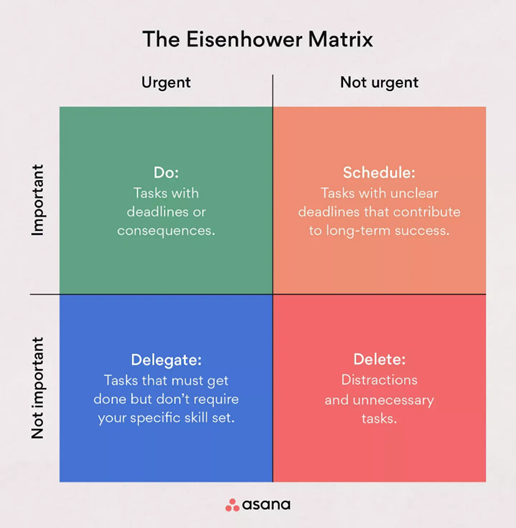
    image 19
    • The matrix helps you divide and eliminate work based on priority. It divides the work into Do, Delegate, Schedule, and Delete.
    • It takes a while to get used to it. Urgent and important are not synonyms in the matrix; they are different for a reason. Urgent tasks have to be submitted; it can be as tedious as signing multiple finance forms, and important tasks could be to increase ROI. These are two examples of urgent and important tasks.

    Rewards

    • From recognition programs to incentives, it is a time-old strategy that employee rewards boost productivity and well-being.
    • These rewards, however, should not be shallow. Every company has R & R, but employees often find such displays shallow and part of the rat race. A high-performing team does not exhibit this behavior.
    • The leaders of high-performing teams understand the value of each team member and bring it out. These teams share credit and engage in open forums of disagreements. It is the leader who will recognize the value of each member and give them appropriate rewards. This could be something small as a thank you note or grand gestures like flexible timings for work well done. Displays like these show trust between the teams.

    The 4DX Framework

    This framework is similar to the Eisenhower Matrix. It suggests that teams should focus on: –

    • The Wildly Important: Identify your organization and team’s critical goals.
    • Action on Lead Measures: These are KPIs that show success in the short term. This could be completing an ad creative in x time.
    • Keep a Scoreboard: Creating visual displays of success and failure gives tangible reality to outcomes. Simplified data in the form of easy-to-look visuals in the company.
    • Creation of Accountability: This is where the idea of a sprint comes from. Enabling clear weekly or monthly goals will give your team clarity.

    The Lean Methodology

    It is the strategy of minimizing waste and focusing on customer value. Even though lean is customer-centric (Relevant, by the way), it is the ideal framework for team workflows. The key principles of lean are to: –

    • Identify Value: The lean method helps teams identify the needs of the user/buyer and provide these to them. By identifying the intricacies of the customer and their requirement, the teams can map out a streamlined creation and delivery process.
    • Mapping the Value Stream: By visualizing the entire journey and smoothing out rough edges, teams can identify waste creating habits or processes and eliminate them.
    • Creating a Flow: Once all the steps are identified and smoothed out, the creation of flow has teams create and optimize the steps inside the method.
    • Establishing a Pull: For marketers, this step is intimate. It is to create what is needed and only when needed, ensuring a demand rather than selling.
    • Pursuing Perfection: Reiteration. Identify what works and what does not. Remove the waste-generating steps and experiment with newer models and thought processes.

    External

    Outcome Based Marketing

      • One of the biggest complaints in marketing today is cutting budgets and more work. Google says to tackle this by communicating with your CFO and providing tangible growth metrics aligned with the company’s yearly outcomes.
      • This means creating metrics that help a business generate its intended revenue while covering or giving ROI over the marketing cost.
      • Reading that article, you will find that Andrew, VP of Mariani Premier, created a three-year business plan processing that involves quantitative objectives for client acquisition, retention, and revenue expansion.

      Omnichannel Strategies

      • The omnichannel experience is about reducing customer-brand friction or creating a frictionless customer journey. It is vital for companies today. Google says that omnichannel buyers have 30% more LTV.
      • Omnichannel strategies are a clear reflection of the internal structure of a business. It showcases that your sales, marketing, and customer success are aligned.

      Sales and Marketing Alignment

      Business Process Improvements are strategy and creativity coming together in cohesion.

      You must have noticed that establishing an internal and external BPI structure complements each other. Alignment, omnichannel marketing, and outcome-based marketing’s success hinges on internal improvements.

      This creates a healthy work environment and reduces decision fatigue in employees and leaders, giving them space for broader and creative decisions. It is no coincidence that we see productive gurus on the rise. Because we are facing an extensive lack of time and distractions, unproductivity has increased, and with it stress and fatigue.

      And everyone faces it, the buyer and the marketer. We need to create systems that give us a sense of purpose and control of time. Whether closing more deals or fostering care in your work culture, now is the time to iterate and improve.

      B2B database

      Top B2B database for Sales Growth

      Top B2B database for Sales Growth

      The key to garnering high-quality leads is an accurate database. How do you maintain it well to accomplish the desired sales growth?

      Customer data is all about collecting the right information about potential business prospects for application in sales and marketing operations. This includes data like the company’s name, contact information, industry, etc. Such details allow brands like yours to connect with potential prospects. When you can foster strong relationships with your target audience, it becomes easier to generate high-quality leads.

      With B2B databases, you can quickly access target leads and procure necessary information about them. Since more and more relevant leads must be generated for sustained business growth, accurate databases offer a speedy and effective way to enhance your outreach strategy. If you opt for a dataset that is inaccurate or out of date, it can create complications. Searching through vast database options could be daunting, so we have compiled a list of the best tools for you to choose from.

      Seven Best B2B Databases

      In the digital age, customer databases are valuable tools that help brands drive B2B sales and accomplish their business goals. We have prepared a list of the best tools to help you find the right solution.

      Saleshandy Lead Finder

      It’s a comprehensive email outreach platform that helps you identify prospects and add them to your cold email sequences. With Saleshandy Lead Finder, acquiring contact information, such as email addresses and phone numbers, is simplified to a great extent. You can search leads with their rich database spanning different companies worldwide. It must be noted that this information is updated regularly to provide proactive and verified email addresses. Although they have a large resource, it makes it easier to narrow down targeted leads with advanced search filters. You can utilize this feature to find leads by their names, designation, department, role, etc.

      Apollo

      It is a cloud-based sales automation software that simplifies lead generation, contact database management, and email outreach. With over 2 million contributing data sources, this platform allows you to collect email addresses through a 7-step email verification process to ensure correct data delivery. Apollo refines your search with relevant filters, such as company name, size, industry, job role, location, etc. When you search data with these, it helps you reach the right prospects and acquire their contact information. Apollo enables targeting the right decision-makers to communicate based on filters, such as industry, designation, company headcount, etc.

      Cognism

      It is a sales intelligence tool that uses a combination of artificial intelligence (AI) and human verification to provide you with accurate data. When you use Cognism, you can easily access advanced filters such as emails, technographics, and mobile numbers to filter the data and create a targeted lead list. This helps you attract ideal leads without wasting resources on prospects less likely to convert into paying accounts. Cognism is operational in Chrome as an extension and a mobile app. It is very particular about maintaining data compliance and keeps a ‘do not call list’ to avoid disturbing customers who have opted out of unsolicited phone calls. Through such innovative integrations, Cognism ranks among the top CRM and sales engagement platforms helping you build the sales pipeline and generate new leads.

      Lusha

      Lusha works perfectly for B2B companies of all sizes to supply precise data. It is a go-to-market platform promoting effective sales and marketing. This database offers you an easy-to-use prospecting tool that simplifies lead identification. You can access the latest and high-quality insights and data that promote communication with the right audience at the right time. The highlighting feature of this platform is its smooth operation while setting up, without involving any lengthy onboarding processes. Another distinguishing factor is that Lusha is accredited under ISO 27701- the highest international privacy standard in the world. What’s more— it allows you to be compliant with all GDPR and CCPA privacy regulations.

      Lead 411

      If you want to focus on targeted communication, this is your go-to database platform. It is powered by intent data, allowing you to find out the contact details of your prospects. Lead 411 supports easy integration with popular ESPs and CRMs, resulting in efficient and automated workflows. Its highlighting feature is unlimited email views in the basic plan while restricting the export to 200 per month. Additionally, it provides you with information on buyer intent.

      Clearbit 

      It offers data integrated with artificial intelligence, thus ensuring that you have accurate contact information. Clearbit adds to your records and helps you understand your prospects’ buying intent. This valuable information accelerates the lead generation process. With Clearbit, you can easily create, capture, and convert prospects into paying accounts by addressing their demands. You can access a range of business intelligence APIs and integrations that accelerate sales and marketing campaigns.

      SalesIntel 

      This business intelligence platform provides you with the data you seek. The key difference is—SalesIntel uses patented AI technology and human verification to source accurate contacts. What makes it stand out is the vast database of more than 100M contacts available with emails and mobile phone numbers. It also offers amazing features such as intent data to gain insights into who is researching your solution. SalesIntel also helps you visualize company technographics to understand their tech stack. Another highlighting feature is the company firmographics that promotes the identification of target accounts based on factors such as company size, location, industry, and more.

      Final thoughts

      Various factors play a role in an efficient database, such as data accuracy, customer intent, data availability, and integration capabilities. Before you make an informed decision, you need to weigh the pros and cons of each platform. The database you select must align with your business goals. The best-fitted tool must allow you to effectively communicate with potential customers, engage with them, and drive the sales funnel.

      CX Analytics: How to measure and improve the customer experience

      How To Measure And Improve The Customer Experience

      How To Measure And Improve The Customer Experience

      Brand awareness is just the beginning of a customer’s journey with your business. How can you create a positive customer experience in the long run?

      Whether you are trying to increase your client base or improve brand awareness, customer experience is essential. It attracts the target audience to your company, thus influencing their buying behavior. If you can improve the CX, it can help you establish brand loyalty and create lifetime value.

      Customer experience demonstrates the impression customers form about your brand throughout their buyer’s journey. It impacts the brand positioning and overall sales cycle. According to Forbes, 76 percent of business leaders consider customer experience an asset for gaining a competitive advantage. Measuring CX is paramount for strategizing and improving outcomes.

      Customer experience analytics offer the following insights:

      • The ideal client base for your business and how you can reach potential loyal customers
      • Client feedback through surveys, reviews, and more
      • An overall report of the customer journey and pain points or roadblocks along the way

      Performance and success of current offerings and gaps that require attention

      Significance of CX Analytics

      You can achieve better CX by implementing strategies to improve customer engagement, purchasing behavior, and lifetime value. Integration of CX analytics allows companies to draw actionable insights that cover every aspect of the business, from sales and marketing to customer retention. With CX, you can evaluate whether you have addressed customer pain points or if there are any gaps. These also help track your interactions with the target customers on the relevant channels.

      Let’s dive into the best CX metrics.

      The key ways to measure customer experience

      CX metrics help you apply numerical scores and touchpoints to analyze buyer’s response. You can visualize the specific parameters with the scores and figures. We have compiled a list of the top 7 metrics for evaluating customer experience with your brand.

      Net Promoter Score (NPS)

      NPS is an indicator of whether your customers like your brand. You can calculate the NPS score by sending your customers a survey with a relevant question, such as how likely are they to refer your brand to others, on a scale of 0-10. The interpretation follows as

      • 0-6: detractors
      • 7-8: passives
      • 9-10: promoters

      Customer Effort Score (CES)

      This metric determines how much effort your customers invest in interacting with your brand. It provides holistic data on supreme customer experience and what does not work. CES compliments NPS, where a combination of these two offer a quick glimpse into business progress and customer retention.

      You can estimate the CES by preparing a survey in a particular format, where the customers are asked to give a score from 1 to 5 or 1-7. Here, 1 represents ‘strongly disagree’ and 5 or 7 refers to ‘strongly agree’. The higher the score, the better. A low score denotes the need to improve certain customer touchpoints. 

      Make sure you can access these surveys in real-time, appearing on your brand’s website soon after the customer gives a score. An alternate way to go about it is to email the CES survey to the customer right away.

      Customer Lifetime Value (CLV)

      It measures the quality and worth of a client for your brand. A customer’s lifetime value enables informed decision-making. These components are required for calculating the CLV: average transaction amount, number of transactions, and length of customer relationship. Once you have these details, multiply the average transaction amount by the number of transactions, followed by multiplying by the retention period. Monitoring CLV takes you closer to better customer retention and effective decisions that accelerate the sales cycle.

      Customer Satisfaction (CSAT)

      Your sales and marketing teams work diligently towards integrating strategies that amplify customer satisfaction, boosting the sales funnel. CSAT helps with understanding whether the audience is satisfied with your offerings. You can utilize this metric by following every major customer transaction with a CSAT survey, answerable between ‘very dissatisfied’ to ‘very satisfied’. This helps you get an overview of the ability of your offerings to meet the expectations of your customers. For example, you could go for these questions:

      • How will you rate your overall satisfaction with our brand?
      • How satisfied are you with the offering you recently purchased?
      • How satisfied are you with our customer support? 
      • Would you recommend our brand to others?

      The plus point about CSAT is that it allows you to change the questions based on the insights you seek and the touchpoints you wish to evaluate. 

      Customer Churn Rate

      This metric provides an idea of the customers who are no longer involved in the business with you. It is also known as the attrition rate— the number of people who stop subscribing to your offerings. The customer churn rate is ideal to have low churn rates consistently, implying that you have a better retention rate. You must monitor your customer churn rate regularly to understand the efficacy of your existing marketing strategies.

      You can calculate the customer churn rate by subtracting the number of customers you retain at the end of a cycle from those at the beginning. Divide this figure by the second number and multiply the answer by 100.

      Customer Retention Rate

      According to 31% of service professionals, a better customer retention rate is a goal of most brands. The CX metric dives into the number of customers a business retains over a certain period and helps to find customer loyalty. However, the downside is the complicated calculation involved. While estimating this CX metric, you will require three numbers: the customers at the end of a period, those at the end, and new customers. Once you have all the necessary information, you can arrive at an accurate value.

      Customer Journey Analytics

      Another popular technique you can utilize to calculate the customer experience is analytics to understand the buyer’s journey. When you create a map of customers’ journeys, it derives details, such as their motivations, needs, and pain points. It also helps to understand the touch points you should evaluate throughout the buyer’s cycle. You can begin by procuring data from various sources, such as social media channels, websites, and events. What follows next is creating a page or tab on your customer journey map dedicated to reporting metrics of your touchpoints, allowing you to evaluate customer experience.

      Summing up

      The main goal of every business is to retain customers. Customer analytics offers a framework to evaluate client demands and implement actions accordingly. When you utilize the seven metrics, they help foster a customer-first mindset, allowing you to increase customer lifetime value. The analytics report reveals insights into different features of customer interactions and responses, helping you deliver the ideal solutions. They are essential to help you develop the right marketing strategies, promoting revenue growth, customer loyalty and retention, and increased brand awareness.

      How to Drive Social Media Lawsuit Prevention website

      How to Drive Social Media Lawsuit Prevention

      How to Drive Social Media Lawsuit Prevention

      Social media has revolutionized businesses across the globe, but this connectivity could potentially result in a legal lawsuit. How can you avoid it?

      Social media is abuzz with businesses networking, sharing posts, or updates about upcoming events and activities. These platforms have become great digital channels for communicating with target accounts, showcasing brand expertise, and generating more leads. 75% of B2B buyers make informed decisions based on social media interactions. With interactive posts and communication tools on social media, you can increase your customer reach and build a brand reputation. However, the tricky part here is to be careful about what you post, as a single misstep could lead to a social media lawsuit, which can seriously damage your brand’s reputation.

      There is a fine line between social media compliance and a lawsuit for copyright infringement or legal offenses that can harm your brand’s reputation. Its widespread use brings with it a series of laws to abide by: GDPR (EU General Data Protection Regulation), FOIA (Freedom Of Information Act), and the CBPR (Global Cross-Border Privacy Rules Forum). When you drive social media lawsuit prevention, it helps protect your brand reputation and prevent legal consequences. A strong understanding of what can lead to a legal misstep can go a long way. Let’s dive in.

      What are the potential risks of social media?

      While social media has transformed digital marketing, there are some risks associated with it:

      Privacy

      Social media platforms collect data, including critical data that can be vulnerable to hackers and breaches.

      Defamation

      If you post false or incorrect information about anyone, it can cause defamation claims. Fact-checking will help avoid these instances.

      Copyright infringement

      When you share a copyrighted agreement without permission, it can result in legal consequences. This may happen if you utilize resources like images, videos, and other media files without giving the due credit. Copyright infringement applies to any original work, even those without the symbol. That is why it is important to exercise caution while adding media files to your post.

      Top 5 Tips to Avoid a Social Media Lawsuit

      Since the consequences of a social media lawsuit can be severe, you can integrate these measures to comply with the legal regulations. We have compiled a list for you to make things easier:

      Realize the significance of privacy settings.

      In the competitive market, businesses use channels frequented by target customers. Doing so may expose you to risks of social media privacy and other legal obligations. One of the ways to protect your brand reputation is to understand the importance of social media privacy settings. Privacy settings should be managed well to control access to critical data and what can be viewed by the public. When you understand how to drive social media lawsuit prevention and the importance of privacy settings, it helps integrate access control to critical data. You can implement some measures to safeguard social media privacy-

      • Periodically review and update privacy settings
      • Be careful when sharing data on social media
      • Apply caution to third-party applications that risk a breach of data access control

      Implement social media monitoring

      To prevent privacy breaches, it is best to step up the privacy settings and adhere to social media policies. Additionally, professional branding services can apply social media monitoring to keep tabs on any potential legal issues. With social media monitoring, you can identify and address the legal risks that may arise. It allows you to guard the organization’s reputation and guarantee compliance with legal and industry standards.

      Promptly address legal concerns.

      If you are in doubt that legal issues may arise, addressing them soon is the way to go. This includes implementing the right actions, such as removing or reporting content that violates policies or laws. Any evidence must be documented and preserved. If you feel it’s necessary, do not hesitate to consult with legal professionals or relevant stakeholders. If any potential damage occurs, actions must be taken.

      Create a social media policy

      Build a robust policy for your company that is aligned with your brand voice, vision, and goals. It needs to cover essential information, such as the security and privacy of accounts, protection of your brand, the type of content created, and how you are engaging with followers.

      Obtain permission from the copyright holder

      Copyright infringement can impact your brand’s reputation. While it is best to create original creatives, if you use external sources, verify whether or not they are copyrighted. Attribute and link to the source when using content from any third party.

      Given the advent of technological progress, social media has transformed marketing for B2B companies. From sharing posts to event updates to connecting with clients, it plays a crucial role in driving personalized campaigns. However, you need to pay close attention to compliance with legal regulations, privacy settings, and copyright infringements. Failing to meet them may result in a social media lawsuit that can adversely impact your brand’s reputation and brand credibility. The upside is that you can drive social media lawsuit prevention with the know-how of the laws. If you align your social media marketing initiatives with the relevant regulations, you minimize the risk of a lawsuit.

      Ciente - Maketing intelligence vs marketing research

      Marketing Intelligence vs. Marketing Research: Understanding the Key Differences

      Marketing Intelligence vs. Marketing Research: Understanding the Key Differences

      Market intelligence and market research can boost your ROI when used in the right way. How can you use these to drive smarter business decisions?

      Market intelligence and market research are often considered synonymous, although they are separate ideas. Market research is typically a singular project that focuses on answering specific business inquiries. On the other hand, Market Intelligence is a continuous process that allows companies to stay informed about shifts in the market environment.

      Even though they both offer key insights for businesses to make informed decisions, their applications, methodologies, and objectives vary greatly. This article will examine the subtle distinction between Market Intelligence and Market Research, digging into their definitions, categories, and their impact on business achievement.

      What is marketing intelligence?

      Market intelligence, also referred to as marketing intelligence, is the valuable information necessary for a company’s marketing efforts daily. This data can be analyzed and utilized to make informed choices regarding the strategies of rival companies, consumer behavior, and possible market opportunities.

      Several factors impact an organization’s competitiveness and market standing. Understanding competitors, market conditions, and changing consumer needs are key factors that must be considered. CMOs can analyze this data to evaluate their strategies and enhance upcoming advertising campaigns, taking into account both their perspectives and those of the entire sector.

      Market intelligence encompasses all aspects of your company’s market, such as competitors, customers, and products. Having access to these sources is vital as market intelligence data is constantly being gathered and refreshed from a myriad of sources.

      What is marketing research?

      Market research, or marketing research, evaluates the potential success of a new product or service by studying the company’s markets, competitors, and customers. It is conducted to monitor consumer purchasing patterns in your company, as well as the wants and demands of your target market. Making decisions about brand building and product growth is extremely important.

      Market research helps companies or organizations understand how consumers spend money and whether they would be willing to pay a certain price for a product.

      Market research is unique to a company, centers around a specific query, and generally revolves around customer needs or desires. A great illustration of market research is the implementation of focus groups and face-to-face surveys, which are standalone projects separate from existing data.

      Understanding the Differences

      Market intelligence and market research both involve collecting data to inform business strategies, but they vary in methodology and objectives.

      Market intelligence is the process of gathering and examining data from external sources to grasp the market situation. The goal is to recognize elements such as rival actions, client requirements, sector patterns, and macroeconomic changes that could affect the business. It is a continuous effort centered on strategic understanding.

      On the contrary, market research involves gathering firsthand information for companies, typically through surveys, focus groups, interviews, and direct communication methods. The objective is to collect feedback, opinions, and observations straight from the target customers and prospects of a company. Market research projects are focused on tackling a specific question or problem that businesses may encounter.

      While market intelligence examines external data broadly, market research delves into the particular details of consumer trends and perspectives. Both essential functions have interconnected yet separate roles – market intelligence supports strategic planning and direction, while market research offers customer insights to inform marketing tactics and product choices. They provide companies with a thorough understanding of the competitive environment and market potential.

      Importance of Market Intelligence and Market Research

      Today, collecting marketing data is essential. Organizations can use the detailed information provided to make informed decisions instead of relying on gut feelings and guesses.

      Here are a few explanations for why collecting market information is essential:    

      • Provides businesses with information on their market potential, growth opportunities, and target demographic.
      • Assists in analyzing competitors
      • Aids in developing a strategy to reach upcoming goals.
      • Streamlines decision-making for your organization by sorting through market discussions.
      • Provides a steady stream of information regarding the target market, the competitive environment, consumer trends, and specific buyer profiles.
      • Improves your business’s standing by aiding in choosing lucrative investment opportunities.

      Unlike marketing intelligence, which is an ongoing process, marketing research is a single activity intended to address specific inquiries.

      Yet, its importance should not be overlooked as it helps companies reach the following objectives:

      • Help define the target market to discover marketing opportunities.
      • Identify vulnerabilities in your marketing strategy to mitigate company risks.
      • Create your GTM plan.
      • Create relevant marketing content.
      • Choose the best platforms for marketing and advertising.
      • Discover overlooked customers
      • Identify the needs of the client.
      • Beat competitors by targeting dissatisfied customers.

      Wrapping it up

      Market research and marketing intelligence vary based on their influence on the marketing strategy and ability to meet market objectives. Although their methods vary and they use different data sources and serve different purposes, they work together to provide a complete market perspective.

      Using secondary data, MI uses a broad perspective to consistently observe competitors, industry trends, and market forces. Taking a wide perspective aids in formulating comprehensive business strategies. On the other hand, MR uses original research to explore customer opinions, concentrating on products, communications, and branding unique to the company. This concentrated method offers strategic guidance for marketing and product development choices.

      Companies that can successfully merge the factors from market intelligence with the specific views of customers from market research can successfully navigate both present and future market environments. In a competitive setting, this comprehensive approach of utilizing syndicated data, secondary research, and proprietary insights is essential for strategic planning, risk reduction, brand management, and growth enhancement.

      Addressing gender disparities in healthcare boosts the economy. Invest in women's health research, revise medical education, and promote workplace equality for a healthier future.

      Stitching Up the Gender Disparity in Healthcare

      Stitching Up the Gender Disparity in Healthcare

      A study by Guardian states that women are less likely to be given CPR as compared to men, but is that all women are deprived of when it comes to healthcare?

      It might be shocking for some of you that addressing the disparities in healthcare could boost the economy by at least $1 trillion annually by 2040. And nothing better than this stat could relate health to the economy. It is 2024, and there is still not enough information for women to better care for themselves. There are prejudices regarding menstruation and contraception and diseases surrounding it – these issues are still not talked about enough, and often, girls are expected to just ‘find their way around’ these issues as they grow up.

      The difficulties women encounter when seeking medical care manifest in various ways across different diseases and sectors of society. Concerning the possible economic outcomes of tackling these issues, every age group and region could see advantages, especially working-age women who hold the most potential.

      When talking about women’s health or ‘women’s issues’, most people forget that there are other health conditions that affect women, and it is not just about birth care and menstruation. In fact, only 5% of a female’s health burdens consist of maternal or gynecological problems. And not just this, the same study also shows that compared to men, the chances of efficacy with certain medicines are less for women.

      There is a lot of evidence that shows severe steps must be taken now to break the patterns and provide for a better future. As we move towards a future where we want to bridge the gender gap in healthcare, business leaders also have a part to play:

      • Invest in research and development focused on women to tackle the lack of women in health research. This involves boosting female representation in clinical trials and ensuring studies acknowledge sex and gender disparities.
      • Revise medical education programs and residency training to incorporate specialized training on sex and gender. It will give healthcare professionals the information needed to offer improved care for women.
      • Create support groups for illnesses that primarily impact women, like endometriosis and menopause. These organizations can offer assistance and resources to aid women in improving their health.
      • Use digital health tools such as remote monitoring and patient engagement platforms to enhance the availability of healthcare services for women, especially those living in rural or underserved regions.
      • Advocate for sharing salary information to guarantee fair pay for women. This can aid in decreasing the gender wage disparity in the healthcare sector.
      • Offer specialized mentorship and assistance to women to aid in their career advancement. This involves providing educational chances and fostering a feeling of inclusion among all staff members.
      • Create a legal basis for workplace equality and challenge societal norms and stereotypes blocking women’s progress. This involves establishing policies to promote women’s leadership and overcoming structural obstacles to their progression.
      • Promote a cultural change in companies by recognizing achievements in women’s health and incorporating women’s health into all aspects of business operations, not just limited to research departments.

      Women’s well-being and progress in society are not isolated issues; they are fundamental to societal health. Improved health and well-being for women have a positive impact that reaches families, communities, and nations. We can reduce health disparities and enhance the prospects of a united worldwide development by utilizing a comprehensive strategy and continuous funding.