A Brief Guide to An Effective ABX Strategy

A Brief Guide to An Effective ABX Strategy

A Brief Guide to An Effective ABX Strategy

Complex buying committees have escalated the need for sophisticated ABM frameworks. Here, ABX steps into the limelight as a much-needed reiteration of ABM.

We’ve all had negative customer experiences. Even with AI becoming a forerunner in customer services, there have been cycles of frustration where we’ve been placed on long waitlists or been given the same cold answer by an AI chatbot.

Even with this persisting (and taxing) problem, companies continue to claim exceptional customer service. It’s an exhaustingly long cycle of frustration for customers whose time the entire process feeds into. In 2025, one bad interaction, and one out of three of your customers will walk away- towards your competitors.

It’s because businesses have emphasized touchpoints- key moments where prospects interact with the brand and its offerings before and after a purchase.

But marketers’ constricted focus on elevating satisfaction at only these moments distorts the whole picture. It suggests that buyers are happy with the business more than they actually are. Because the fundamental cavity remains prevalent, i.e., the actual, more significant picture is easily discarded: the end-to-end buyer journey.

Reaching accounts isn’t enough anymore. B2B buyers don’t just evaluate your solutions and then make a purchase. They assess how your brands deliver on each touchpoint, from the initial touchpoints to retention and beyond.

You can reach the target accounts through precision-targeting, i.e., a well-planned ABM approach. But that’s not enough in today’s relational marketing landscape. Orchestrating experiences has become the real differentiator for brands-

This is where adopting Account-Based Experience (ABX) marketing becomes imperative.

What is ABX marketing?

Tackling buyer disconnect demands a CX design that makes your target accounts feel valued and understood. But not just one that focuses on the key moments, but each moment of a prospect’s progression through the funnel.

An integrated ABX approach amalgamates everything, from marketing and sales to customer success and retention. It’s not just a full-funnel focus, but a deep dive: customer experience across each touchpoint, all under a single umbrella.

Here’s the observable truth.

Even though businesses are leveraging ABM approaches correctly, accounts disengage halfway or slip through the cracks. Because one concern has been put to the back burner- what about the customer moments in between, when they are done interacting with your social media posts or your website?

This is where a shift becomes imperative.

Why shift from ABM to ABX?

Brands fundamentally prioritize siloed functions- it’s either a sales or a marketing campaign to deliver value to target accounts. Even ABM programs have been oversimplified to just stress creating content across diverse formats.

But time-crunched decision-makers refuse to sign up for more content.

Why? Because it’s become downright annoying.

B2B buyers are suffocating from the same messages that congest their inboxes. Marketers chant the ‘we offer better content, content that actually delivers value and instills uniqueness’ prayer to end up developing the same know-how guides as everyone else. What’s missing is becoming a persistent conundrum- insightful opinions and a different perspective.

This is why prospects deny signing up for new content and refuse to share information. Privacy also plays a significant role here. Being pestered over emails or calls is not a great experience if there’s no previous relationship built.

This is why ABX is a notch up from ABM.

The prospecting was done with precision, and the account is engaged. But often it’s the experience after that that feels like the end goal is a transaction. A majority of marketing campaigns end up too surface-level. Like, the only purpose here is outreach.

The result?

Your campaigns attract high-quality accounts but don’t deepen relationships. Sales teams can notice traction and funnel entry, but it stalls. You don’t lose opportunities but fail to convert them into brand advocates.

Truthfully, both parties in B2B are aware of this. But your buyers don’t want to feel this way. This is what calls for pivoting towards ABX.

ABX vs ABM: How are they distinct?

While ABX sounds like a new marketing buzzword, it’s actually a strategic development in ABM. Or instead, an evolution.

ABX isn’t hooked on inbound strategies.

It begins with creating messages that target different shareholders. The messages include relevant keywords and address context that each of the shareholders can relate to. You offer information that will prove helpful to each shareholder.

So, when it comes around to sending these accounts emails or inMails or making calls, it doesn’t seem out of nowhere. The message is targeted and genuinely of value. Technically, isn’t this also what ABM programs do? Targeted messaging and the related shenanigans?

Yes, but ABM campaigns comprise marketing and sales processes, targeting high-value accounts based on whether they’re the right fit. ABX is a step further- a higher level of strategic ABM.

It takes a holistic approach that focuses on orchestrating experience for an account, organization-wide. This model integrates multiple teams and is business-led. Instead of prioritizing who exactly you’re reaching, ABX helps curate ‘how’ they’re experiencing your brand.

This is where the difference between ABX and ABM matters.

ABM focuses on different tiers of personalization- from one-to-many to one-to-one interactions with high-value accounts. It’s all about lead conversion and hyper-targeted acquisition. But account-based experience keeps customers at the nucleus of it all. It boils down to cohesive experiences.

Orchestrate meaningful experiences with the right ABX strategy.

In an increasingly crowded market where everyone follows the same rules, it results in a tie. If everyone leverages the same ABM playbook, no one ends up becoming unique.

But that doesn’t mean you end up abandoning ABM altogether. You level it up to an ABX strategy, one that’s intentional, customized, and measurable. One that aligns with accounts across different funnel stages.

Marketing at the helm, and not a supporting act.

Marketing shouldn’t be entirely relying on sales to hand over a list they would love to sell to. There can be communication as to what would be regarded as high-value accounts, but marketing has to dig deeper.

With the level of 360-degree experiences that ABX promises to offer, research backed with facts, not just feelings, is necessary. Significantly, to develop a list of high-value accounts, your ABM strategy will be delivered to.

The point is that your ICP cannot be each prospect that can buy your solutions. So, start by asking the right questions:

  1. Does your team hold intricate data points to substantiate that the account fits your ICP and passes all your qualifying frameworks?
  2. Do these accounts entail the propensity to buy?
  3. Has the brand done anything similar to this before?
  4. Do they have any pain points? If so, does it need to be solved, or has it already been solved?

Marketing-sales alignment = Streamlined comms.

After grasping which accounts to target, it’s time to underscore which stakeholders to reach within that buying committee. But these accounts should be deserving of one-on-one engagement. This will also help highlight how to develop resonating messages and which channels to leverage.

And then it’s time to hand over the play to sales. So, it can follow up on the account.

Then, finally, it all boils down to conducting a SWOT analysis. This way, you gauge the gaps, lags, timings, market pivots, any new initiatives, or strategy changes. You can listen to the podcasts the shareholders are a part of, what they’ve been posting, and skim the latest company reports.

It’ll help you orchestrate an experience- a talk track that extends from the first conversation to the follow-up emails.

Strategic shift in organization-wide mindset.

A truly effective ABX strategy demands alignment between all customer-facing departments- from product development and marketing to sales and customer success. But this can only happen when all of them are on the same page.

They must share the same broader goals, i.e., their individual objectives must tie to the final objectives. And coordinate efforts to offer a more cohesive journey as an account moves down the funnel.

Adopting a full-fledged ABX strategy isn’t a piece of cake. Integrating it across your other business functions will take a lot of tweaking and (maybe) a cultural shift. Because it demands that your teams and leadership think differently, whether it’s success metrics or content delivery.

The thing is, you’re making a big leap. It’s redefining marketing-sales handoffs or taking up signal-based activation- the timing must be correct. And it should all be consistent to provide the ultimate cohesive experience.

Coordinated engagement points: content’s space across ABX.

The purpose of content creation transforms with ABX.

In other terms, this approach places content right at the crux of the customer journey. Because it ties insight with action, and becomes a versatile channel to deliver meaningful interactions across the entire lifecycle.

But B2B marketers should stop perceiving content creation as merely creating a bunch of fluff. Copy-pasting the same noise is taking away value from the blogs, videos, and ads that are developed. And it ends up stripping them down to what they truly are- empty words.

Relationship and experience must be infused at the molecular levels of your ABX content strategy. Your content should build experiences that expand across diverse roles and journey stages- content for each touchpoint, not the most meaningful ones.

And take a more intelligent approach to it. Don’t sit down to create content pieces from scratch. You can strategically repurpose what exists and also tap into content atomization. An eBook can be converted into a series of blogs, while a blog can be a social media video.

To create further impact? Layer a variety of formats and personalize.

Additional factors for your ABX success-

Implementing a whole new program is challenging. But your shareholders need to be coordinated in their mindset and the decisions they make from here on. They cannot jump into ROI-justification and tangible metrics if they wish to derive long-term growth from ABX marketing.

Two significant facets they should give heed to:

  1. Give ABX time. Don’t pull the plugs on it just yet, and let it simmer a bit.
  2. Ensure you have the right space for its execution. Whether it’s the skill set, martech stack, or frameworks, you should possess the required assets to take this program further. Especially for lead-to-account matching, account-level scoring, and buying group identification and qualification.

The secret sauce to effective ABX is working together. That’s the secret to all marketing and sales campaigns to thrive. It all boils down to coordination across your data, your teams, and organization-wide vision.

Synchronized interactions are the nub of orchestrating a successful ABX strategy.

A chunk of professionals have declared the traditional tactics dead, all at their own convenience. From cold calling to MQLs, the lingo has been discarded and replaced with something new.

At first glance, ABX seems like a sophisticated replacement for ABM. But ABM isn’t dead at all, and neither is it being replaced. It’s just undergoing an evolution to keep pace with the rapidly transforming market.

ABX is quickly becoming imperative for the digital-first marketing landscape. But there’s still a great deal of work left to do. It’s only now that businesses have understood how to do ABM, what’s this new move being thrown their way?

If adopted at the incorrect time, ABX could dissolve amidst the noise and end up as another trend or a hype that dies down. What it needs is space to flourish- and only the realization that personalization isn’t just a byproduct but imperative to customer engagement can change this stance.

ABM is still a need. It’s just that marketers need a piece of mind to grasp that ABX is as paramount to help businesses revamp how they manage their most valuable accounts.

And build an ABX strategy framework that transforms a single interaction into an advocate.

Different Types of Sales Prospecting to Revamp Your Sales Strategy

Different Types of Sales Prospecting to Revamp Your Sales Strategy

Different Types of Sales Prospecting to Revamp Your Sales Strategy

Setting up sales success means digging deeper into your buyer pool, not casting a wide net. But how? Through different types of sales prospecting.

The sales 2.0 era declares sales prospecting and targeting for new businesses dead. It asserts that cold calling is ineffective and prospecting accounts that don’t come to you is a humongous waste of time.

But these assumptions are short-sighted.

While digital transformation offers advanced tools to orchestrate customer relationships, it can’t replace prospecting.

Achieving a successful deal demands locating the individual(s) who are inclined to purchase your offerings. It’s not necessary that this individual holds the authority or budget to do so, but has purchasing influence.

This makes up the fundamental crux of sales prospecting.

What Really Is Sales Prospecting?

Fundamentally, sales prospecting can be described as an efficient process of identifying, filtering, and interacting with individuals who you deem fit to purchase your brand solutions.

In simple terms, it’s about locating new customers.

The methodology is more about working smarter than working hard. The market is way too crowded to be setting loose traps and waiting for the right fish to bite the bait. With each segment a potential prospect-yielding source, it’s crucial to find the right types of sales prospecting methods-

One that permeates all relevant sources to drive leads for your business.

Why Is Prospecting Vital for Modern Businesses?

Every year, businesses lose a chunk of their audience base. It’s called customer attrition, and can take place, vitally, due to these two reasons:

  1. One of your direct competitors counters with better pricing and benefits.
  2. Or they don’t need the particular solution anymore.

This, of course, impacts your brand’s profitability. Losing customers is never a good sight, especially in the first scenario.

And in this competitive market, your competition constantly has its eyes set on you- from the tech you adopt down to your sales deals.

It’s where sales prospecting becomes paramount- to counter the impact of attrition. It all comes together- without prospecting, your marketing and sales funnel runs empty, which ultimately affects your bottom-line growth.

Prospecting identifies your potential buyer and builds a bridge, connecting them to you.

And with the right types of sales prospecting, consistent wins become a routine for your business. Your SDRs also remain on top of their game. Especially to tackle customer attrition, which, while quite normal, is not feasible in the long term.

This is why businesses focus on attracting new customers- prospecting. You merely need the correct method.

A Dive into the Types of Sales Prospecting: Transcending the One-Size-Fits-All Framework

Traditional Categorization of Sales Prospecting

Traditional sales prospecting was the foundational method of finding new customers. It reflects the nucleus of direct engagement.

These processes existed before digital innovations came into purview, but continue to hold relevance even in the current landscape, especially in selected industries.

Traditional prospecting feels more personalized due to its straightforward and face-to-face nature. It has been an industry favorite to build meaningful relationships.

Several may posit a unique apprehension of face-to-face prospecting. It can tend to be overwhelming, time-consuming, and exhausting. There are only a couple of prospects you can identify and communicate with before the sun goes down.

But it still offers a means to connect with buyer psychology. It was easier to underscore the feelings regarding a solution and whether they truly held the intent. The answer always trickled down to a simple yes or no.

1. Analog prospecting

Offline or analog prospecting is a method that worked traditionally, way before digital channels became the key drivers. Sales was always a one-size-fits-all framework, from making house calls to cold calls.

The entire process was carried out through offline or physical channels. It means holding phone calls, field sales, and trade shows. When put forth, they sound like blunt instruments. But instead, these channels are an art form. Mass cold calling requires ample research and spearheaded strategy, field sales is all about account prioritization and territory mapping, and trade shows foster an unparalleled level of connection.

The method worked because the end goal was broad outreach, instead of personalized interactions or prospects’ online behaviors. But in deals where trust is paramount, analog prospecting remains in use.

The point is direct and personal contact to introduce the product or service. Analog prospecting trickles down to volume and persistence- that was the underlying logic.

2. Digital prospecting

Digital prospecting marks a shift from offline channels to digital channels to find new customers. At its core, digital prospecting proves highly effective for improved lead generation. However, this was the initial phase of digital prospecting- mass communication.

As AI and other technology innovations boost sales, there has been a nuanced shift to list segmentation. This sophisticated tactic has ensured that brands don’t send a single email to every account on their contact database.

From broad outreach, sales have shifted to contextual relevance. And digital prospecting has only made it increasingly possible to reach out to segments that actually matter. It’s much easier to reach the most fitting accounts and keep them engaged.

Prospecting doesn’t just end at closing deals. That’s not the goal anymore. With a myriad of granular data that digital prospecting affords, it’s easier to distinguish which messages truly resonate and which ones fall flat.

The tools facilitate A/B testing and message tweaking in real-time. It’s an iteration of offline sales prospecting and only continues to evolve.

A Modern Prospecting Structure

Modern prospecting is all about aligning with the buyer’s journey. It’s less about selling and more about intuitively guiding a prospect through the sales funnel.

1. Inbound prospecting

An informed inbound strategy comprises a tiered content strategy. You aren’t just attracting high-fit leads, but automatically qualifying them. It looks something like this-

  1. At the top of the funnel, a blog post might attract and engage a chunk of your target accounts.
  2. At the middle of the funnel, most brands seek to collate account information by compelling them to download whitepapers in exchange for contact details. This could or couldn’t imply interest, but a certain engagement with the brand still indicates awareness.
  3. And at the bottom of the funnel, actions such as requesting a demo or asking for pricing charts tend to underscore a sales-ready lead.

Here, the most crucial aspect to focus on is your lead scoring methodologies. It’s what guides the lead qualification framework. Each action that a prospect takes adds another point to their profile. This is at least the fundamentals. With growing complexities in consumers’ patterns, this method has turned more sophisticated. It’s up to savvy marketing and sales professionals to adapt.

But honestly, inbound prospecting focuses only on accounts that’ve shown some level of interest. It gets a bit simpler here. It works because these leads are warmer and already have a foundation to develop trust.

How does inbound prospecting work?

Inbound leads come to you. And now, it’s your job to qualify them according to their intent and behavioral signals. And then curate personalized nurture tracks to ensure that each account interacts further with your team, avoiding drop-offs and losing opportunities.

This is where social selling comes in handy. You transition from simply connecting with the relevant accounts to contributing to a community. You’re positioning your brand not just as a solution, but as a trusted resource in the industry.

As decision-makers, buyers value counter insights and opinions. You can position yourself as a credible thought leader who can provide the industry know-how and help them lean into diverse perspectives. This builds your reputation and credibility.

And positions you as an expert. This is why inbound prospecting greatly relies on thought leadership and demand generation tactics. It’s about building a brand and positioning it as a consultant, not a partner.

2. Outbound prospecting

Outbound prospecting is more proactive than inbound. It’s based on an Account-Based Engagement model. This strategy involves taking a more hyper-targeted approach where you identify a small number of highly relevant accounts and curate an omnichannel full-funnel campaign around them.

This includes every tiny touchpoint- from personalized emails and targeted ads to LinkedIn in-mailers aimed at diverse stakeholders on a single buying committee.

The crux?

Outbound is highly specific and ROI-driven. It isn’t about “see, here’s what my solution does,” but about your unique value proposition. You don’t start with product benefits, but research the company’s pain points, ask BANT questions, and then initiate communication with the buying account.

Outbound prospecting works best when you need to reach into a new market segment and communicate with prospects who aren’t aware of your brand yet. It’s more about elevating brand awareness and recognition than conversions.

Outbound prospecting can be both cold and warm. It’s mostly a mix of both.

Marketing has transcended transaction-driven image and plunged into being relationship-driven. This is what demands a problem-solving approach paired with warm follow-ups.

Cold calling or outreach is a problem-first strategy.

Your SDRs shouldn’t begin this with a sales pitch, but attempt to validate a hypothesis- and then it becomes a discovery call. You’re reaching beyond selling and making a genuine attempt to understand why this account might need your solution. This is where the warm touch comes in: following up on accounts that interacted with your LinkedIn post or subscribed to your newsletter.

Understanding and empathy- the two facets of outbound prospecting.

A Healthy Sales Pipeline Demands Continuous Prospecting. And The Right Methodologies.

The fundamental purpose of sales prospecting is to engage and guide potential customers into the sales pipeline.

But SDRs continue to perceive it as a numbers game. With this limited purview, prospecting turns into throwing multiple nets. It’s directionless. Stuck feeding their own sales quotas, your sales pipeline runs dry. And your bottom line shrinks.

So, think of the sales pipeline as a living organism. It requires, not merely prospects, but the right prospects to flourish. You cannot dial random numbers, hoping to convert at least one account in an ocean of your target accounts.

You must lean into different types of sales prospecting methodologies. This signifies a balance between inbound and outbound prospecting types. And ensuring enough clarity to build a value-driven framework-

One that helps inculcate deeper customer relationships and keeps your sales pipeline thriving.

Ciente - sales qualified leads

Sales-Qualified Leads Are People, Not Points

Sales-Qualified Leads Are People, Not Points

Sales Qualified Leads (SQLs) are not treated with reverence and revenue suffers. The hand-off can improve but only if you treat the buyer like a person.

Isn’t it so easy to treat marketing like a game? Score the leads and hand off to the sales teams– each behavior has a point, and these points add up to a sales-qualified lead.

And yet in these gamification and qualification processes, marketing teams are losing sight of one crucial facet: the lead is a person or group of people. Gamifying them can help you gauge behavior, but not establish a relationship.

B2B buying isn’t the Instagram Marketplace where the dopamine-inducing reels push a buyer to an impulse purchase. Yes, there is logic involved, but so are economic and political (external and internal) factors that affect buyers’ emotions and bombard them with it.

Then why are SQLs treated like a batch of data with no context around it?

“Hey, this batch shows relevant (arbitrary?) interest in our brand. Give them a call, they know us.”

And what happens when your SDRs call, and there is a disconnect between what you say and what they perceive?

75% of buyers feel all calls are transactional. They get it. You want to sell. But shouldn’t selling be treated like a business relationship– one where people build mutual understanding for a shared goal?

That isn’t a transaction. And that’s what your SQLs need to signify.

Buying is deeply personal for them, just like selling is for you. It’s not a game to them, and neither should it be for you.

Scoring stays, the context changes. This is how SQLs can change for the better.

Key Takeaways

  1. Marketing is not a game. SQLs are people, not points on a chart. Treat them that way.
  2. Relationships matter more than arbitrary behavior tracking. Build context before scoring.
  3. Modern SQLs are earned. Marketing must nurture, observe, and understand before handing off to sales.
  4. Multi-threading and consultant-like selling turn pre-SQLs into long-term customers. Trust compounds and referrals follow.
  5. Be aware of external factors and cost limits. Optimize every touchpoint without losing the human connection.
  6. Asking the right questions is the foundation of any strategy. Without curiosity, scoring systems and campaigns are meaningless.

How can we define SQL for modern businesses?

If gamification and arbitrary data points aren’t enough, we need to rethink what makes a lead truly ‘sales-qualified’?

What is SQL in the modern context?

The Sales-Qualified Lead, as defined by Salesforce, is this: –

“A Sales-Qualified Lead (SQL) is a potential customer thoroughly assessed by both the marketing and sales teams. Having demonstrated an intention to purchase and meet specific lead qualification criteria, this prospect is considered suitable for advancing to the next phase in the sales process. Once a prospect surpasses the engagement stage, they receive the SQL label, signifying readiness for targeted efforts to convert them into a valued customer.”

Intention to purchase and specific lead qualification criteria = Arbitrary data points

Surpassing the engagement stage = Downloading the whitepaper/sitting for a demo

Targeted efforts = Sales calls and en masse nurturing.

Salesforce’s definition is facing extinction. Their State of Sales report clearly outlines: –

And while we can blame marketing and sales misalignment for this. It’s better to reinvent the definition.

What is the new definition?

An SQL is a batch of people that a marketing and sales team has built a clear relationship with. This relationship can be measured by a personalized scoring system, but the system does not base the score on behavior alone; rather, the type of conversations the segmented people are having about your brand.

An SQL should answer this question: Will the person being contacted know who you are, what you do, and are they willing to give their time to hear your SDRs out?

Why are Sales Qualified Leads important?

From their report, Salesforce identifies another crucial metric- 42% of sales leaders cite recurring sales, cross-sells, and upsells as top revenue sources.

The jury is clear on this: relationship and value-based interactions give organizations the revenue they need. And SQLs can become a direct bridge to it, helping marketing teams prove ROI. However, the reality is not as clean as it looks; there are trade-offs involved that data points cannot solve.

But it’s because of these unknown factors that SQLs should be used and as drivers of relationships.

Only when there is a bond that moves beyond transactions will your buyers tell you what you need to know to make that sale.

Let’s codify into a working method, shall we?

Methods to Convert MQLs into SQLs

A side note: MQLs or Marketing Qualified Leads are people in the top-funnel. The whole takeaway here to convert them into SQLs is nurturing them, which most marketing teams are not doing. If you think these methods sound like lead nurturing. You won’t be wrong.

But the difference here is that the methods answer the question: Why should your prospects care?

Relationship-Mapping Becomes the New Lead Scoring

Let’s run a thought experiment.

Imagine you’re running an organization that provides manufactured goods, and you’re using a current solution for managing inventory, but your inventory still has its hiccups and delays- missing products.

This is big for any manufacturing organization because inventory helps you manage your product and request more raw materials if the inventory is about to become empty. You would like to switch, but there’s too much uncertainty in changing your systems, which are linked to your Supply Chain vendors and your buyers and everyone else in between.

But a sales rep calls you and says he has your perfect solution. And asks you to sit on call. You may agree because you need it. But mid-call, you realize, “Ah, good solution, but integration is going to be a pain.” And instead of following up with you, the sales rep keeps calling you to buy.

And you think, “Guys, you have the solution. But I need to think.” And they don’t respect that; instead, they still call you incessantly with personalized marketing to boot.

Is that something you’d enjoy or prefer, or would you, knowing the seller’s behavior and tactics, wait for a better option?

But what if their marketing teams had built a relationship instead of jumping directly to sales and personalization?

Marketing has a lot of behavioral data. The team knows what makes their buyers tick and tock. But they limit themselves to messaging and forget to nurture and then observe behaviors.

Before assigning the label of SQL to a lead, marketing teams must answer these questions: –

  1. Will the person(s) know who we are on the first call?
  2. What is our relationship with them that is apparent from the scoring and behavioral analysis?
  3. What are the possible gaps in contacting them?
  4. Are the people passive consumers or active participants in conversations? If they are not, what in the marketing messages is stopping them from contacting us?
  5. Can we identify people in the same account and nurture them together for effective selling- using a relational approach to personalization?
  6. What will the sales team note after receiving this batch?

Answering these questions will enable your teams to nurture effectively.

But why is that? It’s because many marketing teams believe they are in the content or data game, but forget that strategies begin with asking questions.

For example, could you do an AMA for your prospects? It doesn’t matter if many show up. The right question is how many showed up and what they asked?

This approach is just one of many to build relationships and show your potential buyers you care about solving their pain points. If you’ve heard that line in a lot of online content and wondered what that actually means- this is it.

Multi-threading as a way to build relationships

Now, let’s shift the focus from marketing to sales without qualifying the leads just yet. What the marketing teams should hand off are pre-SQLs. But with the method above, there is a good chance they are really qualified.

Here’s another truth: Buyers expect consultant-like behavior from the SDRs. No matter how well the marketing team has qualified the people, if sales cannot move away from transactional, they will falter in the long run.

Making thousands of calls a week and then hoping only 2 stick is not effective sales. Hopefully, the Pre-SQLs you received were of the quality range.

Now that you have a batch of these relationally-mapped people, you must use multi-threading to build an unshakeable relationship with the organization.

  1. Identify multiple stakeholders and decision-makers.
  2. Build a relationship with your champion and branch out
  3. Act as consultants, guiding the buyers to a better solution
  4. Understand what their industry needs and use it as leverage to sell why you’re the solution they’d need.
  5. For the quality of the conversations, are they divulging internal matters or processes that they’d like to change?

This step is vital because there are 8-11 decision makers, and the buying cycles for all B2B industries are crossing 12-18 months.

All of this is to position yourself as an expert at what you do and know, and build relationships in the market. This serves two vital purposes: –

  1. Trust is compounding, and word-of-mouth referrals are still king.
  2. If you build relationships that transcend transactions, the buyers are more likely to stay as customers and upgrade.

Why?

Because they are actively looking for markers of trust. And buyers don’t change vendors on a whim; it’s deliberation.

Would you change your vendor, who provides a good solution and has a good relationship with you?

Unlikely.

There’s a reason many teams wait for a leader to switch because they know the leader may not have a similar relationship with the vendor.

The challenges of this method

This method does have its challenges, and they are mainly two: –

  1. External factors (buyers’ side) affecting the purchase
  2. CAC and LTV.

External factors (buyers’ side) affecting the purchase

The economy, for lack of a better term, is uncertain. The hype surrounding AI has been challenged at the time of this writing; ROI from tools is uncertain, and so is the geopolitics.

Your buyers are facing many factors that affect their decision. It’s why we outlined the method to understand these factors and leverage them. But it assumes they will divulge even after the relationship-building, or they might buy on your terms.

This should be brought to light.

This gives rise to the second and vital challenge: cost.

CAC and LTV

Each touchpoint has a cost. And SQLs do have the potential to prove marketing’s role in revenue. But if the price of acquiring a customer surpasses their lifetime value, all will be for naught. There must be optimization and clear boundaries with these methods. Or, like ad spend, it could balloon and cross its limits.

We believe these methods can be done with what you have, following the marketing adage of “Do more with less”.

But there is a reason why many marketing teams don’t have the space to think outside of the box- strategies cost and budgets are tight. It is a reality everyone in the organization must face.

Without understanding the constraints, a strategy cannot be executed properly.

Sales Qualified Leads are relational, not transactional.

The reduction of marketing and sales as data-led functions has deteriorated their original function.

To build markers of trust. That is what a brand is. People know this instinctively and yet fall into the data-led trap.

SQLs aren’t data, but people whose behavioral data your systems collect. By this simple shift, teams can leverage conversations and problems to influence the buying committee and create business relationships that continue paying in dividends.

This is what the successful brands are doing: product/service-led relationship building.

They know the problem they solve and care about their buyers. That’s not the future of marketing and sales but a timeless principle lost in the rubble.

Programmatic Display Examples: 5 Brands That Broke Through the Clutter

Programmatic Display Examples: 5 Brands That Broke Through the Clutter

Programmatic Display Examples: 5 Brands That Broke Through the Clutter

Audience insights underpin successful ad campaigns. These programmatic display examples are solid proof of how accurate answers can drive your efforts home.

Converting volatility into success has been one of the primary drivers of marketers, at least in the intense competition atmosphere.

Almost half of the global ad spend showcases that the advertising industry is reliant on algorithms and forecasts. And this number is all set to skyrocket to 80% by 2027, according to statistics.

With innovation cycles occurring every 2-3 years, marketing has one goal: to carve a constant edge over its competition.

What’s best for this, but programmatic advertising?

Machines are becoming increasingly imperative for seamless message delivery. Because they illustrate and execute intuitive ways to leverage and apply data, fundamentally, to establish differentiation.

It’s all about how creatively you use the data at hand, not what data you possess.

This is the philosophy on which programmatic advertising operates.

Programmatic advertising has been a strategic channel for affording marketers a constant edge to ride out the waves. And drive the market before they get driven by offering much-needed flexibility and innovation to scale and adapt.

Before we dive into some significant use cases of programmatic advertising, it’s crucial to ask ourselves-

What is Programmatic Advertising?

According to HubSpot,

“Programmatic advertising is the automated process of purchasing and selling online ads. The buying and selling of ad space happens in real-time through an automated system called a Demand Side Platform (DSP).”

As per HubSpot’s definition, programmatic advertising boils down to placing display ads across multiple channels with as little manual labour as possible. And that’s what an ad impression opportunity also points to: the probability that your target accounts view your ad.

The entire concept trickles down to two significant aspects: granularity and automation.

First, owing to scientific forecasting techniques, each ad impression opportunity can be selected, evaluated, created, and priced at a specific level. This offers an insightful means for advertisers to optimize their ad budgets. And second, across the course of campaigns, it becomes simpler to tweak any gaps, even at the molecular level.

Programmatic advertising basically hinges on a single aim: build long-term value.

Programmatic advertising is ‘the’ tool that can help brands shape the ongoing market shifts. And help them efficiently tie data, tech, and AI to contribute to a common goal of accelerating marketing efficiency.

Some popular names in the market have leveraged this to reinvent their advertising game. They have successfully adopted programmatic advertising. And this has not only optimized their ad campaigns but also driven them toward long-term success.

Let’s dive into the brands that unlocked the secrets. And decode what programmatic advertising looks like in practice.

6 Programmatic Display Examples to Inspire Your Next Ad Campaigns

1. Google

Google was way ahead of every other brand when it adopted programmatic advertising in 2014 to gauge the maximum potential of its digital marketing strategies. One of the early adopters of programmatic advertising wasn’t happy with Google Search’s performance.

The tech giant wanted better results from its digital ad campaign than they were receiving. And saw potential in programmatic advertising way back in 2014. At the nucleus of Google’s strategy was advertising its (then new) Google Search app.

image 11

Source: Google

Leveraging first-party and third-party audience data helped Google focus on the most valuable market segments. And once the campaign went live, it actively recycled the campaign performance data to make real-time tweaks.

They ran hyper-personalized ads across over 20 countries. For example, a student would view online course ads. This campaign was an omnichannel strategy spread across mobile, display, and video.

The outcome?

  • 50% increase in brand awareness.
  • 30% decrease in CPM compared to the preceding year.
  • 30% more audience reached brands 3 times more frequently.

Google recognized the significance of measuring its ad campaigns through this.

The powerhouse realized that brands need data-backed answers to make informed decisions- what their audience really thinks about the brand and work to change the perception accordingly.

Programmatic advertising does precisely that, i.e., offers audience insights and real-time performance metrics to optimize campaigns instantly. And now, advertisers and publishers can also assess their media investments and streamline their creative strategies.

The result? Google Chrome’s brand visibility has been amplified. Its viewable impressions almost doubled, while the viewable CPM nearly decreased by 50%.

Programmatic turned out to be a saving grace, not for conversions, but for Google’s branding, offering it the market boost it lacked before.

2. Dell Technologies

Last year, Dell Technologies launched a programmatic DOOH campaign across two quarters. The objective was to drive impact through their digital campaigns and convert their brick-and-mortar presence into an entirely digital one. Especially across the entire United Kingdom.

But this was also its fundamental challenge- to shift from a traditional 100% offline retail model to a 100% digital presence. And given Dell’s diverse and complex audience base, it was a challenge to reach high-level IT decision-makers. Managing campaigns at this scale and across such a complex segment would’ve been nearly impossible.

The ultimate goal became to maximize touchpoints and reach Dell’s audience at the right time and place, as seamlessly as possible.

The solution?

  1. Running a programmatic DOOH campaign across mobile and desktop to elevate the number of touchpoints.
  2. Geotargeting in key areas with strong affinity for tech stores.

This allowed the company to outline third-party audience segments, broaden reach, and take a more granular approach to targeting.

image 14

Source: YouTube

Dell adopted a more hyperlocal approach to securing a digital presence. With the help of Locala, a French ad agency, it identified various highly concentrated zones of users across the relevant stores. This ascertained that the ads reached those with an affinity for tech retail.

The objective was both to build relevance and ensure resonance.

This campaign targeted over 2555 locations and 3423 DOOH screens, from subway platforms and gas stations to office buildings and billboards. The strategy that followed was maximizing engagement where foot traffic was relatively high.

The technical strategy succeeded a creative one.

The DOOH ads were developed in various formats- from high-impact HTML-5 banners to immersive DOOH formats. This ensured consistency across mobile, website, and DOOH platforms.

And the outcome?

Dell’s total impressions skyrocketed to approximately 2.6 million with 450,998 DOOH plays. There was a significant increase in purchase intent, brand preference, and overall CTRs.

The precision showcased in selecting DOOH screens when paired with one-to-one engagement was at the heart of Dell’s successful digital transformation.

3. Adobe

Adobe is a global leader in creative software applications, especially across design and illustration. Its development strategy follows a single philosophy- to make digital creation straightforward and more interesting.

But this giant faced a crucial challenge with its Adobe Experience Cloud. Adobe had to position its software as a leader in the enterprise marketing solutions and a robust customer experience platform.

For this, the primary step was to penetrate a new audience segment- C-level customers, i.e., CMOs, CIOs, and marketing directors.

image 10

Source: Adobe

The solution?

To achieve this, Adobe made a 100% shift to programmatic advertising. It had initially invested only 20% of its budget in the approach, and now it was making a 180-degree shift.

The underlying approach ensured a balance between transparency and creativity. Adobe’s programmatic strategy enabled it to grasp exactly where its ads are running and the fees incurred by publishers. This ascertained that the campaigns are running safely on appropriate websites without compromising brand safety.

Unlike its traditional framework, Adobe didn’t dip its toes in outlets that it intuitively believed the audiences would engage with. But it took a more informed approach by leveraging specific customer patterns, interests, and behaviors.

Then, the team at Adobe was able to analyze the actions using Adobe Advertising Cloud across multiple channels. This helped marketing zero in on accounts where the most optimal opportunities existed- enabling precision targeting.

The outcome?

Adobe witnessed organic growth in engagement and impressions. Within six months of leveraging a 100% programmatic strategy, the software powerhouse observed that its following metrics surpassed the industry benchmarks or were at the same level:

  1. Display and video viewability
  2. Brand safety metrics
  3. Impressions across target markets
  4. Fraud-free success metrics

These were Adobe’s final numbers for the programmatic ads campaign:

  • Reduction in CPM by more than half, i.e., from $25 to $12.
  • Elevated customer awareness and visit rates by 1.5 times.
  • 30% more omnichannel reach.
  • 13% elevation in unaided awareness.
  • Buyer association between Adobe and its tagline, “Make Experience Your Business,” jumped from 16% to 27%.
  • And 6% improvement in perception across all customer segments.

The bottom line? Teams were able to make daily and hourly tweaks on channels that actually drove results. Especially to reach where the customers are and beyond.

4. O2 (Digital Communications)

O2, a leading digital communications brand, wanted to do something different for its “Tariff Refresh” campaign. It obviously had viewership across TV, but what about other platforms and devices?

So, as the crux of its strategy, O2 decided to ‘repurpose’ its TV ads for mobile phones. This campaign is a prominent example of programmatic video advertising.

O2 modified and altered its TV ad for different platforms through dynamic creative optimization. This resulted in over 1000 different versions of the video ad spanning the campaign duration. The objective was to establish relevance for mobile users.

image 8

Source: YouTube

What was O2’s approach?

The team curated a sophisticated system that could track and assess mobile usage metrics- the type of mobile and its location. Then, according to these metrics, users were offered specific messages. If the ad messaging aligned with the user’s usage behavior, it would turn out more relevant and engaging. This would actively increase their chances of clicking on the ad and taking the desired course of action.

Leveraging customer data helped O2 offer brand-related, valuable insights to its audiences.

For example, it referenced the makeup and model of the user’s device, its recycling value, and potential upgrades available in nearby stores.

O2’s programmatic strategy was driven by geotargeting and hyper-personalization.

How did this unique approach impact its bottom line?

O2 created 1000 different versions of the video ad that aligned with users’ real-time location and device. And the overall CTR skyrocketed by 128%, outperforming generic video ads, along with a 11% increase in engagement.

This impressive strategic execution is what makes O2’s programmatic advertising one of the most recognized and an early success case of DCO adoption.

5. Yettel (A Bulgarian Telecomm Company)

The digital and telecom industries are diverse, and the audience segments are broad. To target a niche audience segment, Yettel wanted to try something new. But they had one doubt in mind- how could it retain the brand image, while experimenting with different ad formats? And also reach a more granular audience base?

There was only one solution in mind-

A brand awareness campaign streamed on connected TV (CTV) across popular apps and platforms. The aim was to launch its services to online streamers. “We were interested to see how it would go and maybe find out if there’s potential for future campaigns on CTV,” said Yettel’s Digital Head, Miglena Slavova.

Yettel’s primary focus wasn’t on interactions. It centered on elevating brand visibility and understanding the scope of CTV. Because one of the initial challenges it faced was grasping its demographics, the sites its ads appeared on, and who interacted with them.

So, Yettel opted for an approach that could help it with accurate ad measurement and visibility- programmatic advertising. Its video ads ran across the most popular Bulgarian apps and media outlets for this experiment.

image 13

And the outcome was quite impressive.

Yettel’s campaign hit almost 12.5k impressions. This helped outline valuable insights into channel capabilities and improvements in visibility rate.

The 17-second video ad achieved a 94.52% view-through rate, resulting in a 77.9% completed view among all served impressions.

Beginning as a test, this CTV campaign’s success became the benchmark for Yettel to undertake and execute additional campaigns across this channel.

These five brands are proof of programmatic advertising’s capabilities. It’s not just a method of optimizing your ad campaigns, but of checking the effectiveness of your data.

And in a business landscape driven by algorithms, programmatic advertising can make a vital difference. Especially in how brands deliver ads to their audience bases. Its functioning is instilled in agility and brand safety, turning each programmatic advertising use case into an opportunity.

An opportunity to accelerate your revenue growth and have access to premium inventory that can perform at record value.

Why Programmatic Advertising?

Users today swipe through a myriad of content as their brain sifts through and retain chunks of information that are relevant to them. And with minimal time on their hands, they want uninterrupted digital experiences.

The scene for advertisers today is dire. Users now defend themselves against poor, irrelevant ads. And if they’re not able to block it out of their memory, they use ad blockers. As they pause for an ad while swiping from a post by The New York Times and their friend’s update on Instagram, the responsibility falls equally on the publisher and the brand to ensure the user stays.

This is one of the advertising hiccups that gave birth to programmatic advertising. It didn’t just pop out of nowhere.

Modern age advertising has become all about relevance and context. Programmatic builds on this. It ensures contextual relevance and cohesion across all devices in use- in real-time, unlike traditional advertising.

Where’s programmatic advertising headed?

Programmatic advertising is set to conquer the majority of digital ad space by the end of 2025.

In 2024, the global programmatic ad spend elevated to a whopping $595 billion. And it’s forecasted to skyrocket to $800 billion by 2028. This could signify that within merely four years, programmatic display ads are breaking into new frontiers, ones that we haven’t even imagined.

The concern here is the need for more data. This means increased access to zero-party and first-party data as privacy regulations take root and the Internet becomes cookie-less.

Programmatic Advertising Has Become a Market Favorite (If Led with Caution).

This channel represents a crucial move beyond traditional advertising, which relied on manual workloads. In programmatic, all advertisers must do is create an ad, sign up on a DSP, select the target audience, and let the platform work its wonders.

The bottom line is, this methodology of ad buying and selling is much more streamlined and cost-efficient. And in the near future, it will remain the number one choice due to its capability to scale quickly and operate in real-time.

Programmatic advertising operates on a sophisticated algorithmic ecosystem, proving highly efficient in connecting relevant display ads with the right audience at the right time. This is why some of the significant names in the market are flocking towards programmatic advertising.

It’s the need of the hour to differentiate strategically and intuitively. Especially to cut through the online ad clutter and actually impact those who matter. Not only does it help your messages reach the targeted segments, but it also does so irrespective of who and where they are.

As we move toward the next level of marketing, this approach has become the go-to. And these programmatic display examples are the standing proof of that.

The Best Lead Generation Companies: USA

The Best Lead Generation Companies: USA

The Best Lead Generation Companies: USA

High-quality lead generation is difficult. Yet, many lead generation companies have emerged that make bold promises.

Promises that go unmet or underdelivered. This has become the norm in the industry, and one that marketing leaders are trying to avoid.

After all, explaining lost dollars on unmet promises is a difficult conversation to have with the CEO and CFO. As Y-o-Y budgets are slashed across the board, partnerships that don’t yield ROI have to be discarded.

Lead generation cannot remain stagnant, especially when competition is moving at breakneck speed across industries. The industry, especially partner channels, must step up.

However, some partners go above and beyond. That preach what they practice and deliver, enhancing the bottom line and proving performance.

This is a list of these partners, created for marketing leaders to better navigate the lead-gen phase.

Lead Gen agencies exist to streamline your growth.

You need to create a to-do list for your partners. Let’s talk about what lead gen agencies need to do for you.

Free-up Resources

Agencies that deliver leads help you alleviate some pressure on your team. These lead-generation companies help brands focus on what matters the most. Whether it’s developing, selling, operations, or marketing, an agency will empower you to do more of what you specialize in.

Bring in Expertise

Lead gen is not easy. And it ain’t a shocker. Your internal marketing team has a lot to do— they have to set up campaigns, bring in revenue, and handle everything in between— can they afford to dedicate that team to lead gen, as well?

Internal teams are brilliant at the long-term vision. However, hiring an expert saves time in the short term and money in the long term to drive sales and leads. These agencies know what to do, what channel your buyer uses, and how to attract them and drive growth, usually throughout the funnel.

Increase Reach (Scalability)

One of the best things about a lead gen agency is its ability to scale. They scale operations based on your requirements, helping you keep lean.

Whether you’re expanding globally or locally, a lead gen agency can bring in its expertise to drive personalized growth, usually through bespoke solutions.

These agencies also have global, proprietary data, which makes perfect sense if you’re looking to expand beyond your borders and niche market expertise, if you want to zero in on one geo.

Choosing a partner agency means selecting a brand that acts as your extension.

When you choose a lead gen agency, the most vital part is choosing the right partner. Here are some signs you should look out for: –

  1. They focus on quality and not just quantity.
  2. They’re transparent about their processes from the get-go.
  3. They don’t talk in jargon and terms you don’t understand
  4. They have a history of accountability. (If you’re picking young teams, you need not look at their client list. Accountability is an effective factor, too.)
  5. You feel they align with what your goal is— this feeling should be based on data and business acumen.

The best lead gen companies in the USA

Ciente

Ciente

Location: Dubai, UAE
Markets Served: Global (APAC, EMEA, LATAM, NAM)

Ciente is a global full-funnel demand generation engine that serves US enterprises seeking international market expansion and high-quality lead generation services. Ciente is the right partner for organizations looking for cross-border market insights, business intelligence, or high-quality leads from emerging markets.

The organization is industry-agnostic with deep expertise in SaaS, Finance, Manufacturing, Telecommunications and IT Security.

Ciente serves US clients through an editorial platform trusted by global leaders, creating an engaged international readership that helps American companies connect with qualified prospects across multiple continents.

Their approach is built on a proven engagement loop: exceptional, localized content attracts international readers, readers engage with relevant business challenges, and qualified prospects connect with US solutions providers.

This methodology drives meaningful cross-border conversations and positions American companies as problem-solvers in new markets, leading to increased global engagement.

Ciente leverages this proven system to empower US companies, international prospects, and drive measurable ROI for American enterprises expanding globally.

From top-of-funnel international leads to qualified appointments, with specialization in content syndication and cross-border appointment setting, Ciente offers a comprehensive service suite designed to help US companies prove international marketing delivers more than just cost; it drives revenue.

Ciente is known for:

  1. Record-time international campaign deployment
  2. Cross-border market insights and competitive intelligence
  3. Exceptional lead quality and conversion ratios from global markets
  4. Consistent US brand representation internationally, making them one of the best international brand extension partners

This comprehensive international service suite makes Ciente a top contender for US companies seeking the best global lead generation partnerships. For American enterprises ready to scale internationally, it’s undoubtedly a powerhouse.

Belkins

image 12

Location: LA, California, USA

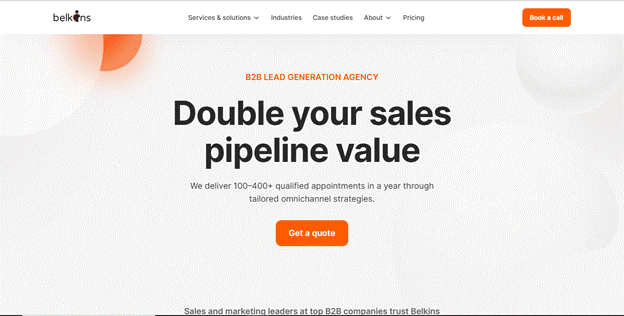
Belkins calls itself the #1 B2B Lead Gen agency. And that might be true. Belkins’ reputation in the market is unparalleled, consistently ranking number one in all lead gen and marketing lists.

They are known for: –

  1. Exceptional lead quality, including appointments
  2. Their response time
  3. Business-elevating performance and strategies
  4. Deep understanding of the industries they serve and a tailored approach to campaigns.

While many organizations make these promises, Belkins is known to deliver on them, enabling business growth. However, Belkins is on the expensive side. It is a through-and-through premium partner channel.

And while large organizations have clear benefits working with them, SMBs and SMEs need to assess whether the ROI will be feasible in the long run.

But Belkins is one such organization that you cannot go wrong with.

SalesRoad

image 10

Location: Boca Raton, Florida, USA

If you want to outsource your sales and generate high-quality appointments and leads, there’s no better candidate than SalesRoad. The organization is known for delivering ROI, and clients are usually happy with the appointments generated.

They create tailored campaigns for unique requirements, but that’s something most companies do. SalesRoad, on the other hand, takes a different approach; they create sales playbooks that are customized for individual companies.

They adapt to company cultures and act as an extension, and make the best of the promise without sacrificing brand voice and authenticity in the process.

Virtually everyone who partners with SaleRoad believes they are worth the cost, and the organization is known for being cost-effective and efficient with budgets.

Overall, SalesRoad is the perfect choice for SMBs, SMEs, and Enterprises alike. An all-rounder.

CallBox

image 8

Location: Encino, California, USA

While most companies specialize in a niche, handling sales or lead gen, CallBox provides its partners with the entire marketing suite and a multi-touch and multi-channel approach. They run –

  1. Webinar and Virtual Event Marketing
  2. Event Marketing Services
  3. Cross-Border Marketing
  4. B2B Lead Generation
  5. Outsourced SDRs

They provide the full-funnel journey and diversify it. CallBox does not shy away from delivering leads from different sources, differentiating itself from the crowd of lead gen and marketing agencies.

The brand is known for quick turnaround times and adaptability, plus their event marketing is something to look out for. The engagement levels provided by CallBox are well above industry standard.

As for pricing, CallBox is priced reasonably and is known for providing ROI compared to its costs.

Sales Factory

image 9

Location: Tampa, Florida, USA

Type: Agency

Specialization: B2B Sales

The Sales Factory prides itself on selling everything. They are an industry-agnostic organization with depth in multiple verticals, providing sales and leads.

Sales Factory is famous for retaining your brand’s voice across the sales pipeline. Their SDR teams ask the right questions and make strategic pivots that empower brands to sell better.

Their response time and communication are the best in the industry, whether that’s B2C or B2B.

The Sales Factory is quite reasonably priced, making it a powerful option for SMB and SME-type organizations.

Cleverly

image 11

Location: LA, California, USA

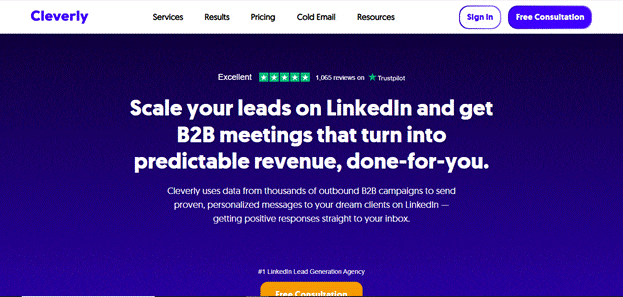
Cleverly is a special one on this list. They generate leads from LinkedIn, using-

  1. LinkedIn Advertising
  2. LinkedIn Lead Generation
  3. Cold Email Outreach
  4. White Label Lead Gen
  5. LinkedIn Recruitment

What makes Cleverly different from its competition is the channel it uses, enabling clients to use LinkedIn. This position is smart because LinkedIn has been pushing to become the go-to stop for lead generation, especially B2B.

Cleverly is that kind of partner that adapts to a business’s ever-changing needs and is highly adaptable.

The brand has flexible pricing, based on what you need. The pricing can range from $1,000 to $200,000 and above.

Martal Group

image 13

Location: San Francisco, California, USA

The Martal Group is an organization that specializes in tailoring its solutions to align with each unique client needs.

They provide services from appointment setting to inbound lead generation with a focus on sales enablement. In recent years, the brand has developed an outbound Agentic-AI platform with a promise of finding leads with high intent, crafting personalized messages, and maximizing deliverability — as explained in this article on lead generation with Agentic AI.

The organization is known for its BDRs and account managers: friendly, communicative, and talented across the board. The brand focuses on communication and iteration, and they have proved this method works by increasing the number of positive conversations their clients are having.

However, the Martal Group is expensive. But the quality of leads provided more than made up for the price.

New Breed+

image 15

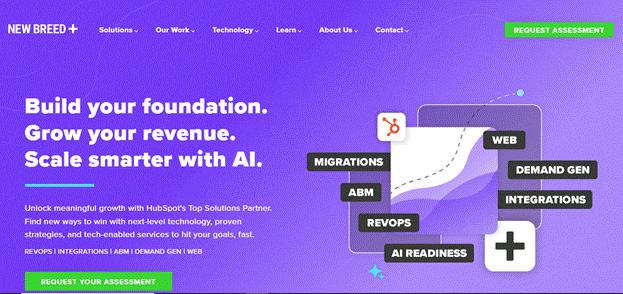
New Breed Revenue is a ReVOps and Demand gen agency. Their services are beneficial for B2B companies that want to improve and streamline their tech stack, enhance revenue performance, and accelerate growth.

As an Elite HubSpot Solutions Partner, New Breed empowers clients to unlock the platform’s full potential by building integrated, scalable systems tailored to their business needs.

And with their demand generation services, they orchestrate and execute a full-funnel experience for their clients’ banners. From attraction to retention, New Breed Revenue takes care of all marketing and sales needs.

They are known for their strategic approach and seamless collaboration with exceptional communication and teamwork.

KlientBoost

image 14

Location: USA

KlientBoost is innovating marketing at the forefront, fusing traditional techniques with a new-age approach. They specialize in the B2B industry through a combination of paid advertising, CRO, and SEO services.

Usually, the campaigns that KlientBoost runs deliver high-quality leads and performance, affecting your sales pipeline and marketing goals. They develop personalized marketing plans for unique needs and goals.

Their audits are thorough, and their reporting is exceptional. Everyone in the industry can and should appreciate the approach KlientBoost is taking. A strategic and data-driven storytelling approach.

Choosing a partner agency will make or break your organization.

And that’s not an understatement. Marketing has been walking a fine line between success and failure post-COVID.

It has been a difficult few years for marketing leaders. As such, they cannot afford missteps, including partnering with the wrong agency.

Delivering ROI is the name of the game, so choose a partner that will help you get there. Not push you 10 steps behind.

Lead Generation Framework

A Strategic Lead Generation Framework for IT Companies

A Strategic Lead Generation Framework for IT Companies

The crowded tech market demands uniqueness and proof of credibility. How far will the traditional lead gen strategies for IT companies take you? Find out.

“Your competition is any business that can fulfill the wants and needs of your potential buyers the same as you can, or even better.”

This realization has sent the market scampering in different directions. And why the vitality of competitive analysis has surged. In a market with no breathing space, it’s easy to lose your footing, let alone establish dominance. And if you don’t stand out, your competition whisks away your target account.

That’s how cut-through selling has become. The same hiccup for sales has instilled a challenge for marketing- how do they reach prospective buyers?

The legacy lead generation techniques don’t fill the gaps in the current landscape. Of course, the statement, “we require more leads,” has become overused, but the foundation for actually generating high-quality leads is wobbly. It poses a severe conundrum for lead generation across IT companies.

Why Is Lead Generation Substantial for IT And Technology Companies?

Have you ever wondered about the immense market size of the IT industry? In 2024, it was estimated to be around $1.5 trillion, and is projected to skyrocket to $2.59 trillion by 2030. That’s 9.4% CAGR in over six years.

If you look at the numbers through squinted eyes, these numbers would easily reflect the competition that’s out there. It’s intense, and with the cycles of digital transformation gaining momentum, the level is about to soar.

In this crowded market, it’s a challenge to stand out. Every other business is selling similar products to yours and even targeting the same market segment. It’s obviously a conundrum for you. Your competition is technically every organization that can meet your potential buyer’s needs as well as you can, or better.

The competition is 360-degree.

But it’s not always about your solutions; it’s about whether you can market them. In a crowded market with no breathing space, how will you retain your footing? And as the market makes a 180-degree shift every couple of years, how do you re-establish your positioning?

Optimizing Your Lead Generation Framework for IT And Tech Industries

While market competition remains a substantial challenge for IT firms, the focal lead gen challenges move beyond such generic hurdles. The evolving data privacy landscape, complex tech offerings, and exhaustive sales cycles add to the mix. And introduce unexpected complications.

Are you stuck at ‘discussing’ leads as the only lead generation strategy?

This doesn’t mean that your traditional lead gen playbook isn’t working. The truth is, the same playbook isn’t optimal for evolving IT businesses. Your age-old lead capture tactics follow a very myopic purview of buyers.

And lead generation, from a very crucial marketing model, has been oversimplified into merely ‘capturing leads.’ There’s no further probe into this methodology of lead generation. And how it’s impacting other marketing and sales functions:

  1. Why are the leads not converting, and what are the fundamental reasons?
  2. Does the funnel continue to leak opportunities even after adopting automation tools? Why?
  3. Even with so much data at our disposal, why do the boundaries between us and the buyers continue to exist?

The thing is, these aren’t B2C customers, they’re tech buyers with the smarts and their own conversing age. It’s only a fraction of the picture. And in recent years, lead generation has become a simple yardstick- downloading eBooks, signing up for newsletters, or filling out a form.

Are you reaching the ones with the actual decision-making power?

The IT ecosystem is more complex than the others. Every supposed “right-fit” lead has conducted research at least at a single point across the marketing funnel. And not all of them are even decision-makers. Lead lists and contact databases are filled in with names, and you believe the work is done.

But do you think reaching the right buyers in a saturated tech market ends at this?

You’re marketing complex tech solutions to more than a single decision-maker. And not all of them entail a deep tech expertise. Marketing to a buying committee across IT businesses means marketing to CFOs and CTOs. And honestly, each of them assesses value in their own ways.

Even two distinct buying accounts in the same market might measure value differently at a given time. While one places substantial value, the other could find it detrimental. This is the challenge of marketing an IT solution- the market walks on extremes. And with tech, there come attached too many questions about privacy and security.

Any of the research that they conduct could be done off the grid. And they’re likely to only interact with your brand in their own terms. Your potential buyer is not even on your radar.

Where’s the marketing budget? (It’s a hypothetical question)

According to a survey conducted by The Partner Marketing Group, 48% of IT marketers stated that most of their marketing budgets go into trade shows and events. This is a 44% increase from the preceding year.

Okay, fine, the contacts are now in your pockets. So, what now? Even though 60% say that their priority and baseline objective is lead generation, their primary challenge is converting those leads. This means they’re making significant mistakes at the very top.

By eroding a majority of the budget into trade shows, paid and digital channels are attributed fewer resources. This has proved a major misstep for B2B tech marketers. They’re missing a significant chunk of what’s in vogue: intent-led strategies and adaptive classification in line with account behavior and fit.

The shift in marketing was because of the disjuncture between marketing and sales. Marketing would hand off ill-fitting ‘MQLs‘ to sales, and call it a day. And a majority of those leads wouldn’t convert into opportunities.

IT firms need to keep up.

Stuck in the quantity-quality conundrum, the need for intensive technical vetting of low-quality leads has resulted in manual qualification. The consequence? Slow pipeline velocity and inflated cost-per-lead.

It’s high time IT businesses made a pivot to a more purpose-led and value-centric approach.

Lead Generation Strategies for IT and Tech Industries

1. Think of reliability as a commodity.

What happens when large systems fail? Heads roll.

A poorly implemented IT solution can lead to network breakdowns and frustrations. We’ve all been there. There’s always some ambiguity regarding the potential of an IT solution, but that’s not your cross to bear.

What actually matters for lead generation in IT companies is proving reliability and attesting to it. There’s little tolerance for operational downtimes, and any fluke can cost millions.

Here, it becomes crucial to curate marketing messages that showcase reliability rather than spotlight the product features. It’s about taking note of the high stakes involved and communicating the disruptions without creating fear. And given the intense market competition, you must communicate this reliability a tad differently from your competitors-

In a way that differentiates your IT solution and instills credibility at the same time.

2. Paint emotional associations to rope in the prospects.

Most marketing messages don’t prove effectiveness because they jump into solving the problem. How do you build connection and trust this way?

Of course, getting into the solution is a crucial factor, but tech buyers have the smarts and have done their research. In a needs-based society, they know what their business requires.

Your lead generation strategies for IT businesses should entail every bit of balance between cold reasoning and emotional association. This is where the GAP (Gathering, Association, and Problem-solving) model will do the trick-

  1. G – Gather facts on the target account’s current pain points. Focus on the hardcore facts that can be transformed, altered, or influenced in some way.
  2. A – Get into the emotional reasons why they should buy the solution. This is where you also establish the value of your IT solution from the buyer’s perspective. What do they care about the most- scalability, security, ease of use, or pricing points? Here, you get to the root of their pain. And through this, you understand how to trigger an emotional response.
  3. P – Prescribe what is best for them, not sell your solution. Once your buyer has created an emotional association, it’s easier to help them see the bigger picture, i.e., what owning this tech feels like.

Remember, emotional impact > cold logic and price-based reasoning.

3. Underscore zero-party and first-party data, not purchased lead lists.

Google has phased out third-party cookies, and due to the latest security policies, we’re diving into a cookie-less future. Especially if you think of tech buyers, they’re the ones who are more proactive about security. That’s one of the most fundamental hiccups IT marketers must be aware of.

But software such as PETs and reverse-DNS can help brands tap into website visitors without utilizing cookies.

To keep buyers’ trust, marketers will have to dig into the first-party data because users are consenting to it beforehand. It’s just the question of whether you understand those patterns from your website and lead gen forms. And even implement lead magnets to expand your data collection.

The significant aspect is to also entail a consent management form, allowing users to access and manage the data they’ve provided. You’re attributing a chunk of control to the buyer, making them feel that they are in safe hands.

This way, you’re building trust not just for the marketing message to get through. But to also facilitate secure and informed adoption.

4. Transform the internal phrasing for consistent messaging all across.

Messages across different channels can be diverse, but then it’ll topple your brand perception. The way the market is shifting, there’s one thing that must remain constant. And that’s your brand.

Just as the market is shifting from MQLs to IQLs, your content and messaging should reflect the same. Often, IT marketers are so lost in the product features that they overlook the messaging and value they’re actually delivering through marketing campaigns.

While one campaign follows all the recent trends and follows a modern playbook, the other leverages conventional data. It ultimately portrays your brand in a negative light. You’re marketing an IT solution that focuses on modern capabilities and digital transformation.

But what about the content? At the top of the funnel, this is what the focus should be. Innovating not just your solutions, but the messages and communications your prospect is going to interact with.

As an IT marketer, you blend all aspects- from marketing storytelling to the complexity of IT solutions. And unify all of it in an agile but innovative lead generation strategy-

One that speaks to the non-technical and technical stakeholders. And posits the value to resonate with the diverse buying committee.

Lead Generation for IT Companies: An Emotionally-Charged Strategy?

The thing is, it’s easy to filter lead generation into a list of specific techniques and label them proven. But with the changing environment, so many marketing and sales teams are frustrated with low-quality leads. And interactions that go nowhere.

From SaaS to fintech to IT, each industry faces this quagmire.

But each domain also entails its own complexities. There’s no point in copy-pasting the same framework. They might work for the short-term, but for the long game, you’re missing out on key accounts. It’s because you’re busy attempting to engage buyers who have no connection to you.

IT companies require lead gen strategies that work for IT buying committees, from the CFO to the CEO. But it’s the marketing comms segment that takes a hit. The message doesn’t resonate with all of them, and you lose the deal. Even the tiniest account matters. So, where do you start?

You start with instilling reliability, not just trust. In the IT industry, reliability is scarce. But if they trust your message, they trust your solutions. And that’s what matters- linking the buyer to the value.

Only the value isn’t your flashy messaging, but in instilling an emotional response. Especially in a segment where emotions are often countered with cold, straightforward logic.